Within Disaster maps
Human checks on AI maps
FEMA’s human-in-the-loop approach shows why faster AI triage still needs accountable analysts before emergency decisions are made.
On this page
- What AI triage does first
- Why disaster images can mislead
- How analysts turn flags into decisions
Page outline Jump by section
Introduction
AI systems can now scan huge volumes of satellite images, drone footage, and radar data within minutes after a disaster. That speed matters when emergency agencies are trying to decide where to send helicopters, rescue teams, generators, medicines, or temporary shelters. But agencies such as the US Federal Emergency Management Agency (FEMA) still keep human analysts deeply involved in the process. The reason is simple: disaster maps influence life-and-death decisions, and AI systems can still misread what they see.
 FEMA’s approach reveals an important pattern in the wider story of AI-assisted coordination. The technology is most useful when it accelerates human judgement rather than replacing it. AI can rapidly flag likely damage zones, rank imagery for review, and identify patterns that humans might miss under pressure. Yet accountability, interpretation, and final operational decisions still depend on trained people who understand local conditions, uncertainty, and the consequences of getting a map wrong. [Department of Homeland Security]dhs.govRGO is utilizing several AIDepartment of Homeland SecurityFederal Emergency Management Agency – AI Use Cases16 Dec 2024 — RGO reviews satellite, aerial, and radar i… [ScienceDirect]sciencedirect.comScienceDirectComputer vision tools for early post-disaster assessmentby R Soleimani · 2024 · Cited by 18 — Remote sensing data, particula…
What AI triage does first
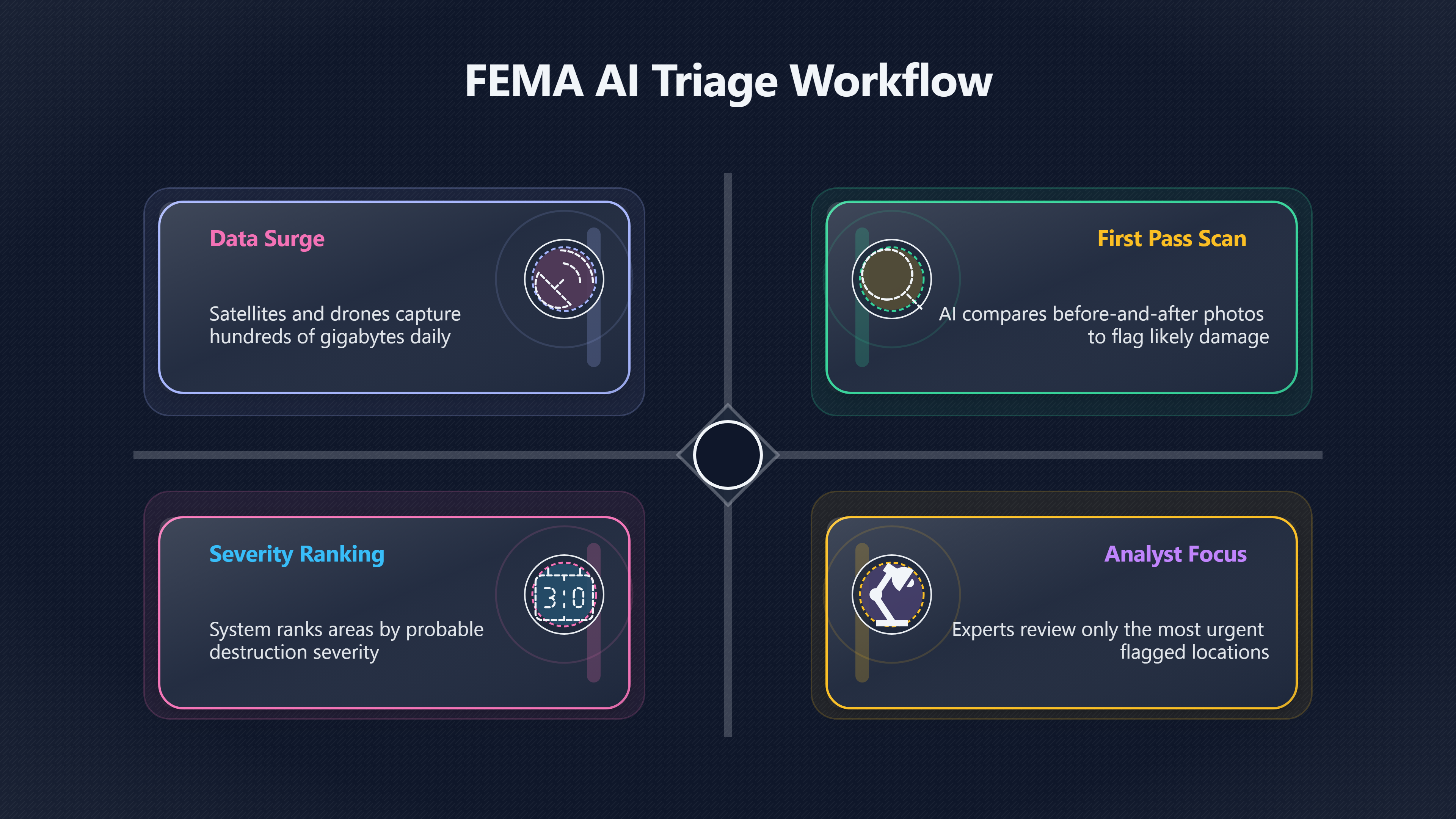
Modern disasters produce more visual data than emergency teams can realistically inspect by hand. Satellites capture wide-area imagery, aircraft fly repeated surveys, and drones may collect hundreds of gigabytes of photographs in a single day. FEMA’s Response Geospatial Office has therefore explored AI systems that use computer vision and machine learning to prioritise structural and debris assessments after disasters. [Department of Homeland Security]dhs.govRGO is utilizing several AIDepartment of Homeland SecurityFederal Emergency Management Agency – AI Use Cases16 Dec 2024 — RGO reviews satellite, aerial, and radar i…
The key word is “prioritise”. FEMA’s systems are not designed to make final decisions autonomously. Instead, the AI performs a first-pass triage:
- comparing before-and-after imagery
- identifying likely collapsed buildings or flooded streets
- ranking areas by probable severity
- directing analysts toward the most urgent locations first
This matters operationally because the bottleneck in disasters is often attention rather than raw information. Emergency managers may have access to imagery quickly, but not enough specialists to inspect every frame. AI allows scarce human expertise to focus where it is most needed.
That acceleration can be dramatic. Operational disaster-response deployments described in recent research showed AI-assisted systems processing hundreds of structures in minutes rather than requiring many hours of manual review. UN-linked humanitarian projects have reported that AI-assisted workflows allowed analysts to examine much larger geographic areas while reducing turnaround times for directional assessments to under a day. [UN Global Pulse]unglobalpulse.orgThe solution works on damages from earthquakes, storms, fires, as well as floods.Read more…
In the broader AI bloom debate, this is an example of machine intelligence acting as a coordination amplifier. Faster interpretation of chaotic situations can help societies respond more effectively to shocks, reducing avoidable losses and improving resilience. But FEMA’s insistence on human oversight shows that increasing capability does not eliminate the need for trusted institutions and accountable judgement.
Why disaster images can mislead
Disaster imagery looks objective, but it is often ambiguous. A flooded street may reflect standing water that disappears in hours, or a deeper structural failure that isolates an entire community. Burn scars from a wildfire can hide buildings that remain structurally intact. Clouds, smoke, shadows, low resolution, and damaged infrastructure can all confuse automated systems.
Researchers working on post-disaster computer vision repeatedly identify “generalisability” as a central problem. A model trained on hurricane damage in one region may struggle when confronted with different building styles, vegetation, lighting conditions, or terrain elsewhere. The same category of disaster can appear visually different across countries or even neighbouring towns. [ScienceDirect]sciencedirect.comScienceDirectComputer vision tools for early post-disaster assessmentby R Soleimani · 2024 · Cited by 18 — Remote sensing data, particula… [Springer Link]link.springer.comSpringer LinkDeep learning transferability for UAS building damageby DK Kang · 2025 — For example, the xBD dataset is a building damage a…
That creates several risks.
False positives
AI may incorrectly label an area as severely damaged. In practice, this can divert rescue teams and supplies away from communities in greater need.
A debris field visible from above might actually be normal post-storm clean-up activity. Roof colour changes can be mistaken for collapse. Mud or ash deposits can resemble structural destruction.
False negatives
More dangerous still are missed detections. A system may fail to recognise severe damage because:
- flooding is hidden by tree cover
- smoke obscures imagery
- rural structures look unlike the training data
- buildings collapse internally while roofs remain visible
In emergency response, missing a badly affected community can have serious consequences for survival and recovery.
Context blindness
AI systems often identify visual patterns without understanding social context. A map may highlight physical destruction while missing:
- nursing homes with vulnerable residents
- isolated communities cut off from roads
- hospitals operating without electricity
- neighbourhoods where evacuation is difficult
Operational response depends on more than visible damage alone. Human analysts integrate local knowledge, infrastructure maps, weather forecasts, and reports from the ground.
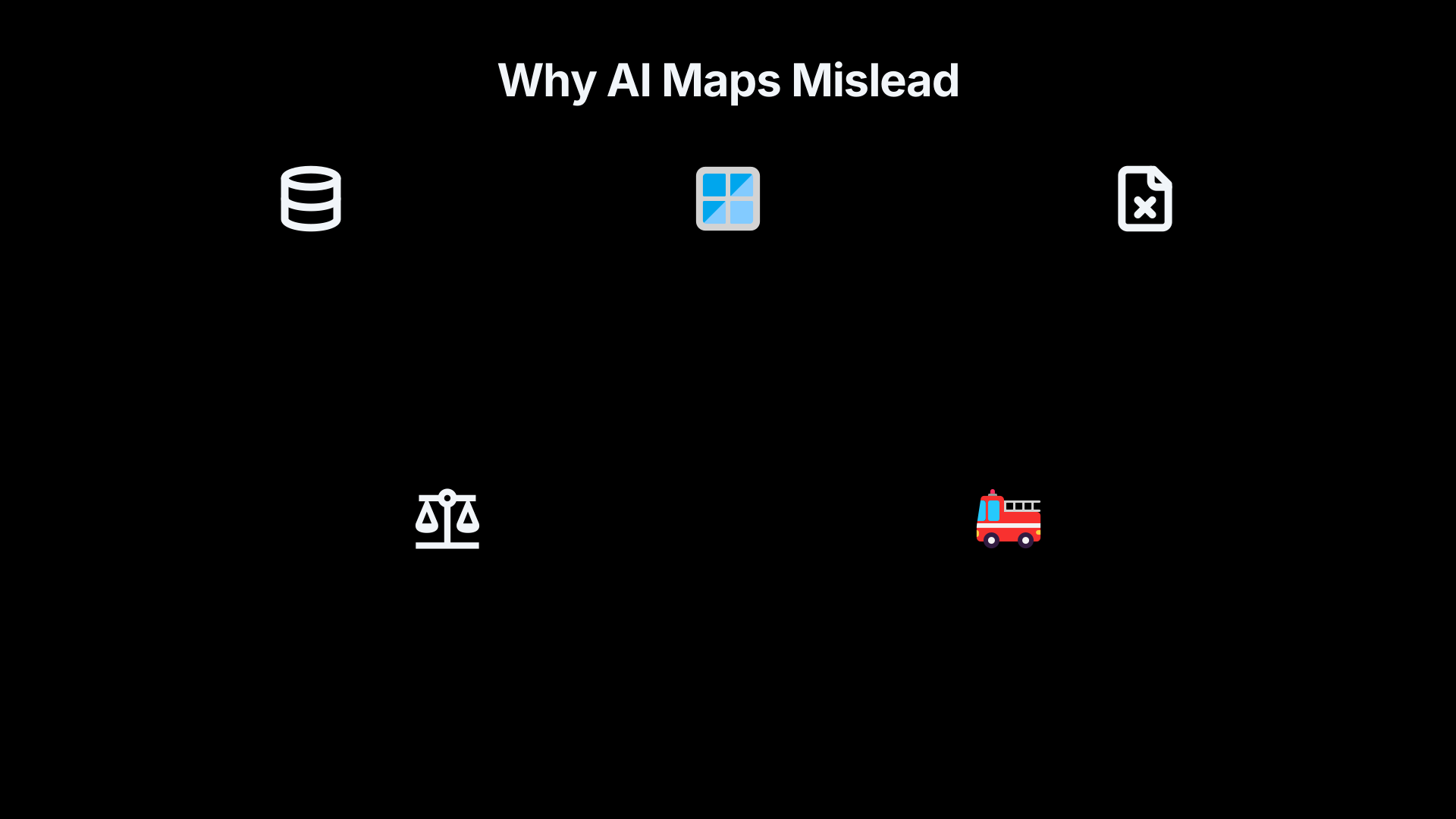
Dataset bias
Many disaster-AI systems are trained using datasets dominated by certain countries, hazards, or building types. Widely used benchmark datasets such as xBD helped accelerate research in automated damage assessment, but researchers also note limitations in transferring performance reliably across disasters and geographies. [arXiv]arxiv.orgDeploying Rapid Damage Assessments from sUAS…13 Dec 2025 — This paper presents the first AI/ML system for automating building damage a… 2arXiv
This matters politically as well as technically. If emergency systems work best in wealthy regions with abundant historical imagery, poorer or less mapped communities may receive less reliable assessments precisely when they are most vulnerable.
How analysts turn flags into decisions
Human analysts remain central because disaster response is ultimately a governance task, not just a pattern-recognition problem.
FEMA’s workflow reflects this distinction. AI-generated outputs are used to help prioritise imagery exploitation, but trained personnel still review, interpret, and validate findings before they influence operational choices. [Department of Homeland Security]dhs.govRGO is utilizing several AIDepartment of Homeland SecurityFederal Emergency Management Agency – AI Use Cases16 Dec 2024 — RGO reviews satellite, aerial, and radar i…
In practice, human review involves several layers.
Analysts check uncertainty
Experienced geospatial analysts know where AI systems tend to fail. They compare machine outputs against:
- radar data
- weather conditions
- infrastructure databases
- historical imagery
- reports from local authorities
- drone footage and field observations
Instead of asking “What did the model say?”, they ask “How confident should we be?”
That distinction is crucial during fast-moving emergencies.

Humans interpret operational meaning
A damaged bridge does not matter only because a structure failed. It matters because ambulances may no longer reach a hospital or evacuation routes may be blocked.
AI systems detect objects and patterns. Human responders translate those signals into operational consequences.
Humans carry accountability
Emergency management decisions are public decisions. If authorities evacuate the wrong area, delay aid, or overlook a vulnerable population, someone must answer for it.
This is one reason FEMA and similar agencies resist fully autonomous disaster assessment. Democratic institutions generally require identifiable responsibility for high-stakes actions. An algorithm cannot testify before Congress, explain trade-offs to the public, or justify why one town received aid before another.
The “human in the loop” model therefore serves both technical and political purposes:
- improving reliability
- preserving public trust
- maintaining legal accountability
- allowing ethical judgement in uncertain conditions
Why this matters beyond disaster response
The debate around AI disaster mapping is a smaller version of a much larger question in the AI bloom discussion: what kinds of decisions should remain meaningfully human even if machine systems become vastly more capable?
Disaster mapping demonstrates both the promise and the limits of current AI coordination tools.
The promise is real. Faster image analysis can reduce chaos after hurricanes, earthquakes, floods, and wildfires. It can help governments and humanitarian agencies allocate scarce resources more effectively. Over decades, increasingly capable AI systems may dramatically improve humanity’s ability to respond to crises, manage infrastructure, and protect populations from climate-related disasters.
But FEMA’s approach also highlights a broader lesson. High-speed machine intelligence does not automatically remove the need for institutions, judgement, or legitimacy. In fact, as systems become more powerful, the demand for trustworthy oversight may grow rather than disappear.
The long-term optimistic vision around AI often focuses on abundance: more knowledge, faster science, better logistics, and greater civilisational capacity. Disaster-response AI offers a grounded near-term example of that trajectory. Yet it also shows why flourishing societies may still depend on human accountability even in highly automated futures.
The practical model emerging in emergency management is therefore not “AI replaces humans”, but “AI expands what humans can coordinate under pressure”. FEMA’s continued reliance on analysts reflects an important principle for broader AI deployment: speed is valuable, but trusted judgement remains essential when the stakes are human lives.
Endnotes
-
Source: sciencedirect.com
Link: https://www.sciencedirect.com/science/article/pii/S0952197624010133Source snippet
ScienceDirectComputer vision tools for early post-disaster assessmentby R Soleimani · 2024 · Cited by 18 — Remote sensing data, particula...
-
Source: catalog.data.gov
Title: geospatial damage assessment outputs
Link: https://catalog.data.gov/dataset/geospatial-damage-assessment-outputsSource snippet
Damage Assessment Outputs1 Jul 2025 — FEMA is developing the capability to understand the full extent of disaster impacts within 72 hours...
-
Source: arxiv.org
Link: https://arxiv.org/html/2511.03132v3Source snippet
Deploying Rapid Damage Assessments from sUAS...13 Dec 2025 — This paper presents the first AI/ML system for automating building damage a...
-
Source: link.springer.com
Link: https://link.springer.com/article/10.1007/s44290-025-00357-ySource snippet
Springer LinkDeep learning transferability for UAS building damageby DK Kang · 2025 — For example, the xBD dataset is a building damage a...
-
Source: sciencedirect.com
Link: https://www.sciencedirect.com/science/article/abs/pii/S0048969725017619Source snippet
Improving disaster resilience with causal machine learning...by ML Museru · 2025 · Cited by 8 — The growing adoption of ML models in flo...
-
Source: arxiv.org
Title: arXiv An Attention-Based System for Damage Assessment Using Satellite Imagery
Link: https://arxiv.org/abs/2004.06643Source snippet
arXivAn Attention-Based System for Damage Assessment Using Satellite ImageryApril 14, 2020...
Published: April 14, 2020
-
Source: arxiv.org
Link: https://arxiv.org/abs/2004.05525 -
Source: arxiv.org
Title: Can LLM Agents Respond to Disasters?
Link: https://arxiv.org/html/2605.11633v1Source snippet
Benchmarking...12 May 2026 — Operational disaster response goes beyond damage assessment, requiring responders to integrate multi-sensor...
Published: May 2026
-
Source: link.springer.com
Link: https://link.springer.com/article/10.1007/s11069-024-06641-xSource snippet
approach to create annotated disaster image...by SH Ro · 2024 · Cited by 14 — This study introduces an innovative workflow anchored in s...
-
Source: dhs.gov
Title: RGO is utilizing several AI
Link: https://www.dhs.gov/ai/use-case-inventory/femaSource snippet
Department of Homeland SecurityFederal Emergency Management Agency – AI Use Cases16 Dec 2024 — RGO reviews satellite, aerial, and radar i...
-
Source: unglobalpulse.org
Link: https://www.unglobalpulse.org/ai-from-google-research-and-un-boosts-humanitarian-disaster-response-wider-coverage-faster-damage-assessments/Source snippet
The solution works on damages from earthquakes, storms, fires, as well as floods.Read more...
Additional References
-
Source: cmu.edu
Link: https://www.cmu.edu/ai-sdm/research/research-highlights/bda-rda-models.htmlSource snippet
AI Decision Support for Rapid Post-Disaster Damage...Traditionally, this damage assessment has been an arduous manual process, requiring...
-
Source: researchgate.net
Link: https://www.researchgate.net/publication/361746533_AI_for_Disaster_Rapid_Damage_Assessment_from_MicroblogsSource snippet
AI for Disaster Rapid Damage Assessment from MicroblogsFormal response organizations perform rapid damage assessments after natural and h...
-
Source: vexceldata.com
Link: https://vexceldata.com/products/elements/damage-assessment/Source snippet
Damage AssessmentDamage Assessment takes Vexcel's high-resolution Disaster imagery to new heights by providing automatically calculated i...
-
Source: gis-fema.hub.arcgis.com
Link: https://gis-fema.hub.arcgis.com/pages/geospatial-da-trainingSource snippet
FEMA Geospatial Resource CenterGeospatial Damage AssessmentsFEMA is developing the capability to understand the full extent of disaster i...
-
Source: esri.com
Link: https://www.esri.com/about/newsroom/arcuser/ml-aids-geospatial-assessment-for-disaster-responseSource snippet
ML Aids Geospatial Assessment for Disaster ResponseDewberry is leveraging powerful ArcGIS tools and ML capabilities to facilitate efficie...
-
Source: ncdp.columbia.edu
Link: https://ncdp.columbia.edu/ncdp-perspectives/transforming-disaster-management-the-promise-and-challenges-of-ai-in-wildfire-damage-assessment/Source snippet
Promise and Challenges of AI in Wildfire Damage...7 Feb 2025 — The exploration of artificial intelligence (AI) offers possibilities for...
-
Source: reisystems.com
Link: https://www.reisystems.com/innovating-fema-disaster-response-with-deep-learning-model-for-building-damage-detection/Source snippet
REI has developed a deep learning model capable of automatically detecting and assessing damaged buildings using satellite images.Read more...
-
Source: oecd.org
Link: https://www.oecd.org/content/dam/oecd/en/publications/reports/2025/06/using-ai-to-measure-disaster-damage-costs_d551a082/b1fe3967-en.pdfSource snippet
r bearing carriers (exposure and vulnerability) and other factors.Read more...
-
Source: dsiac.dtic.mil
Title: machine learning tools to detect battle damage using satellite images
Link: https://dsiac.dtic.mil/technical-inquiries/notable/machine-learning-tools-to-detect-battle-damage-using-satellite-images/Source snippet
dtic.milMachine-Learning to Detect Battle Damage Using Satellite...19 Dec 2022 — This report will describe research that applies ML for...
-
Source: esri.com
Title: gis and artificial intelligence for precise damage assessments
Link: https://www.esri.com/en-us/industries/blog/articles/gis-and-artificial-intelligence-for-precise-damage-assessmentsSource snippet
GIS and Artificial Intelligence for Precise Damage...30 Nov 2023 — Esri blends GIS and AI to transform damage assessment in disaster zon...
Amazon book picks
Further Reading
Books and field guides related to Human checks on AI maps. Use these as the next step if you want deeper reading beyond the article.
Emergency management
First published 2007. Subjects: Emergency management, Hazard mitigation, Natural disasters.
Disaster response and recovery
First published 2007. Subjects: Disaster relief, SOCIAL SCIENCE / Sociology / General, Emergency management.
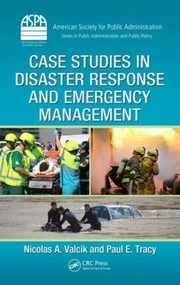
Case Studies In Disaster Response And Emergency Management
First published 2013. Subjects: Emergency management, Case studies, POLITICAL SCIENCE / Public Policy / City Planning & Urban Development...
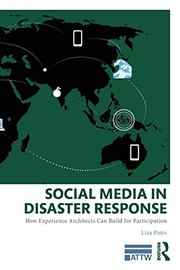
Social Media in Disaster Response
First published 2013. Subjects: Social media, Interpersonal communication, Emergency management, Online social networks, Emergency medica...
eBay marketplace picks
Marketplace Samples
Example marketplace items related to this page. Use the search link to explore similar finds on eBay.

Example eBay listing
A.I. Artificial Intelligence Original Movie Poster Signed By Jude Law
USD 125.00 | Shipping USD 25.00 | US

Example eBay listing
Artificial Intelligence D/S Original Movie Poster - 27 x 40"
USD 19.50 | Shipping USD 13.65 | US

Example eBay listing
612388 Artificial Intelligence Movie Science Fiction Drama Wall Print Poster
USD 22.95 | Shipping USD 12.95 | JP

Example eBay listing
Companion - Artificial Intelligence Dark Comedy Cinema Film - POSTER 20"x30"
USD 23.99 | Free shipping | US

Example eBay listing
A.I. Artificial Intelligence Movie Film Poster Art Print
GBP 4.99 | Free shipping | GB

Example eBay listing
A.I. - Artificial Intelligence Movie/Film Poster Art PICTURE / PRINT 9" x 8"
GBP 2.49 | Shipping GBP 1.75 | GB

Example eBay listing
A I Artificial Intelligence 6 Movie Poster Art Print Print Classic Rare Gallery
GBP 49.00 | Free shipping | GB

Example eBay listing
Artificial Intelligence Framed Wall Art Poster Canvas Print Picture
GBP 8.99 | Shipping GBP 4.99 | GB
Topic Tree