Within AI Mammograms
Reducing missed cancers
Interval cancers are the crucial test of whether AI screening finds dangerous tumours earlier rather than just finding more abnormalities.
On this page
- What interval cancers are and why they matter
- What recent AI supported screening trials found
- Why fewer aggressive interval cancers would change the benefit case

Page outline Jump by section
Introduction
The strongest argument for AI-assisted mammography is not that it finds more abnormalities. It is that it may reduce the cancers screening programmes most fear missing: aggressive “interval cancers” that appear after a woman has been told her mammogram was clear but before her next scheduled screening round.
That distinction matters. Many long-running debates around breast screening revolve around overdiagnosis — finding slow-growing tumours that might never have caused harm. Interval cancers are different. They are often faster-growing, more invasive, and associated with worse outcomes. If AI systems genuinely reduce these cancers, the case for medical AI becomes much stronger: the technology would not merely be detecting more tissue changes, but helping identify dangerous disease earlier when treatment is more effective. Recent large trials, especially the Swedish MASAI study, suggest this may now be happening in practice, though researchers still caution that the evidence is early and long-term mortality data are not yet available. ScienceDirect [The Lancet]WikipediaThe LancetThe Lancet is a weekly peer-reviewed general medical journal, founded in England in 1823. [1] It is one of the world's highe…
What interval cancers are and why they matter
An interval cancer is a breast cancer diagnosed between routine screening appointments after a previous mammogram was interpreted as negative. In countries with screening every one to three years, these cancers emerge during the “interval” between tests.
They matter because they are often the cancers standard screening fails to catch in time. Some were visible in retrospect but overlooked by radiologists. Others were hidden by dense breast tissue. Some genuinely grew very rapidly after the screening examination. Either way, they are frequently associated with more dangerous disease biology. [ScienceDirect]sciencedirect.comScienceDirectInterval cancer, sensitivity, and specificity comparing AI…by J Gommers · 2026 · Cited by 12 — Compared with standard dou… [Cancer]cancer.frInterval cancer, sensitivity, and specificity comparing AI-…9 Feb 2026 — We aimed to compare the interval cancer rate in AI-supported…
Researchers pay unusually close attention to interval cancers because they are one of the clearest indicators that screening is delivering real clinical benefit rather than simply increasing diagnosis counts. A screening system can appear successful by finding many tiny or slow-growing tumours. But if women still later present with invasive cancers missed during screening, the practical value is less convincing.
This is why interval cancer rates are often treated as a proxy for whether earlier detection is likely to improve outcomes. The Swedish MASAI investigators described interval cancers as a central measure for testing whether AI-supported screening actually improves screening efficacy. [PubMed]pubmed.ncbi.nlm.nih.govPubMedInterval cancer, sensitivity, and specificity comparing AI…by J Gommers · 2026 · Cited by 13 — We aimed to compare the interval…
The distinction also matters inside the broader debate about AI and human flourishing. Much of the optimistic “AI bloom” argument rests on whether advanced systems can materially reduce suffering and disease burdens at scale, not simply automate paperwork or produce impressive demos. Mammography offers an unusually concrete test. The outcome is measurable: either fewer dangerous cancers are missed, or they are not.

What recent AI-supported screening trials found
The most influential evidence so far comes from the MASAI trial in Sweden, a large randomised controlled study involving more than 100,000 women. The trial compared conventional double-reading by radiologists against an AI-supported workflow in which AI helped triage scans and identify suspicious regions for closer human review. [The ASCO Post]ascopost.comThe ASCO PostInterval Cancer Rate With AI-Supported Mammography…12 Feb 2026 — In Sweden, eligible women are invited to screen every 1…
The key finding was not simply higher detection rates. The more important result was a reduction in interval cancers.
Published analyses reported:
- about a 12% reduction in interval cancer rates,
- higher screening sensitivity, [sciencedirect.com]sciencedirect.comScienceDirectInterval cancer, sensitivity, and specificity comparing AI…by J Gommers · 2026 · Cited by 12 — Compared with standard dou…
- similar specificity,
- and fewer aggressive cancers appearing between screenings. [AJMC]ajmc.comai supported mammography caught more cancers during screeningAJMCAI-Supported Mammography Caught More Cancers During…Jan 29, 2026 — AI-supported mammography screenings showed higher sensitivity a… [3ScienceDirect 3The]sciencedirect.comScienceDirectInterval cancer, sensitivity, and specificity comparing AI…by J Gommers · 2026 · Cited by 12 — Compared with standard dou… Guardian](#endnote-21 “Snippet: Conducted in Sweden from April 2021 to December 2022, the trial evaluated over 100,000 women who underwent either regular mammography or…”)
The details are important because they address one of the biggest criticisms of cancer screening AI: that it might only increase detection of harmless or ambiguous abnormalities.
Instead, the Swedish results suggested a shift towards detecting more clinically relevant cancers earlier. According to trial summaries, the AI-supported group showed:
- 16% fewer invasive interval cancers,
- 21% fewer large tumours,
- and 27% fewer aggressive sub-type cancers diagnosed between screening rounds. [EurekAlert!]eurekalert.orgnews releasesEurekAlert!The Lancet: AI-supported mammography screening results…29 Jan 2026 — In the AI-supported mammography group, 81% of cancer c…
Researchers also reported that cancers found in the AI-supported arm tended to have more favourable characteristics than interval cancers detected after standard screening alone. [ScienceDirect]sciencedirect.comScienceDirectInterval cancer, sensitivity, and specificity comparing AI…by J Gommers · 2026 · Cited by 12 — Compared with standard dou…
That is precisely the pattern advocates hoped to see. If AI merely inflated detection totals without changing dangerous cancer rates, the benefit case would remain uncertain. A reduction in invasive interval cancers suggests at least some tumours are being caught earlier while still more treatable.
Why this evidence is more convincing than headline “accuracy”
AI systems are often marketed using abstract metrics such as accuracy, area under the curve, or sensitivity scores. Those numbers can be misleading outside specialist contexts because they do not automatically translate into better patient outcomes.
Interval cancers are harder to dismiss.
A screening tool that genuinely lowers interval cancer rates is likely identifying dangerous tumours earlier rather than simply labelling more scans as suspicious. This is why many breast-imaging researchers consider interval cancers one of the most clinically meaningful tests of screening performance. [SMC España]sciencemediacentre.esSMC EspañaAI improves breast cancer screening30 Jan 2026 — Radiological results show that AI provides a clinically relevant improvement t…
The MASAI results were especially influential because they emerged from a real population screening programme rather than retrospective laboratory testing. Earlier AI mammography studies often used enriched datasets containing unusually high cancer prevalence, which can make algorithms appear more impressive than they would in ordinary clinical practice. [bmjopen.bmj.com]bmjopen.bmj.comArtificial intelligence (AI) to enhance breast cancer screeningby ML Marinovich · 2022 · Cited by 33 — AI algorithms for interpreting mam…
The Swedish trial instead examined how AI functioned inside an operational national screening system with ordinary patients and normal radiology workflows.
That matters for the wider AI bloom debate because real-world deployment is where many AI promises weaken. Laboratory demonstrations are common. Population-scale health improvements are much rarer. Mammography AI is one of the first areas where large controlled trials suggest measurable system-level gains may actually be emerging.
Why fewer aggressive interval cancers could change the benefit case
The central unresolved question in breast screening has always been balance: do the benefits outweigh the harms?
Screening unquestionably saves lives for some women, but it also produces false positives, unnecessary biopsies, anxiety, and treatment of cancers that might never have become dangerous. Critics of screening programmes have long argued that detecting more cancers is not automatically beneficial if many detected tumours are biologically indolent. [BMJ]bmjopen.bmj.comArtificial intelligence (AI) to enhance breast cancer screeningby ML Marinovich · 2022 · Cited by 33 — AI algorithms for interpreting mam…
This is where interval cancer reductions become unusually important.
If AI screening reduces the number of later-presenting invasive cancers without sharply increasing false positives, the technology may improve the balance between benefit and harm rather than merely intensifying surveillance. The MASAI findings were notable partly because specificity remained similar while sensitivity improved. [ScienceDirect]sciencedirect.comScienceDirectInterval cancer, sensitivity, and specificity comparing AI…by J Gommers · 2026 · Cited by 12 — Compared with standard dou…
In plain language, the system appeared to find more dangerous cancers without proportionally flooding women with additional false alarms.
That does not yet prove AI screening reduces mortality. Breast-cancer death outcomes take many years to measure. Researchers repeatedly stress that longer follow-up is still needed before drawing definitive conclusions. [Cancer Rose]cancer-rose.frinterval cancers incidentalomas the losers of screeningInterval cancers, incidentalomas, the losers of screening6 Jun 2024 — In other words, screening detects mostly low-stage cancers and carc…
But the direction of evidence matters. A technology that lowers invasive interval cancers while maintaining similar false-positive rates is moving in a much more clinically meaningful direction than systems that simply increase total detections.
The important caveats and unresolved questions
Despite the encouraging results, several important uncertainties remain.
A 12% reduction is meaningful, but not transformative on its own
The interval cancer reduction reported in MASAI is clinically important, but it is not a complete solution to missed cancers. Many interval cancers still occurred in the AI-supported group. [contemporaryobgyn.net]contemporaryobgyn.nettrial shows higher sensitivity with ai supported breast cancer screeningTrial shows higher sensitivity with AI-supported breast…Feb 2, 2026 — Interval cancer rates were 1.55 per 1000 participants (95% CI 1…
AI improves screening performance; it does not eliminate uncertainty.
Some cancers remain inherently difficult to detect because of breast density, image quality limitations, tumour biology, or rapid tumour growth between screening rounds.
Long-term mortality evidence is still pending
Reducing interval cancers is encouraging because it is associated with better outcomes, but researchers still need longer follow-up to determine whether AI-supported screening ultimately lowers breast-cancer mortality. [Cancer Rose]cancer-rose.frwhat is the masai mammography screening with artificial intelligence trial studyinterval cancers is reduced compared to screening procedures without AI…Read more…
That distinction matters because earlier detection does not always translate cleanly into longer survival statistics. Cancer screening research is full of examples where apparent improvements were partly explained by lead-time bias — detecting disease earlier without fundamentally changing the final outcome.
Overdiagnosis concerns have not disappeared
Even with improved interval cancer performance, experts still warn that AI systems could increase overdiagnosis if they become overly sensitive to tiny abnormalities or low-risk lesions. [BMJ]bmj.comBMJUse of artificial intelligence for image analysis in breast…by K Freeman · 2021 · Cited by 389 — In such a case, AI might increase…
The key question is not whether AI can detect more patterns. Modern deep-learning systems clearly can. The harder question is whether they preferentially detect the cancers that matter most clinically.
Current evidence suggests the answer may increasingly be “yes”, but researchers remain cautious about overclaiming.
Real-world implementation remains difficult
AI systems also have to function across diverse hospitals, imaging devices, populations, and clinical workflows. Performance can vary by ethnicity, breast density, local screening intervals, and data quality. Regulators and clinicians are increasingly focused on validation outside tightly controlled research settings. [Nature]nature.comNationwide real-world implementation of AI for cancer…by N Eisemann · 2025 · Cited by 203 — Growing evidence indicates that AI detects…
This is especially important if AI-supported screening expands globally into healthcare systems with fewer specialist radiologists.
Why mammography has become an important AI bloom test case
Mammography has become one of the clearest near-term demonstrations of what a beneficial medical AI transition could look like.
The systems involved are still narrow AI tools rather than anything resembling superintelligence. But they illustrate an important pattern in the larger AI bloom argument: machine-learning systems augmenting scarce human expertise in ways that may scale across populations.
Breast radiologists are in short supply in many countries. Screening programmes struggle with growing demand and workforce shortages. AI systems that safely reduce reading burden while improving early cancer detection could expand access to effective screening and reduce delays. [lunduniversity.lu.se]lunduniversity.lu.seAI support in breast cancer screening: Fewer missed…30 Jan 2026 — In the MASAI trial, AI was used to triage mammograms to single or do…
The significance extends beyond breast cancer itself.
If AI systems can reliably detect dangerous disease earlier across millions of patients while preserving human oversight, similar approaches could eventually spread into pathology, retinal disease, lung screening, cardiovascular imaging, and broader preventive medicine. That would not by itself create a post-scarcity future or an “intelligence explosion”, but it would represent a real example of AI shifting medicine from reactive treatment towards earlier and more scalable intervention.
For advocates of long-term human flourishing, that matters because health is cumulative. Earlier detection of dangerous disease increases healthy lifespan, reduces suffering, preserves productivity and family stability, and lowers the burden on healthcare systems. Small percentage improvements applied across large populations can translate into very large aggregate gains over decades.
The mammography evidence therefore matters not because it proves a grand technological utopia, but because it offers a concrete example of a more grounded possibility: AI systems helping human institutions notice serious problems earlier, allocate expert attention more effectively, and reduce some forms of avoidable suffering at population scale.
Endnotes
-
Source: sciencedirect.com
Link: https://www.sciencedirect.com/science/article/abs/pii/S014067362502464XSource snippet
ScienceDirectInterval cancer, sensitivity, and specificity comparing AI...by J Gommers · 2026 · Cited by 12 — Compared with standard dou...
-
Source: sciencedirect.com
Link: https://www.sciencedirect.com/science/article/pii/S0720048X22001711Source snippet
ScienceDirectAI-based prevention of interval cancers in a national...by D Byng · 2022 · Cited by 46 — Approximately 20–25% of interval c...
-
Source: cancer-rose.fr
Title: interval cancers incidentalomas the losers of screening
Link: https://cancer-rose.fr/en/2023/02/20/interval-cancers-incidentalomas-the-losers-of-screening/Source snippet
Interval cancers, incidentalomas, the losers of screening6 Jun 2024 — In other words, screening detects mostly low-stage cancers and carc...
-
Source: nature.com
Link: https://www.nature.com/articles/s41591-024-03408-6Source snippet
Nationwide real-world implementation of AI for cancer...by N Eisemann · 2025 · Cited by 203 — Growing evidence indicates that AI detects...
-
Source: eurekalert.org
Title: news releases
Link: https://www.eurekalert.org/news-releases/1114399Source snippet
EurekAlert!The Lancet: AI-supported mammography screening results...29 Jan 2026 — In the AI-supported mammography group, 81% of cancer c...
-
Source: ajmc.com
Title: ai supported mammography caught more cancers during screening
Link: https://www.ajmc.com/view/ai-supported-mammography-caught-more-cancers-during-screeningSource snippet
AJMCAI-Supported Mammography Caught More Cancers During...Jan 29, 2026 — AI-supported mammography screenings showed higher sensitivity a...
-
Source: bmjopen.bmj.com
Link: https://bmjopen.bmj.com/content/12/1/e054005Source snippet
Artificial intelligence (AI) to enhance breast cancer screeningby ML Marinovich · 2022 · Cited by 33 — AI algorithms for interpreting mam...
-
Source: bmj.com
Link: https://www.bmj.com/content/374/bmj.n1872Source snippet
BMJUse of artificial intelligence for image analysis in breast...by K Freeman · 2021 · Cited by 389 — In such a case, AI might increase...
-
Source: cancer-rose.fr
Title: what is the masai mammography screening with artificial intelligence trial study
Link: https://cancer-rose.fr/en/2025/02/13/what-is-the-masai-mammography-screening-with-artificial-intelligence-trial-study/Source snippet
interval cancers is reduced compared to screening procedures without AI...Read more...
-
Source: bmjopen.bmj.com
Link: https://bmjopen.bmj.com/content/15/12/e111360Source snippet
Performance of artificial intelligence in breast cancer...by G Jassim · 2025 · Cited by 3 — Most studies evaluating the use of AI in the...
-
Source: contemporaryobgyn.net
Title: trial shows higher sensitivity with ai supported breast cancer screening
Link: https://www.contemporaryobgyn.net/view/trial-shows-higher-sensitivity-with-ai-supported-breast-cancer-screeningSource snippet
Trial shows higher sensitivity with AI-supported breast...Feb 2, 2026 — Interval cancer rates were 1.55 per 1000 participants (95% CI 1...
-
Source: nature.com
Link: https://www.nature.com/articles/s43018-026-01127-0Source snippet
NatureDiagnostic accuracy, fairness and clinical implementation...by CJ Kelly · 2026 · Cited by 1 — Cancer detection rate increased from...
-
Source: sciencedirect.com
Link: https://www.sciencedirect.com/science/article/pii/S2352047726000043Source snippet
Artificial intelligence in breast cancer screeningby E Sossavi · 2026 · Cited by 1 — We conducted a systematic review and random-effects...
-
Source: lunduniversity.lu.se
Link: https://www.lunduniversity.lu.se/article/ai-support-breast-cancer-screening-fewer-missed-cancer-casesSource snippet
AI support in breast cancer screening: Fewer missed...30 Jan 2026 — In the MASAI trial, AI was used to triage mammograms to single or do...
-
Source: cancer.fr
Link: https://www.cancer.fr/professionnels-de-sante/veille/nota-bene-cancer/bulletin-n-673-du-9-fevrier-2026/dep301/interval-cancer-sensitivity-and-specificity-comparing-ai-supported-mammography-screening-with-standard-double-reading-without-ai-in-the-masai-stuSource snippet
Interval cancer, sensitivity, and specificity comparing AI-...9 Feb 2026 — We aimed to compare the interval cancer rate in AI-supported...
-
Source: nature.com
Link: https://www.nature.com/articles/s41746-026-02507-7Source snippet
Eur. Radiol. 31, 5940–5947 (2021). Google Scholar.Read more...
-
Source: sciencedirect.com
Title: Since its first weekly issue (
Link: https://www.sciencedirect.com/journal/the-lancetSource snippet
The Lancet | Journal | ScienceDirect.com by ElsevierThe Lancet is an independent, international general medical journal founded in 1823 b...
-
Source: lunduniversity.lu.se
Title: ai supported breast cancer screening new results suggest even higher accuracy
Link: https://www.lunduniversity.lu.se/article/ai-supported-breast-cancer-screening-new-results-suggest-even-higher-accuracySource snippet
lu.seAI-supported breast cancer screening – new results...4 Feb 2025 — In the MASAI trial, AI had to identify mammograms with an increas...
-
Source: thelancet.com
Link: https://www.thelancet.com/journals/lancet/article/PIIS0140-6736%2825%2902464-X/abstractSource snippet
Interval cancer, sensitivity, and specificity comparing AI...by J Gommers · 2026 · Cited by 15 — Evidence indicates that artificial inte...
-
Source: pubmed.ncbi.nlm.nih.gov
Link: https://pubmed.ncbi.nlm.nih.gov/41620232/Source snippet
PubMedInterval cancer, sensitivity, and specificity comparing AI...by J Gommers · 2026 · Cited by 13 — We aimed to compare the interval...
-
Source: ascopost.com
Link: https://ascopost.com/news/february-2026/interval-cancer-rate-with-ai-supported-mammography-screening/Source snippet
The ASCO PostInterval Cancer Rate With AI-Supported Mammography...12 Feb 2026 — In Sweden, eligible women are invited to screen every 1...
-
Source: theguardian.com
Link: https://www.theguardian.com/science/2026/jan/29/ai-use-in-breast-cancer-screening-cuts-rate-of-later-diagnosis-by-12-study-findsSource snippet
Conducted in Sweden from April 2021 to December 2022, the trial evaluated over 100,000 women who underwent either regular mammography or...
Published: April 2021
-
Source: sciencemediacentre.es
Link: https://sciencemediacentre.es/en/clinical-trial-involving-more-100000-women-shows-ai-improves-breast-cancer-screeningSource snippet
SMC EspañaAI improves breast cancer screening30 Jan 2026 — Radiological results show that AI provides a clinically relevant improvement t...
-
Source: thelancet.com
Link: https://www.thelancet.com/Source snippet
We select only the best research papers for their quality of work and the progression they bring. Improving lives is...
-
Source: Wikipedia
Title: The Lancet
Link: https://en.wikipedia.org/wiki/The_LancetSource snippet
The LancetThe Lancet is a weekly peer-reviewed general medical journal, founded in England in 1823. [1] It is one of the world's highe...
-
Source: uk.linkedin.com
Title: the lancet
Link: https://uk.linkedin.com/company/the-lancetSource snippet
Lancet GroupThe Lancet was founded in 1823 by Thomas Wakley and began as an independent, international weekly general medical journal.Rea...
-
Source: x.com
Title: The Lancet (@The Lancet) / Posts / XThe Lancet (@The Lancet)
Link: https://x.com/TheLancet?lang=enSource snippet
The Lancet (@TheLancet) / Posts / XThe Lancet (@TheLancet) - Posts - Welcome to The Lancet, one of the world's leading medical journals...
-
Source: prnewswire.com
Title: NIJMEGEN, Netherlands, Jan.Read more
Link: https://www.prnewswire.com/news-releases/the-lancet-publishes-final-results-from-the-first-randomized-controlled-trial-in-breast-ai-302675094.htmlSource snippet
The Lancet publishes final results from the first randomized...Jan 30, 2026 — New research highlights Transpara Detection's impact on th...
-
Source: facebook.com
Link: https://www.facebook.com/TheLancetMedicalJournal/?locale=en_GBSource snippet
The Lancet | LondonThe Lancet Group is a collection of 24 medical & health journals united by a shared vision – publishing the best scien...
Additional References
-
Source: clinicaltrials.gov
Link: https://clinicaltrials.gov/study/NCT04838756Source snippet
Mammography Screening With Artificial Intelligence (MASAI)The purpose of this randomized controlled trial is to assess whether AI can imp...
-
Source: ecancer.org
Link: https://ecancer.org/en/news/27721-ai-supported-mammography-screening-results-in-fewer-aggressive-and-advanced-breast-cancers-finds-full-results-from-first-randomised-controlled-trialSource snippet
AI-supported mammography screening results in fewer...30 Jan 2026 — The full results of the trial, published today, show AI-supported ma...
-
Source: linkedin.com
Link: https://www.linkedin.com/posts/gustavo-monnerat-phd_new-evidence-on-ai-supported-mammography-activity-7422995157999882240-5i0gSource snippet
AI-Supported Mammography Screening Non-InferiorInterval cancer, sensitivity, and specificity comparing AI-supported mammography screening...
-
Source: sas.com
Link: https://www.sas.com/en_gb/insights/analytics/what-is-artificial-intelligence.htmlSource snippet
Artificial Intelligence (AI): What it is and why it mattersArtificial intelligence (AI) makes it possible for machines to learn from expe...
-
Source: linkedin.com
Link: https://www.linkedin.com/posts/jorge-m-mendes-182522251_interval-cancer-sensitivity-and-specificity-activity-7449608119040565248-tpe3Source snippet
Jorge M. Mendes' PostWhen AI helps find breast cancer earlier, what really changes is not the machine; it is the chance that a woman is s...
-
Source: healthtriage.ai
Link: https://www.healthtriage.ai/en/mammography-screening-swedish-study-in-the-lancet-confirms-the-effectiveness-of-artificial-intelligence/Source snippet
Health Triage S.p.A.Mammography screening: Swedish study in The Lancet...25 Mar 2026 — According to the published evidence, the use of A...
-
Source: linkedin.com
Link: https://www.linkedin.com/pulse/ai-detects-29-more-interval-cancer-largest-randomized-colangelo-k1zsc -
Source: oncologynews.com.au
Link: https://oncologynews.com.au/latest-news/ai-supported-mammography-screening-results-in-fewer-aggressive-and-advanced-breast-cancers/Source snippet
AI-supported mammography screening results in fewer...4 Feb 2026 — It finds that AI-supported screening improves the early detection of...
-
Source: ascopost.com
Link: https://ascopost.com/news/february-2026/randomized-trial-shows-ai-supported-mammography-improves-sensitivity-and-lowers-interval-cancer-rate/Source snippet
Randomized Trial Shows AI-Supported Mammography...2 Feb 2026 — Another analysis of the trial showed that 29% more cancers were detected...
-
Source: portal.research.lu.se
Title: interval cancer sensitivity and specificity comparing ai supporte
Link: https://portal.research.lu.se/sv/publications/interval-cancer-sensitivity-and-specificity-comparing-ai-supporte/Source snippet
cancer, sensitivity, and specificity comparing AI...31 Jan 2026 — These findings imply that AI-supported mammography screening can effic...
Amazon book picks
Further Reading
Books and field guides related to Reducing missed cancers. Use these as the next step if you want deeper reading beyond the article.

Screening and Risk Reduction Strategies for Breast Cancer
This book provides readers with the most up-to-date practical information on breast cancer screening. Since breast cancers are highly het...
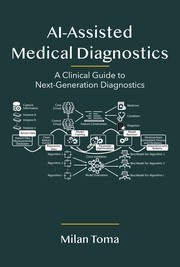
AI-Assisted Medical Diagnostics
First published 2025. Subjects: Artificial Intelligence, Machine Learning, Medical Diagnostics, Healthcare Delivery, Clinical Integration.

European Guidelines for Quality Assurance in Breast Cancer Sc...
Breast cancer is the most frequent cause of cancer-related deaths in women in Europe, and demographic trends indicate a continuing increa...
eBay marketplace picks
Marketplace Samples
Example marketplace items related to this page. Use the search link to explore similar finds on eBay.

Example eBay listing
A.I. Artificial Intelligence Original Movie Poster Signed By Jude Law
USD 125.00 | Shipping USD 25.00 | US
Example eBay listing
Artificial Intelligence D/S Original Movie Poster - 27 x 40"
USD 19.50 | Shipping USD 13.65 | US

Example eBay listing
612388 Artificial Intelligence Movie Science Fiction Drama Wall Print Poster
USD 22.95 | Shipping USD 12.95 | JP

Example eBay listing
Companion - Artificial Intelligence Dark Comedy Cinema Film - POSTER 20"x30"
USD 23.99 | Free shipping | US

Example eBay listing
A.I. Artificial Intelligence Movie Film Poster Art Print
GBP 4.99 | Free shipping | GB

Example eBay listing
A I Artificial Intelligence 6 Movie Poster Art Print Print Classic Rare Gallery
GBP 49.00 | Free shipping | GB

Example eBay listing
AI - Artificial Intelligence (Poster + Slipcase) Blu-Ray
GBP 10.49 | Free shipping | GB

Example eBay listing
A. I. Artificial Intelligence. Jude Law. Original UK Video Poster.
GBP 8.11 | Shipping GBP 3.38 | GB
Topic Tree