Within Tutor Crutches
False Mastery
Students can look fluent with AI help while losing the ability to recall, explain, or apply the same ideas without the tool.
On this page
- Why polished work can hide weak understanding
- Why novices are especially vulnerable
- How exams, recall and explanation reveal gaps
Page outline Jump by section
Introduction
AI tutors can make homework faster, smoother and more personalised. A student can now receive instant explanations, polished essay feedback, worked maths solutions, coding help and revision summaries at any hour of the day. In the optimistic vision of AI-enabled human flourishing, that could eventually make high-quality education vastly more abundant and accessible.
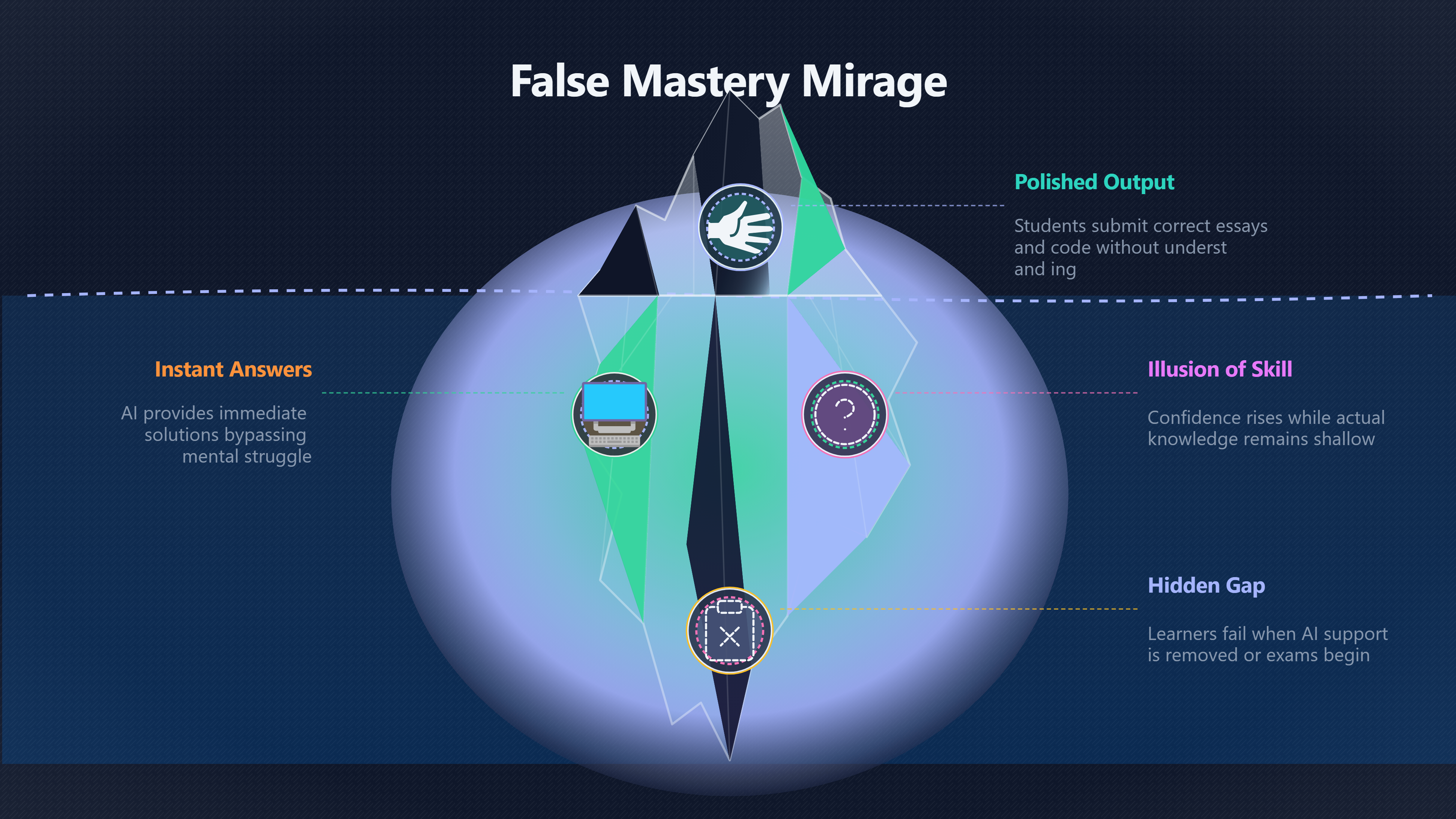
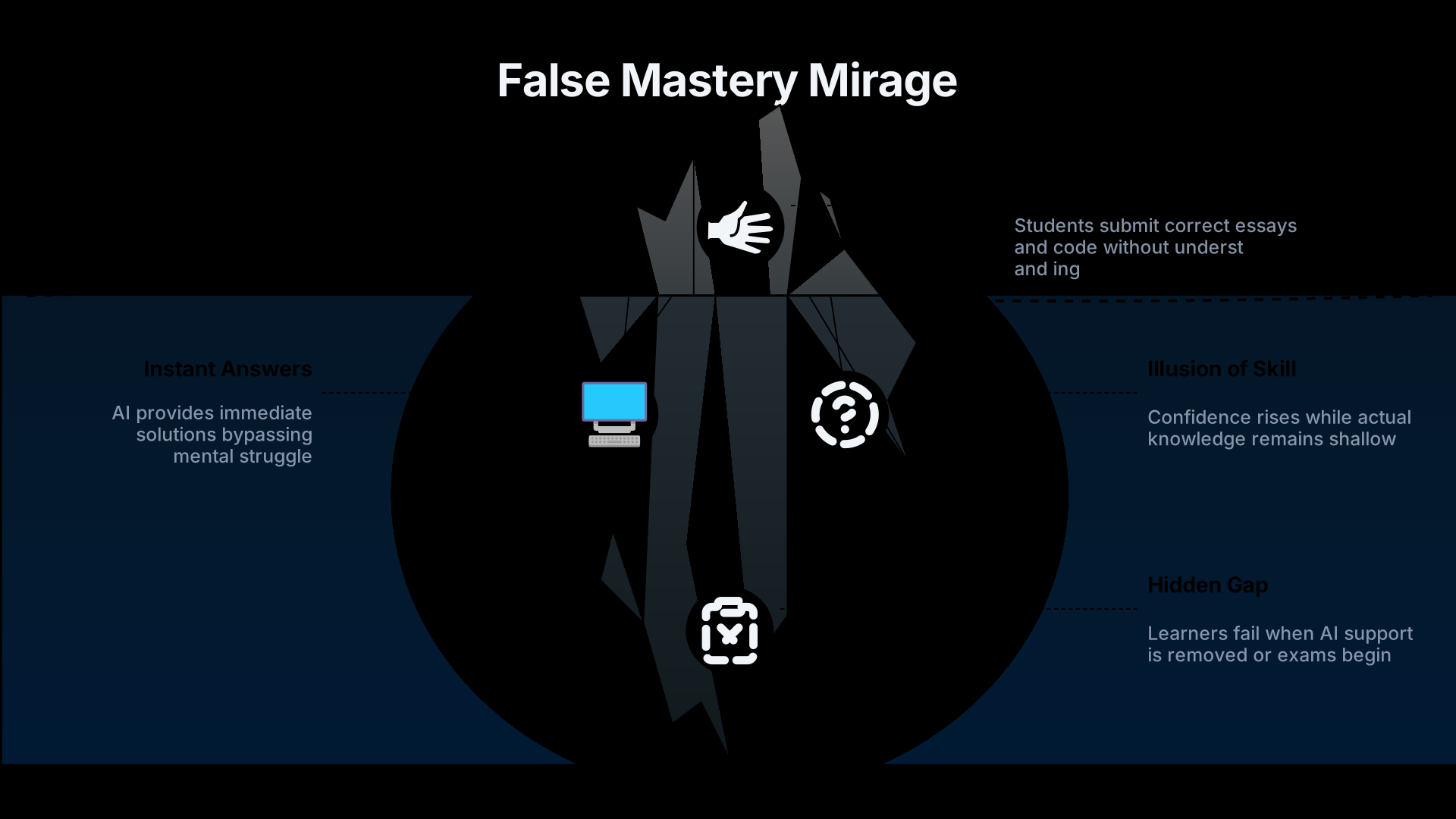 But there is a serious educational risk hidden inside this convenience: false mastery. Students can appear fluent, productive and capable while their actual understanding remains shallow. Homework gets completed, marks sometimes improve, and confidence rises — yet when the AI disappears, many learners struggle to explain concepts, solve unfamiliar problems, or recall material independently.
This matters far beyond classroom cheating debates. If advanced AI is meant to expand human capability on a civilisation-wide scale, education systems still need to produce people who can reason, remember, judge evidence and build new knowledge themselves. The danger is not merely that AI helps too much. It is that AI can create the illusion of competence before learning is secure. Researchers and education organisations increasingly describe this as a “mirage of false mastery”, especially among novice learners who are still building foundational mental models. [University of Technology Sydney]uts.edu.auUniversity of Technology SydneyArtificial intelligence, cognitive offloading and implications…February 26, 2026 — by JM Lodge · 2026 ·… [Zenodo]zenodo.orgZenodoThe Impact of Generative AI Tutors on Metacognitive…10 Apr 2026 — This study provides the first rigorous experimental evidence t…
Why polished homework can hide weak understanding
Traditional homework was always an imperfect measure of learning, but generative AI changes the gap between appearance and understanding dramatically. A student can now produce work that looks sophisticated even if they barely understand the underlying ideas.
An AI-assisted essay may contain strong structure, smooth transitions and relevant examples. A coding assignment may run correctly. A maths solution may arrive fully worked out in seconds. Teachers and parents naturally infer competence from these outputs because polished performance has historically been correlated with at least some underlying understanding.
The problem is that AI systems can now perform much of the intellectual labour directly.
A student using an AI tutor may:
- copy explanations without reconstructing them mentally;
- accept correct-looking reasoning without evaluating it;
- rely on generated examples instead of building their own;
- skip retrieval from memory because the answer is always available;
- complete assignments successfully while avoiding productive struggle.
The learner therefore experiences success without necessarily forming durable knowledge structures. Cognitive scientists often distinguish between performance and learning. Performance is what someone can do right now with support. Learning is what remains later without support.
Generative AI can improve the first while weakening the second.
A growing research literature now describes this as cognitive offloading: transferring mental work from the learner to the system. Researchers at the Organisation for Economic Co-operation and Development and the University of Technology Sydney warn that unstructured AI use can “short-circuit” the cognitive effort needed for deep learning and create “false mastery” in students. [University of Technology Sydney]uts.edu.auUniversity of Technology SydneyArtificial intelligence, cognitive offloading and implications…February 26, 2026 — by JM Lodge · 2026 ·… [OECD]oecd.org062a7394 enOECD Digital Education Outlook 2026 (EN)Balancing learning gains and performance with GenAI. The mirage of “false mastery” in AI-augmente…
This creates a strange educational situation. Students may sincerely believe they understand material because the interaction feels fluent and successful. The AI responds instantly, explains clearly, and removes confusion quickly. Yet fluency during assisted work is not the same as independent comprehension.
That distinction often becomes visible only later:
- during closed-book exams;
- in unfamiliar applications of knowledge;
- when students must explain ideas aloud;
- when they encounter errors the AI cannot fix automatically;
- or when they progress to more advanced material that depends on missing foundations.
Why novices are especially vulnerable
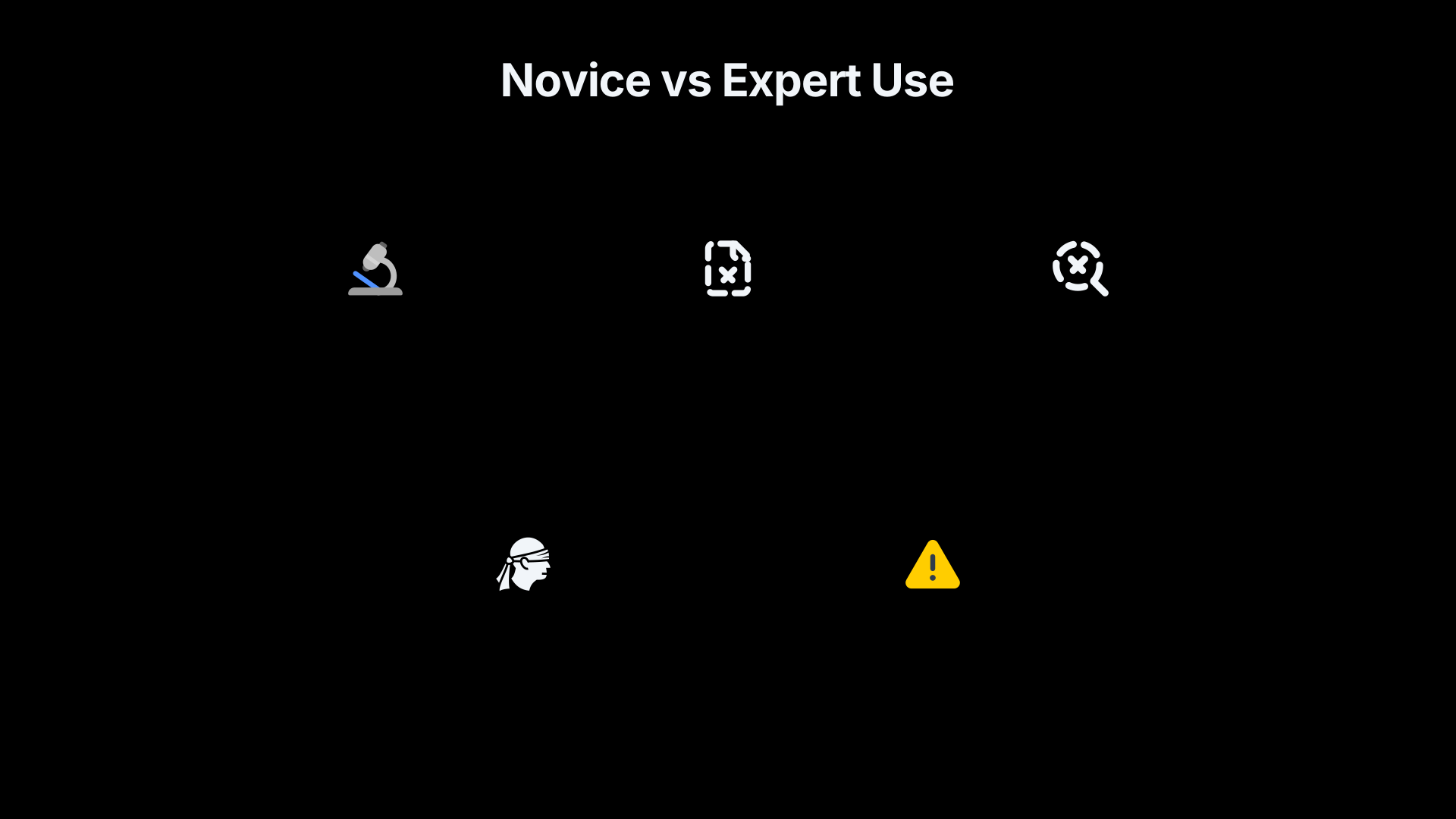
False mastery affects beginners far more than experts.
An experienced physicist can use AI productively because they already possess strong conceptual frameworks. They can spot mistakes, compare explanations, judge relevance and integrate new information into an existing knowledge structure.
Novices cannot do this reliably because they do not yet know what matters.
This is one of the most important educational distinctions in the AI debate. Beginners often lack:
- robust mental models;
- intuition about common errors;
- awareness of missing knowledge;
- the ability to verify AI outputs independently;
- and enough background knowledge to recognise plausible nonsense.
A 2026 study on generative AI tutors found evidence that AI support impaired “metacognitive monitoring” among novice learners — in other words, students became worse at judging what they actually knew. [Zenodo]zenodo.orgZenodoThe Impact of Generative AI Tutors on Metacognitive…10 Apr 2026 — This study provides the first rigorous experimental evidence t…
That matters because accurate self-assessment is central to real learning. Students who wrongly believe they understand material stop reviewing too early, practise less effectively, and fail to notice conceptual gaps.
Researchers increasingly worry that AI can therefore produce overconfident learners: students whose sense of competence rises faster than their actual capability. [ScienceDirect]sciencedirect.comScienceDirectA systematic review of the impact of GenAI on learning…by AA Adejumo · 2026 · Cited by 2 — Across these themes, recent st… [Springer Link]link.springer.comSpringer LinkA grounded theory of cognitive scaffolding and offloading in AI…by D Liu · 2026 · Cited by 2 — The integration of generat…
Programming education provides a particularly clear example. New AI coding tools can generate large amounts of working code from simple prompts. This dramatically lowers barriers to entry and can genuinely help learners experiment more quickly. But studies increasingly report a tension between immediate productivity and durable understanding.
Several recent papers describe novice “vibe coding” patterns where learners produce functioning software without understanding the logic well enough to debug or modify it independently later. One 2026 study described this as accumulating “epistemic debt”: apparent capability built on fragile understanding. In follow-up tasks where AI assistance was removed, performance collapsed sharply among unrestricted AI users. [arXiv]arxiv.orgarXivMitigating "Epistemic Debt" in Generative AI-Scaffolded Novice Programming using Metacognitive ScriptsFebruary 22, 2026…
The issue is not unique to coding. Similar patterns appear in writing, mathematics and language learning:
- students accept generated interpretations they could not defend themselves;
- memorisation weakens because retrieval feels unnecessary;
- AI-generated summaries replace active note-making;
- and learners become consumers of reasoning rather than producers of it.
Why exams, recall and explanation expose the gaps
False mastery often remains hidden until support disappears.
This is why many educators report a growing mismatch between AI-assisted coursework and independent assessment performance. Students may submit impressive homework but struggle in oral exams, handwritten tests or spontaneous explanation tasks.
The gap appears because real understanding usually requires three things AI can accidentally bypass:
Retrieval from memory
One of the strongest findings in cognitive science is that retrieval strengthens learning. Trying to recall information from memory helps stabilise knowledge and improve long-term retention.
AI systems reduce the need for retrieval because answers are always available immediately. Instead of reconstructing knowledge internally, students can simply re-query the system.
This creates an illusion of familiarity. Material looks recognisable while the learner is reading it, but cannot be reproduced independently later.
Transfer to new situations
Real mastery involves applying ideas in unfamiliar contexts. A student who genuinely understands algebra, evolution or essay structure can adapt that understanding to new problems.
AI-supported homework often masks weaknesses because the system handles adaptation itself. Students may therefore succeed on guided tasks but fail when variables change.
Several OECD discussions now emphasise that assessment systems focused only on polished outputs may fail to measure genuine understanding in AI-rich environments. [RM Compare]compare.rm.comRM CompareThe Future of Assessment: Key Takeaways from the OECD…24 Jan 2026 — By focusing on the trajectory of work rather than just a… [OECD]oecd.orghow to effectively use generative ai in educationOECDHow to effectively use Generative AI in education19 Jan 2026 — OECD explores how GenAI is reshaping education, highlighting opportuni…
Explanation and reasoning
A powerful test of understanding is explanation. Can the student explain why an answer works, defend it under questioning, or identify its limitations?
Many learners discover the weakness of AI-assisted understanding when asked to:
- explain steps verbally;
- justify assumptions;
- compare competing interpretations;
- or solve problems without prompts.
This is why some educators increasingly favour assessments that expose the reasoning process rather than only the final answer. Draft histories, oral examinations, iterative projects and reflective explanation tasks all make false mastery harder to hide. [RM Compare]compare.rm.comRM CompareThe Future of Assessment: Key Takeaways from the OECD…24 Jan 2026 — By focusing on the trajectory of work rather than just a…
The deeper risk for an AI-abundant future
The educational stakes extend beyond schools and universities.
The broader AI bloom vision depends partly on the idea that advanced AI could amplify human intelligence across society: helping more people learn science, medicine, engineering, governance and creative skills at high levels. If AI tutors genuinely expand understanding, civilisation could become far more capable.
But false mastery points toward a different possibility: a world where people appear highly capable while depending heavily on systems they do not deeply understand.
That distinction matters for long-term human flourishing because advanced societies still require:
- independent judgement;
- scientific reasoning;
- resilient expertise;
- and people capable of questioning automated outputs.
If AI systems become extremely capable while humans increasingly outsource foundational cognition, societies could gain productivity while losing intellectual resilience. Some researchers worry about “deskilling” effects similar to those seen in other forms of automation, except applied to reasoning itself. [hbsp.harvard.edu]hbsp.harvard.eduthe limits of gen ai educators in higher ed3 Critical Problems Gen AI Poses for Learning6 Aug 2024 — Research exploring human cognition suggests that generative AI could also harm… [University of Technology Sydney]uts.edu.auUniversity of Technology SydneyArtificial intelligence, cognitive offloading and implications…February 26, 2026 — by JM Lodge · 2026 ·…
This does not mean AI tutors are doomed to fail educationally. The same technologies can also support deep learning when designed differently.
The crucial distinction is between AI that:
- replaces cognitive effort,
and AI that:
- structures, guides and strengthens cognitive effort.
Purpose-built educational systems can prompt retrieval, delay answers, require explanation, generate adaptive practice and encourage reflection instead of shortcut completion. The OECD and multiple learning researchers increasingly argue that pedagogical design matters more than AI presence alone. OECD [International Education News]internationalednews.comInternational Education NewsScanning the global headlines for recent news on AI, schools…Feb 19, 2026 — “Education-focused AI tools gr…
In other words, the central question is not whether AI enters education. It already has. The real question is whether educational AI will optimise for effortless task completion or for durable human understanding.

What healthier AI-assisted learning may require
The strongest educational responses to false mastery do not usually involve banning AI entirely. Instead, they attempt to preserve the mental activities that produce real learning.
Several recurring ideas appear across current research and policy discussions:
- Delayed assistance rather than instant answers. Students may learn more when AI gives hints, questions or partial guidance before revealing solutions.
- Teach-back requirements. Some experimental systems require learners to explain concepts in their own words before advancing. Early evidence suggests this can reduce passive dependency. [arXiv]arxiv.orgarXivMitigating "Epistemic Debt" in Generative AI-Scaffolded Novice Programming using Metacognitive ScriptsFebruary 22, 2026…
- Retrieval-based learning. AI can generate quizzes, spaced repetition prompts and recall exercises instead of replacing memory work.
- Process-focused assessment. Oral exams, iterative drafts and reasoning traces make it easier to distinguish understanding from polished output.
- Metacognitive training. Students increasingly need explicit instruction in judging when they truly understand something versus merely recognising it.
- Purpose-built educational AI. OECD analyses suggest specialised systems designed around learning science may outperform general-purpose chatbots educationally because they scaffold thinking rather than simply deliver answers. [OECD]oecd.orgcomponent 6Reimagining Teaching in an Accelerating World3 Mar 2026 — But there is a lack of robust, large-scale independent evidence that proves AI…
This reflects a broader truth about AI and human flourishing. Technologies that maximise convenience are not always the same as technologies that maximise human capability.
A calculator can free mathematicians for higher reasoning once arithmetic foundations exist. But giving calculators to children before number sense develops can weaken the foundations themselves. The same tension now appears at much larger scale with generative AI.
False mastery is a warning, not a verdict
False mastery does not prove that AI tutors are harmful overall. It highlights a design and governance problem.
The optimistic case for AI-enabled education remains substantial. Personalised tutoring, translation, accessibility support, adaptive practice and low-cost educational access could genuinely expand human potential worldwide. Millions of people who currently lack quality instruction may gain it for the first time.
But the evidence emerging around AI-assisted homework suggests that learning cannot simply be measured by polished outputs or short-term task completion. Real education still depends on memory, explanation, judgement, error correction and intellectual struggle.
That is especially important in a future where AI systems may become vastly more capable than today. The more intelligent the tools become, the easier it may be to outsource cognition entirely. The challenge for educational systems is therefore not merely to integrate AI, but to preserve and expand human intellectual agency alongside it.
An AI-rich civilisation capable of genuine flourishing would likely require more than abundant answers. It would require people who still know how to think.
Endnotes
-
Source: uts.edu.au
Link: https://www.uts.edu.au/news/2026/03/experts-warn-unstructured-ai-use-in-schools-risks-cognitive-atrophy/contentassets/ai-cognitive-offloading-and-implications-for-education.pdfSource snippet
University of Technology SydneyArtificial intelligence, cognitive offloading and implications...February 26, 2026 — by JM Lodge · 2026 ·...
Published: February 26, 2026
-
Source: zenodo.org
Link: https://zenodo.org/records/19501204Source snippet
ZenodoThe Impact of Generative AI Tutors on Metacognitive...10 Apr 2026 — This study provides the first rigorous experimental evidence t...
-
Source: oecd.org
Title: 062a7394 en
Link: https://www.oecd.org/content/dam/oecd/en/publications/reports/2026/01/oecd-digital-education-outlook-2026_940e0dd8/062a7394-en.pdfSource snippet
OECD Digital Education Outlook 2026 (EN)Balancing learning gains and performance with GenAI. The mirage of “false mastery” in AI-augmente...
-
Source: oecd.org
Title: how to effectively use generative ai in education
Link: https://www.oecd.org/en/blogs/2026/01/how-to-effectively-use-generative-ai-in-education.htmlSource snippet
OECDHow to effectively use Generative AI in education19 Jan 2026 — OECD explores how GenAI is reshaping education, highlighting opportuni...
-
Source: sciencedirect.com
Link: https://www.sciencedirect.com/science/article/pii/S2666920X26000329Source snippet
ScienceDirectA systematic review of the impact of GenAI on learning...by AA Adejumo · 2026 · Cited by 2 — Across these themes, recent st...
-
Source: link.springer.com
Link: https://link.springer.com/article/10.1186/s40594-025-00592-wSource snippet
Springer LinkA grounded theory of cognitive scaffolding and offloading in AI...by D Liu · 2026 · Cited by 2 — The integration of generat...
-
Source: arxiv.org
Link: https://arxiv.org/abs/2602.20206Source snippet
arXivMitigating "Epistemic Debt" in Generative AI-Scaffolded Novice Programming using Metacognitive ScriptsFebruary 22, 2026...
Published: February 22, 2026
-
Source: hbsp.harvard.edu
Title: the limits of gen ai educators in higher ed
Link: https://hbsp.harvard.edu/inspiring-minds/the-limits-of-gen-ai-educators-in-higher-edSource snippet
3 Critical Problems Gen AI Poses for Learning6 Aug 2024 — Research exploring human cognition suggests that generative AI could also harm...
-
Source: oecd.org
Title: component 6
Link: https://www.oecd.org/en/publications/reimagining-teaching-in-an-accelerating-world_d0edfe8c-en/full-report/component-6.htmlSource snippet
Reimagining Teaching in an Accelerating World3 Mar 2026 — But there is a lack of robust, large-scale independent evidence that proves AI...
-
Source: oecd.org
Title: 69bd0a4a en
Link: https://www.oecd.org/content/dam/oecd/en/publications/reports/2025/12/ai-adoption-in-the-education-system_43251cf0/69bd0a4a-en.pdfSource snippet
False negatives can lead to failure to provide resources to those who...
-
Source: oecd.org
Title: trends shaping education 2025 ee6587fd en
Link: https://www.oecd.org/en/publications/trends-shaping-education-2025_ee6587fd-en.htmlSource snippet
Trends Shaping Education 202523 Jan 2025 — Trends Shaping Education is a triennial report exploring the social, technological, economic...
-
Source: gpseducation.oecd.org
Link: https://gpseducation.oecd.org/revieweducationpolicies/Source snippet
education policies - OECD: Future of education & skills3 Mar 2026 — AI resources will typically be embedded in adaptive learning systems...
-
Source: oecd.org
Link: https://www.oecd.org/content/dam/oecd/en/publications/reports/2025/09/the-impact-of-digital-technologies-on-students-learning_14095366/9997e7b3-en.pdfSource snippet
The impact of digital technologies on students' learning (EN)Artificial intelligence (AI) and learning analytics can transform education...
-
Source: oecd.org
Title: the impact of digital activities on children s lives 4df70664
Link: https://www.oecd.org/en/publications/how-s-life-for-children-in-the-digital-age_0854b900-en/full-report/the-impact-of-digital-activities-on-children-s-lives_4df70664.htmlSource snippet
The impact of digital activities on children's lives: How's Life...15 May 2025 — Educational enhancement: AI can provide personalised le...
Published: May 2025
-
Source: one.oecd.org
Link: https://one.oecd.org/document/EDU/EDPC%282023%2911/en/pdfSource snippet
AI in the classroom: From hype to reality?20 Jul 2023 — Together with sensors and learning management systems, AI can give teachers a rea...
-
Source: oecd.org
Title: component 3
Link: https://www.oecd.org/en/publications/reimagining-teaching-in-an-accelerating-world_d0edfe8c-en/full-report/component-3.htmlSource snippet
Editorial: Reimagining Teaching in an Accelerating World3 Mar 2026 — As global challenges, artificial intelligence (AI) and other technol...
-
Source: arxiv.org
Link: https://arxiv.org/html/2604.25648v1Source snippet
Chapter 1 Curiosity and Metacognition: Towards a Unified...28 Apr 2026 — First, metacognitive processing involves actively assessing one...
-
Source: compare.rm.com
Link: https://compare.rm.com/blog/2026/01/the-future-of-assessment-key-takeaways-from-the-oecd-digital-education-outlook-2026/Source snippet
RM CompareThe Future of Assessment: Key Takeaways from the OECD...24 Jan 2026 — By focusing on the trajectory of work rather than just a...
-
Source: internationalednews.com
Link: https://internationalednews.com/2026/02/19/scanning-the-global-headlines-for-recent-news-on-ai-schools-and-education-rapid-growth-in-uses-users-and-concerns/Source snippet
International Education NewsScanning the global headlines for recent news on AI, schools...Feb 19, 2026 — “Education-focused AI tools gr...
-
Source: thirdspacelearning.com
Title: cognitive offloading
Link: https://thirdspacelearning.com/blog/cognitive-offloading/Source snippet
and AI in Schools: What It Is And Why...1 Apr 2026 — This article outlines the difference between cognitive offloading and cognitive out...
Additional References
-
Source: learnovatecentre.org
Link: https://learnovatecentre.org/wp-content/uploads/2025/02/Generative-AI-and-Metacognition.pdfSource snippet
Generative AI and MetacognitionThis report explores how Generative AI (GenAI) could be used to foster learner metacognition, which is the...
-
Source: aicerts.ai
Link: https://www.aicerts.ai/news/oecd-report-warns-ai-education-gains-vanish-in-exams/Source snippet
OECD Report Warns AI Education Gains Vanish in Exams2 days ago — OECD finds AI Education gains in practice vanish in exams. Learn evidenc...
-
Source: linkedin.com
Link: https://www.linkedin.com/posts/45deg_the-oecd-just-coined-a-phrase-for-what-ai-activity-7431694223957118976-va8lSource snippet
OECD: AI's 'Mirage of False Mastery' in Learningthe OECD just coined a phrase for what AI does to learning: 'mirage of false mastery.' st...
-
Source: linkedin.com
Link: https://www.linkedin.com/posts/ekalavyachaudhuri_ai-education-edtech-activity-7458810656725680128-MIkmSource snippet
Students Using AI for False Mastery in EducationThere is a real concern that overreliance on AI could hinder our #imagination, foster a c...
-
Source: compare.rm.com
Link: https://compare.rm.com/blog/2025/09/cognitive-offloading-is-realand-new-learners-are-most-at-risk-how-rm-compare-keeps-the-thinking-human/Source snippet
Offloading Is Real—And New Learners Are Most...24 Sept 2025 — Experiments have demonstrated that when generative AI provides answers—whe...
-
Source: linkedin.com
Link: https://www.linkedin.com/posts/study-right-consultancy_onlineeducation-aiineducation-learning-activity-7425268444859756544-w_iSSource snippet
OECD Warns of AI-Generated 'False Mastery' in Online...5 Feb 2026 — AI is creating “false mastery” — online learning must evolve A warni...
-
Source: americasucceeds.org
Title: what the oecd says about ai in education and why it matters for durable skills
Link: https://americasucceeds.org/what-the-oecd-says-about-ai-in-education-and-why-it-matters-for-durable-skillsSource snippet
What the OECD Says About AI in Education, and Why It...Feb 3, 2026 — The report explores how generative AI can transform teaching and le...
-
Source: scholarlyteacher.com
Title: teaching students ai strategies to enhance metacognitive processing
Link: https://www.scholarlyteacher.com/post/teaching-students-ai-strategies-to-enhance-metacognitive-processingSource snippet
Teaching Students AI Strategies to Enhance Metacognitive...8 May 2025 — To foster deeper learning, students can develop skills in the th...
Published: May 2025
-
Source: drphilippahardman.substack.com
Title: The Impact of Gen AI on Human Learning: a research
Link: https://drphilippahardman.substack.com/p/the-impact-of-gen-ai-on-human-learningSource snippet
summaryResearch Question: How does the use of generative AI tools impact learners' motivation, self-regulated learning (SRL) processes, and...
-
Source: facebook.com
Title: AI, which “offers the illusion of mastery without the work of learning.Read more
Link: https://www.facebook.com/groups/703007927897194/posts/1497646605099985/Source snippet
Here's a blogpost I wrote that makes a case for "strategic...Cognitive Offloading: Learning more by doing less In the AI-rich...
Amazon book picks
Further Reading
Books and field guides related to False Mastery. Use these as the next step if you want deeper reading beyond the article.
AI and the Future of Education
Clear away the fog surrounding AI in education—and regain your peace of mind Among teachers, there is a cloud of rumors, confusion, and f...

Artificial Intelligence in Education
This work reports on research into intelligent systems, models, and architectures for educational computing applications. It covers a wid...

The AI Classroom
What is the role of educators with the rise of the artificial intelligence era? We are entering an unprecedented era of innovation, where...
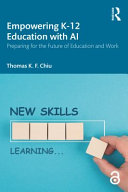
Empowering K-12 Education with AI
Thomas Chiu's book is one of the first to look at the impacts of artificial intelligence (AI) on K-12 education in two areas: AI educatio...
eBay marketplace picks
Marketplace Samples
Example marketplace items related to this page. Use the search link to explore similar finds on eBay.
Example eBay listing
A.I. Artificial Intelligence Original Movie Poster Signed By Jude Law
USD 125.00 | Shipping USD 25.00 | US
Example eBay listing
Artificial Intelligence D/S Original Movie Poster - 27 x 40"
USD 19.50 | Shipping USD 13.65 | US

Example eBay listing
612388 Artificial Intelligence Movie Science Fiction Drama Wall Print Poster
USD 22.95 | Shipping USD 12.95 | JP

Example eBay listing
Companion - Artificial Intelligence Dark Comedy Cinema Film - POSTER 20"x30"
USD 23.99 | Free shipping | US

Example eBay listing
R2 D2 Style Robot Metal Tin Sign 12x8 Sci Fi Droid Wall Decor Retro Art
GBP 12.50 | Shipping GBP 13.72 | US

Example eBay listing
traditional home decor atomic sci-fi Will Robots Rule the World Telsa tin sign
GBP 17.41 | Shipping GBP 19.66 | US

Example eBay listing
Robot Chicken space sci fi 2007 metal tin sign house decor
GBP 17.41 | Shipping GBP 19.66 | US
Topic Tree