Within Disaster maps
Hurricane drone imagery
Hurricane drone deployments show how AI can turn overwhelming image volumes into faster building-damage clues for responders.
On this page
- Why drone data overwhelms analysts
- What building damage models can flag
- What the hurricane cases prove and miss
Page outline Jump by section
Introduction
Hurricanes now generate more visual information than emergency teams can realistically absorb during the first days after landfall. Drones, aircraft, satellites, and mobile crews can capture tens or even hundreds of gigabytes of imagery in a single operational period. The bottleneck is no longer collecting pictures. It is turning those pictures into decisions quickly enough to matter.
 Recent hurricane deployments in the United States have become an important test case for AI-assisted disaster response. Researchers and emergency managers used machine-learning systems to scan drone imagery for damaged buildings, blocked roads, and heavily affected neighbourhoods after storms including Hurricanes Debby, Helene, Harvey, Ian, Ida, and Michael. The results did not prove that AI can run disaster response on its own. But they did show something more practical and arguably more important: AI can help humans cope with information overload during chaotic emergencies. [AAAI Publications]ojs.aaai.orgAAAI PublicationsDeploying Rapid Damage Assessments from sUAS…by T Manzini · 2026 · Cited by 1 — The best performing model was deploye… 2arXiv
Within the broader idea of AI improving civilisation-scale coordination, hurricane drone mapping is one of the clearest near-term examples of machine intelligence expanding human capacity rather than replacing it. It offers a glimpse of what happens when computers become good at rapidly organising reality into operationally useful knowledge.
Why drone data overwhelms analysts
Drone imagery is unusually valuable after hurricanes because it captures damage at a level satellites often cannot. Responders can inspect individual roofs, flooded streets, collapsed walls, washed-out bridges, debris piles, and isolated rural properties. Drones also work below cloud cover and can be deployed locally when airports or larger aircraft operations are disrupted.
The problem is scale.
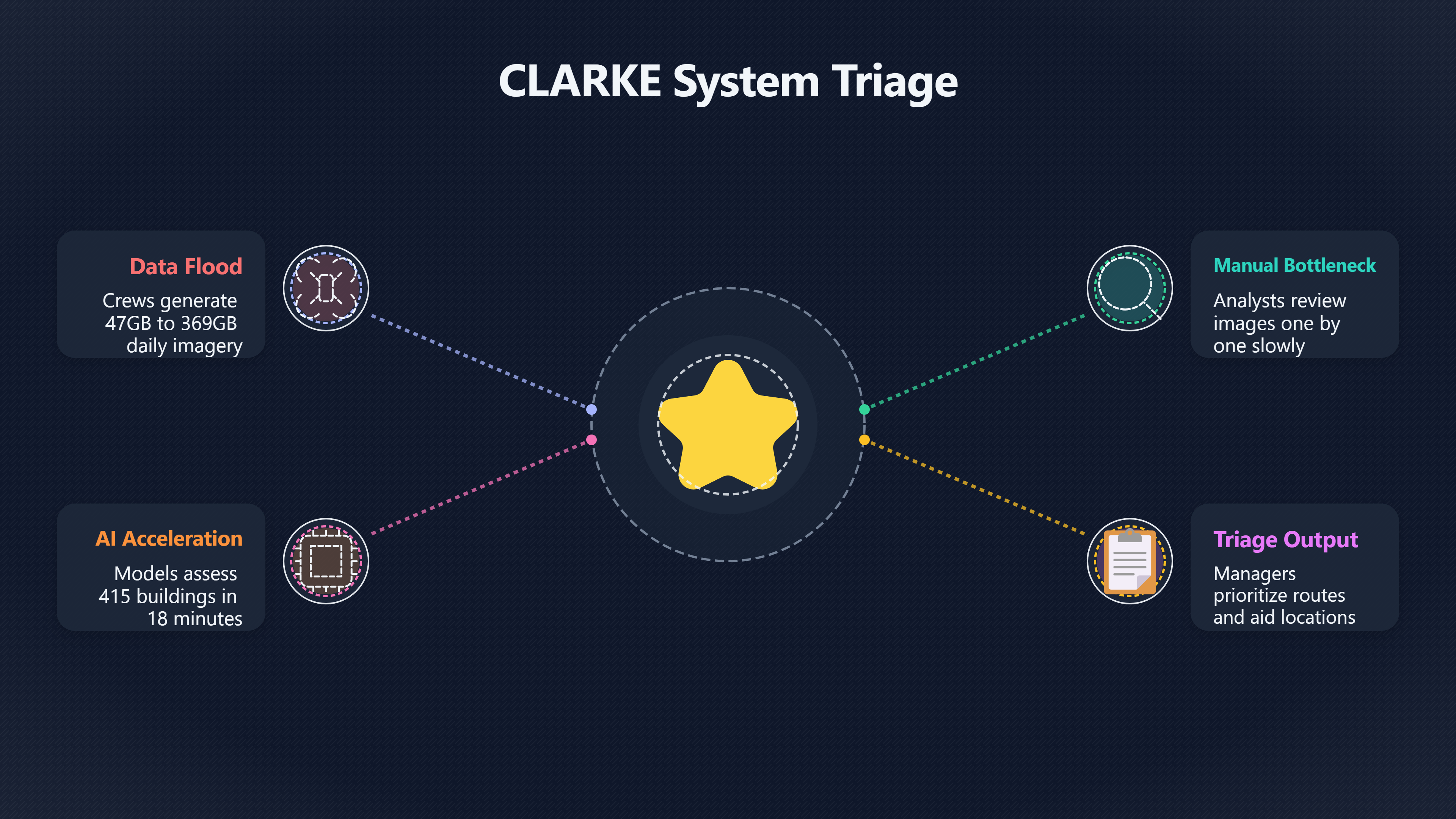
Operational teams responding to Hurricanes Debby and Helene reported that drone crews generated between 47GB and 369GB of imagery per day. That volume exceeded what specialists on the ground could reasonably transmit, review, and classify fast enough for time-sensitive emergency decisions. [arXiv]arxiv.orgSource details in endnotes.
Historically, this work depended heavily on manual review. Analysts would inspect images one by one, compare them with pre-storm conditions, and assign damage categories. That approach can work for smaller incidents. During large hurricanes affecting multiple counties or states, it becomes a race against time.
Several practical constraints make the problem harder:
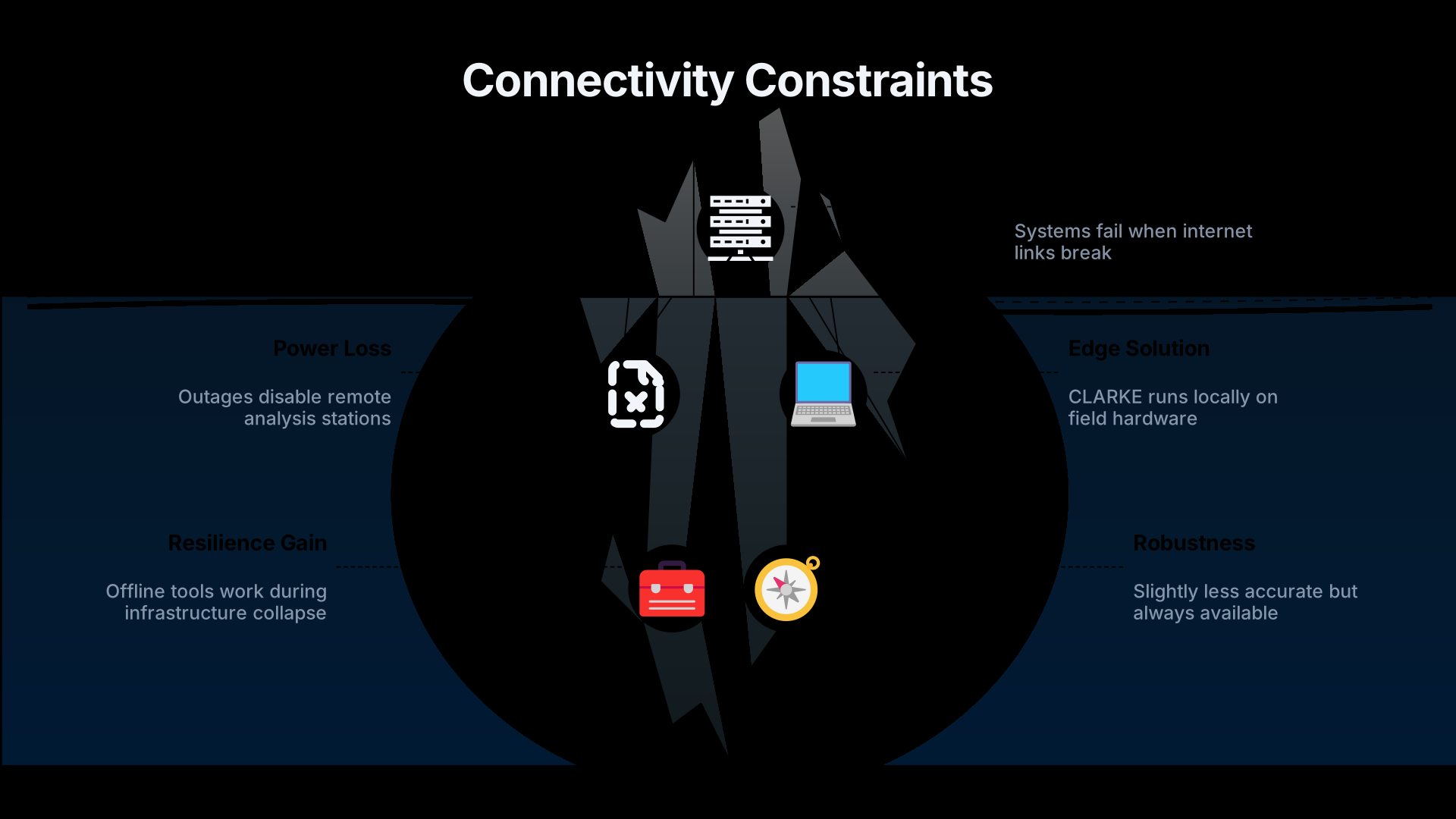
- Connectivity failures: Rural areas often lose internet and mobile service after hurricanes, limiting the ability to upload imagery for remote analysis. [EurekAlert!]eurekalert.orgEurekAlert!AI turns drone footage into disaster response maps in…30 Jul 2025 — The system was trained on drone images from over 21,000…
- Short operational windows: Search-and-rescue priorities change rapidly during the first 24 to 72 hours.
- Human fatigue: Analysts reviewing thousands of images under pressure become slower and less consistent.
- Mixed imagery quality: Drone footage may vary in altitude, angle, lighting, resolution, and geolocation accuracy.
- Uneven damage patterns: Hurricanes produce scattered destruction. One street may appear intact while another nearby is devastated.
The sheer quantity of imagery created a lesson many disaster teams did not fully anticipate: collecting more data is not automatically useful unless systems exist to triage it quickly.
That lesson matters beyond hurricanes. It points toward a wider pattern emerging across AI-enabled systems. Modern societies increasingly generate more raw information than humans can interpret unaided. AI’s practical value often comes not from producing new data, but from compressing overwhelming complexity into actionable summaries.
What building-damage models can flag
The most successful hurricane-response systems did not attempt to “understand” disasters in a human sense. Instead, they performed narrower but operationally valuable tasks.
Computer vision models trained on hurricane imagery learned to identify visual patterns associated with damage categories such as:
- intact roofs
- partial roof failure
- collapsed structures
- severe debris fields
- flood impacts
- road obstruction
- destroyed infrastructure
The CLARKE system developed through Texas A&M and collaborating institutions became one of the best documented operational examples. It was trained using more than 21,000 labelled building examples from ten major disasters, including Hurricanes Harvey, Ian, Ida, Michael, and Idalia. [Texas A&M Stories]stories.tamu.eduai turns drone footage into disaster response maps in minutesTexas A&M StoriesAI Turns Drone Footage Into Disaster Response Maps In…28 Jul 2025 — A system developed at Texas A&M uses drone imager… 2arXiv
The training process itself revealed an important operational challenge: disaster imagery is messy. Buildings appear at inconsistent angles. Floodwater obscures structures. Vegetation hides damage. Wind and rain reduce image quality. Researchers had to align aerial imagery carefully with mapped building footprints before models could classify structures reliably. [arXiv]arxiv.orgSource details in endnotes.
Even then, the systems were usually designed as prioritisation tools rather than final authorities.
During deployments after Hurricanes Debby and Helene, AI models assessed 415 buildings in about 18 minutes. Researchers reported that the systems could process large neighbourhoods dramatically faster than manual workflows alone. [AAAI Publications]ojs.aaai.orgAAAI PublicationsDeploying Rapid Damage Assessments from sUAS…by T Manzini · 2026 · Cited by 1 — The best performing model was deploye… 2arXiv
What mattered operationally was not perfect accuracy. It was faster situational awareness.
Emergency managers often need answers such as:
- Which communities appear worst hit?
- Which roads may be passable?
- Where should reconnaissance teams go first?
- Which neighbourhoods may require evacuation support or medical access?
- Which regions can wait?
In that sense, the AI acted less like an autonomous responder and more like a triage assistant for human coordination.
The hurricane cases exposed the importance of edge AI
One of the less obvious lessons from hurricane deployments was that cloud-based AI alone is insufficient during disasters.
Many hurricane-affected regions lose connectivity precisely when rapid analysis becomes most important. Systems depending on high-bandwidth uploads to remote servers can fail operationally even if their underlying models perform well in laboratory conditions.
Researchers working on hurricane deployments increasingly emphasised “edge” capability: running AI locally on laptops or field hardware near the disaster zone. The CLARKE system, for example, was designed to operate in disconnected environments rather than requiring permanent cloud access. [Carnegie Mellon University]cmu.eduCarnegie Mellon UniversityAI Decision Support for Rapid Post-Disaster Damage…AI-SDM's CLARKE system uses the world's largest drone dis…
That design choice reflects a broader shift in practical AI thinking. In many high-stakes environments, resilience matters as much as raw model capability.
An AI system that is slightly less accurate but works offline during infrastructure collapse may be more valuable than a more sophisticated system that depends on stable internet access.
This is particularly relevant for climate-related disasters, where power outages and damaged communications networks are common. Hurricane response showed that future humanitarian AI systems may need to prioritise robustness, portability, and operational simplicity over benchmark performance alone.
What the hurricane cases proved
The hurricane deployments demonstrated several things clearly.
AI can reduce analysis delays
The strongest evidence concerns speed.
Drone programmes had already solved the problem of rapid image collection. AI helped solve the next bottleneck: identifying useful information quickly enough to influence operations.
In practice, this meant responders could receive preliminary building-damage assessments within minutes or hours instead of waiting days for full manual review. [AAAI Publications]ojs.aaai.orgAAAI PublicationsDeploying Rapid Damage Assessments from sUAS…by T Manzini · 2026 · Cited by 1 — The best performing model was deploye…
That time compression matters because disaster mortality and suffering are often shaped by delays in coordination rather than by total resource scarcity alone.
AI works best as decision support
The hurricane deployments repeatedly reinforced a pattern seen in many operational AI systems: humans remained central.
Emergency managers still interpreted maps, prioritised routes, validated suspicious outputs, coordinated agencies, and decided where aid should go. AI accelerated interpretation rather than replacing command structures.
This matters for broader debates about AI abundance and human flourishing. Many valuable AI systems may function less as autonomous actors and more as tools that dramatically expand the amount of complexity humans can handle.
Large datasets matter
The operational systems depended on years of accumulated imagery from multiple disasters. [arXiv]arxiv.orgSource details in endnotes.
That highlights a wider feature of modern AI progress: capability often emerges from combining large-scale data collection, infrastructure, institutional cooperation, and iterative deployment rather than from a single breakthrough model.
Hurricanes Harvey, Ian, Ida, Michael, Laura, and Helene collectively became part of the training history for future response systems.
AI coordination tools are becoming infrastructure
Disaster imagery systems increasingly resemble public coordination infrastructure rather than isolated research projects.
NOAA’s emergency imagery operations, NASA disaster mapping support, state emergency agencies, universities, and humanitarian responders now form a connected ecosystem in which imagery and AI analysis feed into shared operational maps. [National Ocean Service]oceanservice.noaa.govNational Ocean ServiceHurricane Helene Damage Assessment ImageryThe National Geodetic Survey (NGS) is collecting aerial damage assessment… [National Ocean Service]oceanservice.noaa.govNational Ocean ServiceHurricane Helene Damage Assessment ImageryThe National Geodetic Survey (NGS) is collecting aerial damage assessment…
That institutional layering may matter more in the long run than any single algorithm.
What the hurricane cases did not prove
The hurricane deployments were important, but they also revealed clear limitations.
Faster maps do not automatically produce fair outcomes
AI can identify damaged neighbourhoods quickly without guaranteeing that aid distribution becomes equitable.
Poorer regions may still receive slower assistance. Rural communities may remain underserved. Political incentives may still shape recovery priorities. Disaster coordination remains partly a governance problem rather than merely an information problem.
This is a recurring issue in broader AI bloom debates. Better intelligence alone does not guarantee better institutions or fair distribution.

Models remain vulnerable to uncertainty
Hurricane damage classification remains difficult.
Floodwater can hide structural failure. Trees can obscure roofs. Debris may resemble collapsed buildings. Different camera angles can change classifications. Models trained on one region may generalise poorly elsewhere.
Researchers increasingly emphasise uncertainty estimation and human review because operational trust matters more than headline accuracy figures. [Carnegie Mellon University]cmu.eduCarnegie Mellon UniversityAI Decision Support for Rapid Post-Disaster Damage…AI-SDM's CLARKE system uses the world's largest drone dis…
Drone imagery is not the whole disaster picture
Aerial imagery captures visible destruction well. It does not automatically reveal:
- medical needs
- social vulnerability
- evacuation failures
- power restoration status
- drinking water contamination
- psychological trauma
- displacement patterns
Some newer systems attempt to combine imagery with structured information such as wind speed, building age, flood exposure, and infrastructure data. [arXiv]arxiv.orgSource details in endnotes.
That shift suggests an important lesson: future disaster AI may become increasingly multimodal, integrating visual, environmental, logistical, and demographic information into unified operational systems.
AI can also amplify misinformation
The hurricane era has also revealed a darker parallel trend: synthetic and misleading imagery spreads rapidly during disasters. [Facebook]facebook.comFacebookThe Impact of AI Created Images on Hurricane Helene…It is easy to get caught up in the emotion of sharing an image that seems…
As generative AI improves, emergency responders may face a dual challenge:
- extracting reliable information from authentic imagery
- filtering fabricated or manipulated media circulating online
That means the future of AI-assisted disaster coordination may depend partly on trust infrastructure and verification systems, not only on detection models.
Why this matters beyond hurricanes
Hurricane drone deployments are a narrow use case, but they illuminate a much larger possibility.
Human societies increasingly struggle with coordination under conditions of overwhelming complexity. Climate disasters, pandemics, infrastructure failures, supply-chain shocks, and large-scale humanitarian crises all generate more information than human teams can process unaided.
The hurricane cases suggest that AI’s long-term value may partly come from increasing civilisation’s ability to perceive and organise reality quickly enough to act coherently.
That does not automatically lead to an abundant or flourishing future. Better coordination tools can still be captured by unequal institutions, weakened by political conflict, or undermined by misinformation. Yet the deployments offer a grounded example of a broader pattern often discussed more abstractly in debates about advanced AI: machine intelligence can extend the practical cognitive reach of human organisations.
In hurricanes, that meant turning impossible volumes of drone imagery into maps responders could actually use.
At larger scales, similar coordination gains could eventually affect public health, climate adaptation, infrastructure management, scientific collaboration, and other systems where human attention is the scarce resource.
Endnotes
-
Source: ojs.aaai.org
Link: https://ojs.aaai.org/index.php/AAAI/article/view/41474Source snippet
AAAI PublicationsDeploying Rapid Damage Assessments from sUAS...by T Manzini · 2026 · Cited by 1 — The best performing model was deploye...
-
Source: arxiv.org
Link: https://arxiv.org/abs/2511.03132 -
Source: arxiv.org
Link: https://arxiv.org/abs/2407.17673 -
Source: eurekalert.org
Link: https://www.eurekalert.org/news-releases/1093146Source snippet
EurekAlert!AI turns drone footage into disaster response maps in...30 Jul 2025 — The system was trained on drone images from over 21,000...
-
Source: arxiv.org
Link: https://arxiv.org/pdf/2511.03132Source snippet
arXivDeploying Rapid Damage Assessments from sUAS...by T Manzini · 2025 · Cited by 1 — Across both Hurricanes, 415 buildings were as- se...
-
Source: oceanservice.noaa.gov
Link: https://oceanservice.noaa.gov/news/sep24/ngs-storm-imagery-helene.htmlSource snippet
National Ocean ServiceHurricane Helene Damage Assessment ImageryThe National Geodetic Survey (NGS) is collecting aerial damage assessment...
-
Source: oceanservice.noaa.gov
Title: emergency response imagery
Link: https://oceanservice.noaa.gov/hazards/emergency-response-imagery.htmlSource snippet
National Ocean ServiceNOAA's Emergency Response Imagery21 Aug 2024 — The Emergency Response Imagery website provides easy access to aeria...
-
Source: appliedsciences.nasa.gov
Title: hurricane helene 2024
Link: https://appliedsciences.nasa.gov/what-we-do/disasters/disasters-activations/hurricane-helene-2024Source snippet
NASA Applied SciencesHurricane Helene 202425 Sept 2024 — True-color imagery of Hurricane Helene off the coast of Florida on Sept. 26, 202...
-
Source: arxiv.org
Link: https://arxiv.org/abs/2404.07399 -
Source: arxiv.org
Link: https://arxiv.org/abs/2310.01565 -
Source: facebook.com
Link: https://www.facebook.com/groups/533426456139200/posts/535860629229116/Source snippet
FacebookThe Impact of AI Created Images on Hurricane Helene...It is easy to get caught up in the emotion of sharing an image that seems...
-
Source: ojs.aaai.org
Link: https://ojs.aaai.org/index.php/AAAI/article/view/41474/45435Source snippet
Rapid Damage Assessments from sUAS...by T Manzini · 2026 — This paper presents the first AI/ML system for automat- ing building damage a...
-
Source: facebook.com
Link: https://www.facebook.com/notredame/posts/hurricanes-are-among-the-most-destructive-natural-disasters-and-while-tracking-m/1244380904393411/Source snippet
University of Notre DameAI-powered drones now lead the way in disaster zones. In a powerful shift for emergency response, researchers hav...
-
Source: stories.tamu.edu
Title: ai turns drone footage into disaster response maps in minutes
Link: https://stories.tamu.edu/news/2025/07/28/ai-turns-drone-footage-into-disaster-response-maps-in-minutes/Source snippet
Texas A&M StoriesAI Turns Drone Footage Into Disaster Response Maps In...28 Jul 2025 — A system developed at Texas A&M uses drone imager...
-
Source: cmu.edu
Link: https://www.cmu.edu/ai-sdm/research/research-highlights/bda-rda-models.htmlSource snippet
Carnegie Mellon UniversityAI Decision Support for Rapid Post-Disaster Damage...AI-SDM's CLARKE system uses the world's largest drone dis...
-
Source: esri-disasterresponse.hub.arcgis.com
Link: https://esri-disasterresponse.hub.arcgis.com/pages/imagerySource snippet
| Esri Disaster Response Program - ArcGIS OnlineThis imagery was acquired by the NOAA Remote Sensing Division to support NOAA homeland se...
Additional References
-
Source: researchgate.net
Link: https://www.researchgate.net/figure/Comparison-of-spatial-resolution-of-imagery-captured-during-Hurricane-Helene-Both-images_fig3_392918016Source snippet
Comparison of spatial resolution of imagery captured...This paper details four principal challenges encountered with machine learning (M...
-
Source: newswise.com
Link: https://www.newswise.com/articles/qa-new-dataset-provides-a-robust-picture-of-hurricane-helene-s-destruction-and-could-help-design-more-resilient-communitiesSource snippet
Q&A: New Dataset Provides a Robust Picture of Hurricane...4 Oct 2024 — Q&A: New Dataset Provides a Robust Picture of Hurricane Helene's...
-
Source: scholars.esri.ca
Link: https://scholars.esri.ca/wp-content/uploads/2022/04/Maja-Kucharczyk-Poster.pdfSource snippet
2) using two test images: one captured within the general training area in Sint Maarten by the same drone platform and...
-
Source: youtube.com
Link: https://www.youtube.com/watch?v=t-OCZKVibOQSource snippet
AI Drones Assess Hurricane DamageRobin Murphy and her NSF supported research team at Texas A&M University are using drones and harnessing...
-
Source: ascelibrary.org
Link: https://ascelibrary.org/doi/10.1061/%28ASCE%29CP.1943-5487.0001061Source snippet
with drone mission planning for disaster response operations.Read more...
-
Source: reddit.com
Link: https://www.reddit.com/r/EmergencyManagement/comments/1q0i6xb/people_working_in_disaster_response_how_useful/Source snippet
sponse systems (fires, floods, earthquakes, industrial incidents...
-
Source: techxplore.com
Title: 2025 07 ai tool drone images instant
Link: https://techxplore.com/news/2025-07-ai-tool-drone-images-instant.htmlSource snippet
AI tool transforms drone images into instant disaster area...31 Jul 2025 — A tool developed at Texas A&M University is set to transform...
-
Source: flypix.ai
Title: building damage assessment
Link: https://flypix.ai/building-damage-assessment/Source snippet
AI - Driven Building Damage Assessment17 Feb 2025 — This article explores how machine learning models, satellite imagery, and structural...
-
Source: datasmart.hks.harvard.edu
Title: [ai disaster]({{ ‘ai-bloom-abun/ai-bloom-abun-98d3a6-ai-coordinati-e1e5d8-ai-disaster-m-584aa7/’ | relative_url }}) response data
Link: https://datasmart.hks.harvard.edu/ai-disaster-response-dataSource snippet
AI Helps Cities Manage Disaster Response Data28 Apr 2026 — Learn how AI tools help local emergency managers process drone imagery and mak...
-
Source: sciencedirect.com
Link: https://www.sciencedirect.com/science/article/abs/pii/S1474034619305828Source snippet
Convolutional neural networks for object detection in aerial...by Y Pi · 2020 · Cited by 363 — These models are capable of recognizing c...
Amazon book picks
Further Reading
Books and field guides related to Hurricane drone imagery. Use these as the next step if you want deeper reading beyond the article.
Disaster response and recovery
First published 2007. Subjects: Disaster relief, SOCIAL SCIENCE / Sociology / General, Emergency management.
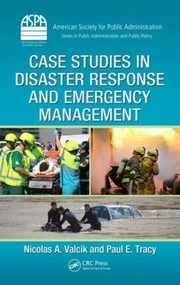
Case Studies In Disaster Response And Emergency Management
First published 2013. Subjects: Emergency management, Case studies, POLITICAL SCIENCE / Public Policy / City Planning & Urban Development...

Global Disaster Response Guide
This book provides adventurous facts and crucial information about disasters throughout history and in the present day. We shine a light...
Disaster response
First published 2009. Subjects: Disaster relief, Emergency management.
eBay marketplace picks
Marketplace Samples
Example marketplace items related to this page. Use the search link to explore similar finds on eBay.

Example eBay listing
A.I. Artificial Intelligence Original Movie Poster Signed By Jude Law
USD 125.00 | Shipping USD 25.00 | US

Example eBay listing
Artificial Intelligence D/S Original Movie Poster - 27 x 40"
USD 19.50 | Shipping USD 13.65 | US

Example eBay listing
612388 Artificial Intelligence Movie Science Fiction Drama Wall Print Poster
USD 22.95 | Shipping USD 12.95 | JP

Example eBay listing
Companion - Artificial Intelligence Dark Comedy Cinema Film - POSTER 20"x30"
USD 23.99 | Free shipping | US

Example eBay listing
A.I. Artificial Intelligence Movie Film Poster Art Print
GBP 4.99 | Free shipping | GB

Example eBay listing
A.I. - Artificial Intelligence Movie/Film Poster Art PICTURE / PRINT 9" x 8"
GBP 2.49 | Shipping GBP 1.75 | GB

Example eBay listing
A I Artificial Intelligence 6 Movie Poster Art Print Print Classic Rare Gallery
GBP 49.00 | Free shipping | GB

Example eBay listing
Artificial Intelligence Framed Wall Art Poster Canvas Print Picture
GBP 8.99 | Shipping GBP 4.99 | GB
Topic Tree