Within Molecular Binding
Faster Drug Discovery?
AlphaFold 3 may help researchers narrow drug candidates faster, but binding predictions still need laboratory proof.
On this page
- How protein ligand prediction narrows the search space
- Where docking gains can save time and experiments
- Why predicted binding is not the same as a medicine
Page outline Jump by section
Introduction
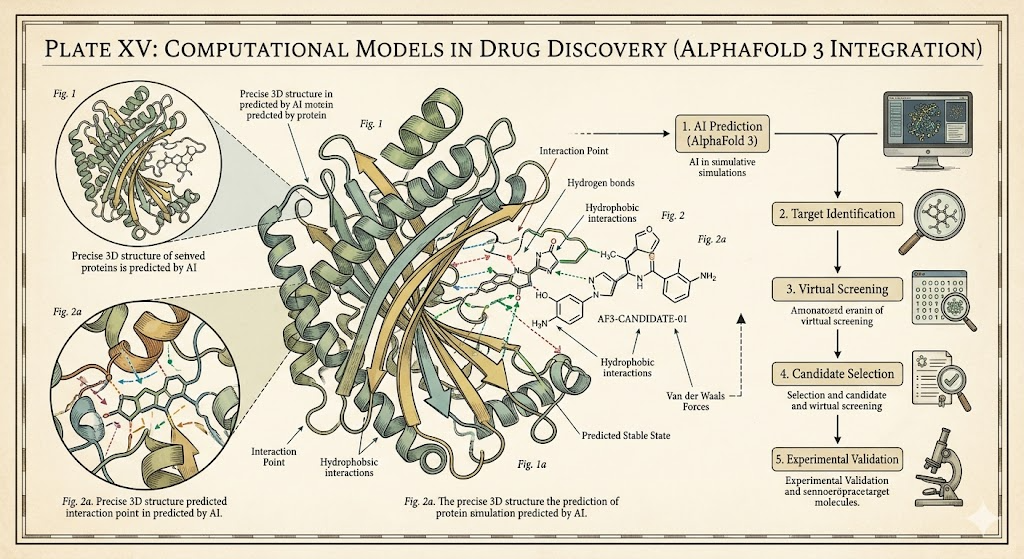
AlphaFold 3 probably can speed up parts of early drug discovery, but not in the simple “AI designs medicines automatically” sense often implied by headlines. Its real value is narrower and more practical: helping researchers predict how biological molecules may fit together, so they can reject weak ideas earlier and focus laboratory work on more promising candidates. That matters because modern drug discovery is often a search problem across enormous chemical possibilities, where most experiments fail.
The system extends earlier AlphaFold work by modelling interactions between proteins, DNA, RNA and small drug-like molecules together rather than predicting protein shapes alone. In benchmark tests, AlphaFold 3 and related deep-learning “co-folding” systems have shown clear improvements in protein–ligand prediction tasks, especially compared with older docking pipelines. [Nature]nature.comNatureBenchmarking all-atom biomolecular structure prediction…by S Xu · 2025 · Cited by 20 — For the entire protein-ligand set, AlphaF… [Nature]nature.comNatureAccurate structure prediction of biomolecular interactions…by J Abramson · 2024 · Cited by 13808 — Here we describe our AlphaFol…
But the limits are just as important as the gains. Predicting a plausible binding pose is not the same thing as discovering a safe and effective medicine. Biology is dynamic, noisy and context-dependent. Molecules that appear promising in silico often fail in cells, animals or humans. AlphaFold 3 may shorten parts of the search process, yet laboratory validation remains central to drug development.
Within the broader AI bloom argument, this matters because it offers a concrete example of scientific acceleration. Even modest reductions in failed experiments, dead-end compounds and years of exploratory work could compound across medicine over decades. The strongest case is not that AI suddenly cures disease by itself, but that it increasingly acts as a force multiplier for human researchers.
How protein-ligand prediction narrows the search space
Most drugs work by binding to proteins. A small molecule enters a pocket on a target protein and changes its behaviour: blocking an enzyme, activating a receptor or altering signalling pathways. Finding molecules that bind in useful ways has historically required huge screening efforts involving chemistry, robotics, simulations and repeated laboratory testing.
AlphaFold 3 attempts to make that search less blind.
The 2024 Nature paper introducing the system described a diffusion-based model able to predict complexes involving proteins, nucleic acids, ions and small molecules together. [Nature]nature.comNatureAssessing the potential of deep learning for protein–ligand…by A Morehead · 2025 · Cited by 8 — To bridge this knowledge gap, we… Earlier AlphaFold systems mainly predicted static protein structures. AlphaFold 3 instead tries to model interactions.
That matters because many early-stage drug failures come from uncertainty about binding:
- Does the molecule fit the target at all?
- Does it bind in the expected orientation?
- Is the binding pocket accessible?
- Which protein regions matter most?
- Which compounds are unlikely to work and can be discarded quickly?
Traditional virtual docking tools already attempted parts of this problem, but often relied on rigid assumptions or hand-crafted physics approximations. Deep-learning systems can sometimes recognise broader structural patterns across huge biological datasets.
A 2025 benchmarking study in Nature Communications reported that AlphaFold 3 achieved about a 65% success rate on protein–ligand structure prediction benchmarks, outperforming several competing systems. [Nature]nature.comMol. Syst. Biol. 18, e11081 (2022). Article CAS…Read more… Other benchmark work found that deep-learning co-folding approaches generally outperform conventional docking methods on many tasks, though performance still drops on unfamiliar targets and novel ligands. [Nature]nature.comWhat does AlphaFold mean for drug discovery?14 Sept 2021 — AlphaFold and RoseTTAFold have delivered a revolutionary advance for protein s…
For pharmaceutical researchers, even partial improvements can matter economically. Early drug discovery is full of expensive dead ends. If AI systems help eliminate weak candidates earlier, teams can spend more time on compounds with higher odds of success.
That does not mean replacing medicinal chemists. It means giving them better maps.

Where docking gains can save time and experiments
The clearest near-term gains are likely to come from reducing exploratory labour rather than eliminating the need for experiments.
Faster target assessment
Some diseases involve proteins with poorly understood structures or difficult experimental measurements. AlphaFold systems can provide initial structural hypotheses much faster than older methods alone.
That can help researchers:
- identify possible binding pockets
- prioritise biological targets
- estimate whether a target looks “druggable”
- explore mutations linked to disease
- generate starting hypotheses before wet-lab work begins
This matters especially in areas where structural biology has historically been slow or expensive.
Narrowing chemical libraries
Modern pharmaceutical screening can involve millions or billions of possible compounds. Testing everything experimentally is impossible.
AI-based interaction prediction may help narrow those libraries before synthesis or biological assays. Instead of experimentally screening vast numbers of compounds, teams can focus on smaller subsets predicted to bind more plausibly.
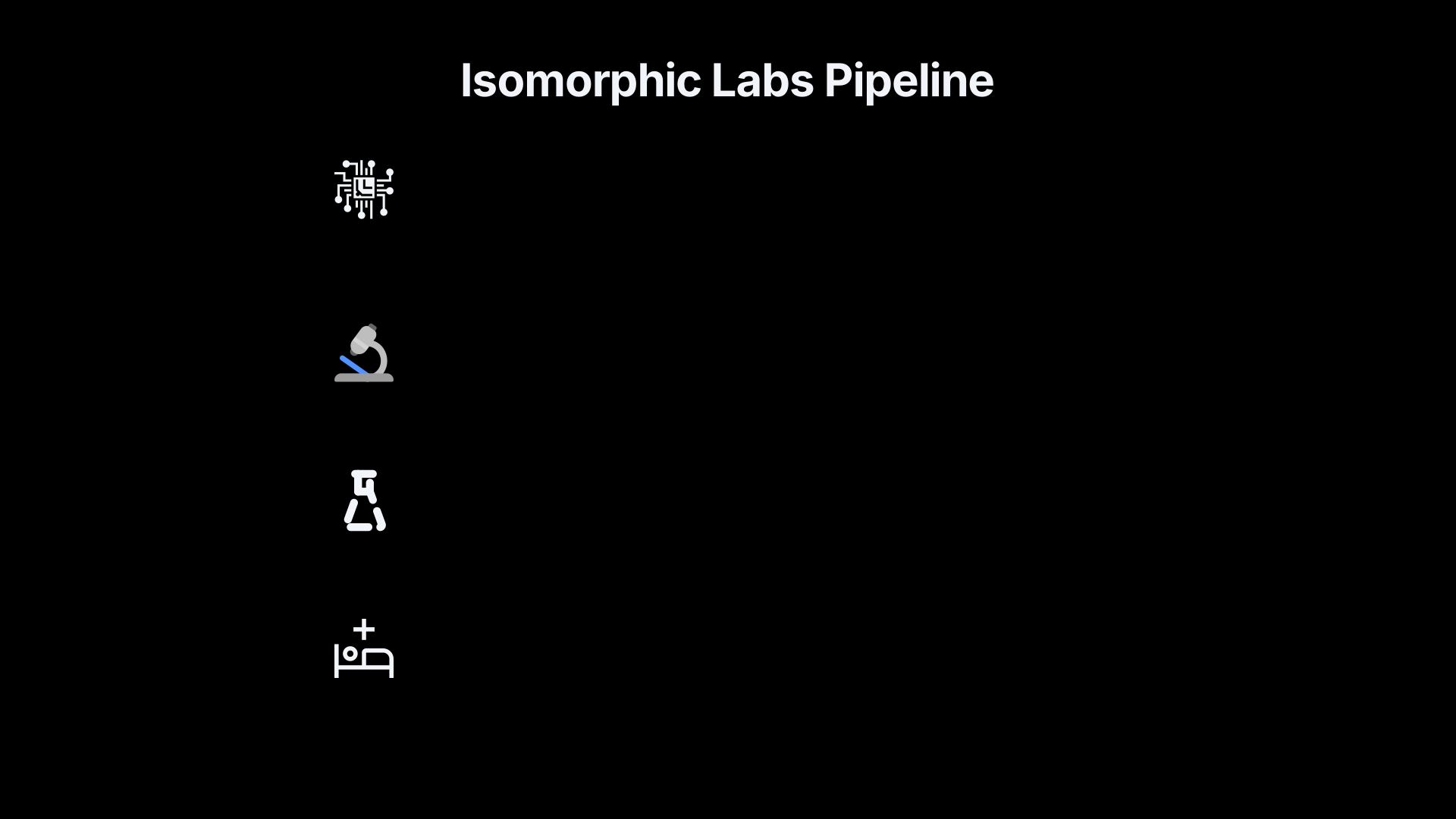
That is one reason companies such as Isomorphic Labs, spun out from Google DeepMind, are attempting to build AI-assisted drug discovery pipelines around AlphaFold-derived systems. In 2026 the company stated that AI-designed drug programmes were moving towards human clinical trials. [WIRED]wired.comAI-Designed Drugs by a Deep Mind Spinoff Are Headed to Human TrialsThis development marks a major step in AI-driven drug discovery. Launched in 2021, Isomorphic Labs leverages AlphaFold’s ability to predi…
The significance is less about one specific company and more about workflow compression. If interaction modelling reduces the number of failed synthesis-and-test cycles, timelines could shorten substantially across the industry.
Helping rare and neglected diseases
Drug discovery economics often favour diseases with large commercial markets because exploratory work is so expensive.
Cheaper and faster early-stage modelling could modestly improve the economics of smaller patient populations by lowering the cost of target exploration and lead identification. That does not solve pricing or access problems, but it could widen the range of diseases worth investigating.
Within the broader AI bloom perspective, this is one of the more concrete pathways by which scientific acceleration could translate into wider human flourishing: not by replacing medicine with AI, but by increasing the rate at which useful biomedical knowledge accumulates.
Why predicted binding is not the same as a medicine
The biggest misunderstanding around AlphaFold 3 is the assumption that accurate binding prediction automatically leads to successful drugs.
It does not.
Drug discovery is not only about whether molecules bind. It is also about:
- toxicity
- side effects
- metabolism
- dosage
- immune response
- manufacturability
- stability
- delivery into tissues
- long-term safety
- interactions with other biological systems
Many molecules bind strongly to proteins and still fail as medicines.
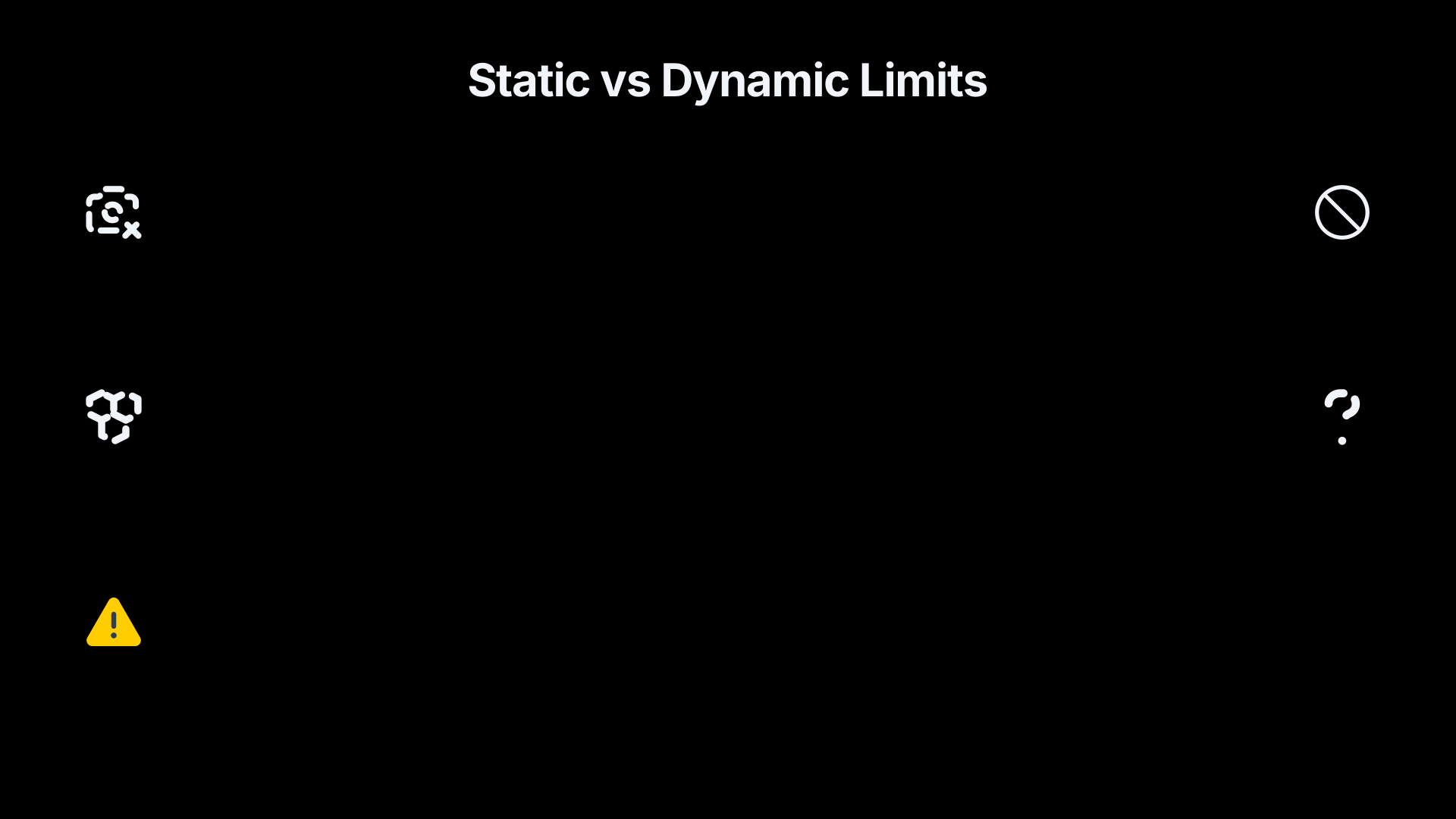
Proteins are not static objects
One major limitation is that proteins constantly change shape inside living cells. Many important drug targets switch between multiple conformations depending on chemical context.
Researchers studying G protein-coupled receptors (GPCRs) — targets for roughly one-third of approved drugs — found that AlphaFold systems predict inactive receptor states more reliably than active ones. [arXiv]arxiv.orgarXiv Deep Learning for Protein-Ligand Docking: Are We There Yet?arXiv Deep Learning for Protein-Ligand Docking: Are We There Yet? That matters because therapeutically important signalling often depends on dynamic state changes rather than one frozen structure.
Critics of current co-folding approaches also note that AI predictions can resemble static snapshots more than full biological motion. [desertsci.com]desertsci.comalphafold2 was just the beginning what comes after structure predictionDrug targets are…Read more…
Real cells are crowded, temperature-dependent and chemically noisy environments. Binding events are probabilistic and influenced by many surrounding conditions that current models only partially capture.
Chemical realism still matters
AlphaFold 3 also struggles with some chemically important details.
Training material from EMBL-EBI notes that the system can violate chirality constraints — meaning it may occasionally generate chemically implausible molecular orientations. [ebi.ac.uk]ebi.ac.ukWhat AlphaFold 3 struggles withAlphaFold 3 does not always respect chirality when predicting the conformations of small molecules. On the… Other evaluations found weaknesses on unfamiliar ligands, novel proteins and multi-ligand systems. [Nature]nature.comA Folding-Docking-Affinity framework for protein-ligand…by MH Wu · 2025 · Cited by 22 — To address this limitation, we plan to utilize…
This is a reminder that biological prediction is not solved simply because benchmark scores improve.
The pharmaceutical industry already has decades of experience with computational optimism outrunning experimental reality. Many promising in silico discoveries collapse during laboratory testing or clinical development.
Validation remains the bottleneck
Even enthusiastic supporters emphasise that AlphaFold predictions still require experimental confirmation.
The system can suggest hypotheses at extraordinary speed. But biology still decides whether those hypotheses survive.
That means AI acceleration may shift bottlenecks rather than eliminate them. If structure prediction becomes cheap and abundant, downstream stages — assays, animal studies, manufacturing, regulation and clinical trials — become proportionally more important.
So the likely future is not fully automated medicine discovery. It is a hybrid system where AI expands researchers’ ability to explore biological possibility while laboratories remain essential for verification.
What this means for the larger AI bloom argument
AlphaFold 3 is important less because it proves AI can “solve biology” and more because it demonstrates a broader pattern: AI systems are beginning to compress parts of scientific search.
Historically, major scientific advances often depended on reducing the cost of exploration:
- microscopes expanded observable biology
- sequencing reduced the cost of reading genomes
- computers accelerated simulation and statistics
- automation increased experimental throughput
AI-assisted molecular modelling may become another such layer.
If systems like AlphaFold 3 continue improving, they could contribute to a world where scientific iteration becomes faster, cheaper and more accessible. Over decades, even incremental gains could compound across medicine, materials science and biotechnology.
That is one reason AlphaFold became symbolically important in discussions about AI abundance and scientific acceleration. It offered a visible example of AI producing genuinely useful scientific capability rather than only consumer automation.
But the evidence also argues against simplistic narratives of imminent post-scarcity medicine.
The hard parts of biology remain extraordinarily hard:
- living systems are dynamic rather than static
- causal mechanisms remain poorly understood
- many diseases involve whole-body complexity
- experimental validation is still slow
- regulatory systems remain cautious
- pharmaceutical incentives distort research priorities
So AlphaFold 3 supports a moderate version of the AI bloom thesis more strongly than an extreme one. It suggests that advanced AI may meaningfully accelerate scientific discovery and reduce some forms of scarcity in knowledge production. But it also reveals how much embodied experimentation, institutional coordination and human judgement still matter.
The likely significance is cumulative rather than magical. If AI systems steadily improve humanity’s ability to model biology, filter hypotheses and guide experiments, the result over decades could be substantial: faster biomedical progress, lower research costs and potentially longer, healthier lives for millions of people.
That is already a profound possibility, even without assuming that biology becomes fully computable or that AI instantly cures disease.
Endnotes
-
Source: nature.com
Link: https://www.nature.com/articles/s41467-025-67127-3Source snippet
NatureBenchmarking all-atom biomolecular structure prediction...by S Xu · 2025 · Cited by 20 — For the entire protein-ligand set, AlphaF...
-
Source: nature.com
Link: https://www.nature.com/articles/s41586-024-07487-wSource snippet
NatureAccurate structure prediction of biomolecular interactions...by J Abramson · 2024 · Cited by 13808 — Here we describe our AlphaFol...
-
Source: nature.com
Link: https://www.nature.com/articles/s42256-025-01160-1Source snippet
NatureAssessing the potential of deep learning for protein–ligand...by A Morehead · 2025 · Cited by 8 — To bridge this knowledge gap, we...
-
Source: arxiv.org
Title: arXiv Deep Learning for Protein-Ligand Docking: Are We There Yet?
Link: https://arxiv.org/abs/2405.14108 -
Source: wired.com
Title: AI-Designed Drugs by a Deep Mind Spinoff Are Headed to Human Trials
Link: https://www.wired.com/story/wired-health-2026-how-ai-is-powering-drug-discovery-max-jaderbergSource snippet
This development marks a major step in AI-driven drug discovery. Launched in 2021, Isomorphic Labs leverages AlphaFold’s ability to predi...
-
Source: arxiv.org
Link: https://arxiv.org/abs/2502.17628Source snippet
arXivCharacterizing the Conformational States of G Protein Coupled Receptors Generated with AlphaFoldFebruary 24, 2025...
Published: February 24, 2025
-
Source: desertsci.com
Title: alphafold2 was just the beginning what comes after structure prediction
Link: https://www.desertsci.com/2026/04/09/alphafold2-was-just-the-beginning-what-comes-after-structure-prediction/Source snippet
Drug targets are...Read more...
-
Source: ebi.ac.uk
Link: https://www.ebi.ac.uk/training/online/courses/alphafold/alphafold-3-and-alphafold-server/introducing-alphafold-3/what-alphafold-3-struggles-with/Source snippet
What AlphaFold 3 struggles withAlphaFold 3 does not always respect chirality when predicting the conformations of small molecules. On the...
-
Source: deepmind.google
Link: https://deepmind.google/Source snippet
Google DeepMindArtificial intelligence could be one of humanity's most useful inventions. We research and build safe artificial intellige...
-
Source: deepmind.google
Link: https://deepmind.google/science/alphafold/Source snippet
AlphaFold — Google DeepMindAlphaFold has revealed millions of intricate 3D protein structures, and is helping scientists understand how a...
-
Source: deepmind.google
Title: alphafold five years of impact
Link: https://deepmind.google/blog/alphafold-five-years-of-impact/Source snippet
AlphaFold: Five Years of Impact25 Nov 2025 — The model is designed to predict the structure and interactions of all of life's molecules —...
-
Source: nature.com
Link: https://www.nature.com/articles/s41467-025-63947-5Source snippet
Mol. Syst. Biol. 18, e11081 (2022). Article CAS...Read more...
-
Source: nature.com
Link: https://www.nature.com/articles/d41573-021-00161-0Source snippet
What does AlphaFold mean for drug discovery?14 Sept 2021 — AlphaFold and RoseTTAFold have delivered a revolutionary advance for protein s...
-
Source: nature.com
Link: https://www.nature.com/articles/s42004-025-01506-1Source snippet
A Folding-Docking-Affinity framework for protein-ligand...by MH Wu · 2025 · Cited by 22 — To address this limitation, we plan to utilize...
-
Source: nature.com
Link: https://www.nature.com/articles/s41586-024-08416-7Source snippet
Addendum: Accurate structure prediction of biomolecular...by J Abramson · 2024 · Cited by 253 — AlphaFold3 model, which allows predictio...
-
Source: nature.com
Link: https://www.nature.com/articles/s41586-021-03819-2Source snippet
Highly accurate protein structure prediction with AlphaFoldby J Jumper · 2021 · Cited by 49749 — Here we provide the first computational...
-
Source: nature.com
Link: https://www.nature.com/articles/s41586-024-07487-w_reference.pdfSource snippet
The text and figures will undergo...Read more...
-
Source: nature.com
Link: https://www.nature.com/articles/d41586-026-00365-7Source snippet
'An AlphaFold 4' — scientists marvel at DeepMind drug...by E Callaway · 2026 · Cited by 1 — Isomorphic Lab's proprietary drug-discovery...
-
Source: nature.com
Link: https://www.nature.com/articles/s41392-023-01381-zSource snippet
AlphaFold2 and its applications in the fields of biology and...by Z Yang · 2023 · Cited by 666 — AlphaFold2 (AF2) is an artificial intel...
-
Source: ebi.ac.uk
Link: https://www.ebi.ac.uk/training/online/courses/alphafold/alphafold-3-and-alphafold-server/introducing-alphafold-3/how-have-alphafold-3s-predictions-been-validated/Source snippet
How have AlphaFold 3's predictions been validated?Additionally, AlphaFold 3 faces limitations in consistently reproducing all non-Watson...
-
Source: ebi.ac.uk
Title: alphafold potential impacts
Link: https://www.ebi.ac.uk/about/news/opinion/alphafold-potential-impactsSource snippet
In particular, it is not expected to capture the effect of...Read more...
-
Source: arxiv.org
Link: https://arxiv.org/html/2405.14108v6Source snippet
Assessing the potential of deep learning for protein-ligand...12 Aug 2025 — We introduce the first unified benchmark for protein-ligand...
Additional References
-
Source: medium.com
Link: https://medium.com/%40cognidownunder/alphafold-changed-biology-forever-when-it-solved-protein-folding-78bb8768483aSource snippet
AlphaFold 3 Predicts Everything Now, Not Just Proteins...AlphaFold 3 shows you molecular shapes but can't predict binding affinities, ki...
-
Source: prescouter.com
Link: https://www.prescouter.com/2024/05/alphafold-3/Source snippet
AlphaFold 3: Revolutionizing drug discovery and molecular...AlphaFold 3 increases the potential to identify new drug targets compared to...
-
Source: jakemp.com
Link: https://www.jakemp.com/knowledge-hub/alphafold-and-the-future-of-protein-structure-prediction/Source snippet
AlphaFold and the future of protein structure predictionLimitations and future directions · Database dependence: The quality of predictio...
-
Source: reddit.com
Link: https://www.reddit.com/r/science/comments/1cn7le6/google_deepmind_alphafold_3_predicts_the/Source snippet
Google DeepMind: AlphaFold 3 predicts the structure and...In a paper published in Nature, we introduce AlphaFold 3, a revolutionary mode...
-
Source: frontiersin.org
Link: https://www.frontiersin.org/journals/artificial-intelligence/articles/10.3389/frai.2026.1739303/fullSource snippet
The transformative impact of AI-enabled AlphaFold 3by C Chakraborty · Cited by 1 — If the drug target's structure is unavailable, the dru...
-
Source: github.com
Link: https://github.com/google-deepmind/alphafold3Source snippet
google-deepmind/alphafold3: AlphaFold 3 inference...This package provides an implementation of the inference pipeline of AlphaFold 3. Se...
-
Source: facebook.com
Link: https://www.facebook.com/ItisaScience/posts/-alphafold-3-matters-because-it-moved-beyond-predicting-protein-shapes-alone-it-/122223237512051326/Source snippet
🧬 AlphaFold 3 matters because it moved beyond predicting...**Drug Discovery Acceleration**: The AI model significantly advances drug dis...
-
Source: alphafoldserver.com
Link: https://alphafoldserver.com/Source snippet
AlphaFold ServerAlphaFold Server – powered by AlphaFold 3 – provides accurate structure predictions for how proteins interact with other...
-
Source: linkedin.com
Link: https://www.linkedin.com/posts/jamessfraser_large-scale-prospective-evaluation-of-co-folding-activity-7411529981983592448-Ky9rSource snippet
AlphaFold3 Benchmarking: Ligand-Protein Complexes and...Test 1: Can co-folding predict 557 Mac1 ligand-protein complexes... AlphaFold3...
-
Source: isomorphiclabs.com
Title: alphafold 3 predicts the structure and interactions of all of lifes molecules
Link: https://www.isomorphiclabs.com/articles/alphafold-3-predicts-the-structure-and-interactions-of-all-of-lifes-moleculesSource snippet
AlphaFold 3 predicts the structure and interactions of all...8 May 2024 — By accurately predicting the structure of proteins, DNA, RNA...
Published: May 2024
Amazon book picks
Further Reading
Books and field guides related to Faster Drug Discovery?. Use these as the next step if you want deeper reading beyond the article.

Computational Biology
First published 2006. Subjects: Mechanical properties, Life Sciences, Biomechanics, Computational Biology, NATURE.

Kernel methods in computational biology
First published 2004. Subjects: Kernel functions, Computational biology, Kernel, Biological Models, Algoritmos e estruturas de dados.

Introduction to computational biology
First published 1995. Subjects: Computational biology, Molecular genetics, Molecular biology, Bio-informatique, Biomathématiques.

Concise Encyclopaedia Of Bioinformatics And Computational Bio...
First published 2013. Subjects: Bioinformatics, Dictionaries, Computational biology, Biology, data processing.
Topic Tree