Within AI Bloom Futures
The Long Future
AI bloom ultimately asks whether humanity can become safer, freer, more creative, and resilient across centuries or longer.
On this page
- Beyond GDP and consumer abundance
- Resilience against catastrophe
- Space, culture, and civilisation scale flourishing

Page outline Jump by section
Introduction
The long future beyond scarcity is the most ambitious version of the AI bloom idea. It asks whether advanced AI could help civilisation move beyond a world where most human effort is spent managing shortages: not only shortages of money and consumer goods, but shortages of health, time, safety, energy, knowledge, coordination, and opportunity. In this view, the prize is not just a higher GDP line. It is a civilisation in which people live longer and freer lives, societies are more resilient to catastrophe, and future generations inherit a wider field of possible lives, cultures, sciences, and worlds.
That future is possible only in a qualified sense. AI can make intelligence cheaper, discovery faster, and coordination more powerful, but it cannot automatically make energy, land, political trust, minerals, care, ecological stability, or legitimate institutions abundant. The strongest case for a long future beyond scarcity therefore depends on turning cognitive abundance into real human capability, while preventing the gains from being captured by narrow owners of compute, infrastructure, land, capital, or political power. The UNDP’s 2025 Human Development Report makes this point plainly: AI’s importance for development lies less in what the technology can do in isolation than in the choices societies make about whether it expands people’s real freedoms and possibilities. [Human Development Reports]hdr.undp.orghuman development report 2025Human Development ReportsHuman Development Report 2025 | Human Development ReportsMay 6, 2025…
Beyond GDP and consumer abundance
A future beyond scarcity is often imagined as a world of cheap goods: plentiful food, automated factories, robot labour, abundant energy, low-cost medicine, and personalised services. Those things matter. But the long-future question is deeper than whether AI can make today’s economy larger. A civilisation can become richer while still leaving people anxious, unhealthy, isolated, politically weak, or unable to shape their own lives.
This is why GDP is an incomplete measure of AI bloom. GDP counts market activity, not whether people are more capable of living lives they value. A society may spend more on medical treatment because people are ill, more on security because people feel unsafe, or more on digital services because work has become more surveilled and fragmented. None of that necessarily means human flourishing has grown. The more relevant question is whether AI expands capabilities: healthy years of life, access to education and expertise, freedom from degrading work, meaningful participation in society, resilience against shocks, and the ability to create, explore, and care.
The UNDP frames human development as the expansion of people’s choices and agency. Its 2025 AI-focused report argues that AI could help people, firms, and communities access not just information but know-how, opening new paths for education, health, work, trade in services, and local problem-solving. But it also warns that people who lack connectivity, skills, institutional support, or bargaining power may fall further behind. [Human Development Reports]hdr.undp.orghuman development report 2025Human Development ReportsHuman Development Report 2025 | Human Development ReportsMay 6, 2025…
The difference between “more stuff” and “less scarcity” is crucial. Scarcity is not only a physical condition; it is also institutional. A medicine can exist and still be unaffordable. A tutor can be technically available and still be useless if a child lacks a safe place to learn. Clean energy can be cheap in one region while another faces grid queues, political conflict, or high capital costs. AI may reduce the cost of expertise, but whether that becomes broad abundance depends on infrastructure, rights, public goods, regulation, and distribution.
A useful way to think about the long future is to separate three kinds of abundance:
- Material abundance: cheaper energy, housing, food, transport, manufactured goods, and medical tools.
- Capability abundance: wider access to education, diagnosis, translation, legal help, design, research assistance, and creative tools.
- Civilisational abundance: stronger institutions, safer technologies, lower catastrophe risk, cultural richness, ecological repair, and space for future generations to pursue projects we cannot yet imagine.
AI bloom requires all three. Material abundance without agency can become dependency. Capability abundance without fair access can widen inequality. Civilisational abundance without safety can collapse under its own power.
Intelligence is the lever, not the whole machine
The optimistic case begins with one strong mechanism: intelligence is a bottleneck in many human projects. Scientific discovery, engineering, medicine, climate adaptation, logistics, education, public administration, and diplomacy all depend on scarce cognitive labour. If AI systems make useful reasoning, modelling, design, translation, tutoring, simulation, and discovery much cheaper, they could speed up progress across many fields at once.
This is why some economists describe AI as more than another tool. The UNDP cites the idea of AI as an “invention of a method of invention”: a technology that can help generate other technologies, rather than merely perform one fixed task. [Human Development Reports]hdr.undp.orghuman development report 2025Human Development ReportsHuman Development Report 2025 | Human Development ReportsMay 6, 2025… In long-future terms, that matters because the bottleneck shifts from having ideas to testing, governing, scaling, and distributing them.
But intelligence alone does not abolish scarcity. A design for a better battery is not the same as mines, factories, permitting, skilled workers, stable supply chains, and recycling systems. A promising drug target is not the same as safe clinical evidence, manufacturing capacity, health-system access, or affordability. A plan for climate repair is not the same as political consent. AI can widen the possibility frontier, but human institutions still decide which possibilities are pursued and who benefits.
The International Energy Agency’s work on AI and electricity shows the physical side of this constraint. Data centres consumed an estimated 415 terawatt hours of electricity in 2024, about 1.5% of global electricity consumption, and the IEA’s base case projects this could rise to around 945 terawatt hours by 2030. That is still a limited share globally, but it is growing much faster than overall electricity demand and can create local grid stress where data centres cluster. [IEA]iea.orgEnergy demand from AI – Energy and AI – AnalysisEnergy demand from AI – Energy and AI – Analysis
This does not refute AI abundance. It clarifies its terms. A post-scarcity trajectory would require AI to help expand clean energy, grid capacity, efficient chips, cooling, storage, and demand flexibility faster than AI itself raises demand. Otherwise, the first scarcity AI intensifies may be electricity, land for infrastructure, water for cooling, and political tolerance for higher energy bills.
The long future begins with better constraints, not no constraints
A credible future beyond scarcity is not a world without limits. It is a world with better limits: fewer people trapped by disease, poverty, ignorance, dangerous labour, and preventable disaster, while civilisation stays within ecological and safety boundaries.
That distinction avoids a common misunderstanding. “Post-scarcity” does not mean every desire can be satisfied at zero cost. Some goods remain rival: land in a particular place, attention from a loved one, political authority, unique artworks, ecosystems, historic sites, and the limited time of a human life. Even in a far richer world, societies would still need norms, laws, and priorities.
What could change is the severity of basic constraint. Advanced AI might help reduce scarcity in areas where the binding limit is knowledge or coordination:
- Health: AI-assisted biology, diagnosis, drug discovery, clinical trial design, and personalised prevention could reduce the burden of disease and extend healthy life.
- Education: high-quality tutoring and translation could make expert guidance available far beyond elite institutions.
- Infrastructure: AI could improve design, maintenance, grid balancing, transport planning, and disaster response.
- Climate and energy: better modelling, materials discovery, storage optimisation, and industrial process design could speed decarbonisation.
- Work: robotics and AI systems could reduce the need for dangerous, repetitive, or degrading labour.
- Science and culture: more people could create, research, simulate, compose, build, and collaborate at levels once limited to well-funded institutions.
The long-future question is whether these gains compound. If AI accelerates science, science improves energy and robotics, robotics improves construction and manufacturing, and abundance funds better education and health, civilisation could enter a virtuous cycle. But there is also a failure mode: AI increases profits and surveillance for a few, displaces workers faster than institutions adapt, strains grids, pollutes information environments, and leaves many people with cheaper entertainment but weaker bargaining power.
The IMF’s labour-market analysis captures this tension. It estimates that almost 40% of global employment is exposed to AI, with higher exposure in advanced economies. Some workers may become more productive, but others may face lower demand, lower wages, or job loss; without policy, AI could deepen inequality and social tension. [IMF]imf.orgAI Will Transform the Global Economy. Let’s Make Sure It Benefits HumanityAI Will Transform the Global Economy. Let’s Make Sure It Benefits Humanity
A long future beyond scarcity therefore depends on whether societies treat AI as a public-capability technology, not merely a labour-saving device for existing owners.
Resilience against catastrophe
The strongest reason to care about the long future is that it could be very large. If civilisation survives, learns, and expands over centuries or longer, the number of future people, discoveries, cultures, and achievements could dwarf the present. But that possibility makes catastrophe prevention central, not peripheral. A richer civilisation that is more fragile is not blooming; it is becoming a larger target.
AI could improve resilience in several concrete ways. It could help detect pandemics earlier, model extreme weather, strengthen cyber-defence, monitor crops, manage energy grids, discover countermeasures, identify infrastructure failures, and support emergency planning. Better forecasting and simulation can turn some disasters from surprises into manageable risks. AI could also help governments and researchers explore low-probability, high-impact scenarios that are difficult for human institutions to prioritise.
Yet AI also creates or amplifies risks. The 2025 International Scientific Report on the Safety of Advanced AI says general-purpose AI could advance wellbeing, prosperity, and scientific discovery if properly governed, but also highlights possible risks from large-scale labour-market impacts, AI-enabled hacking or biological attacks, and future loss-of-control scenarios. It stresses that current systems are not considered to pose significant loss-of-control risk, while the controllability of much more capable autonomous systems remains uncertain. [GOV.UK]GOV.UKInternational scientific report on the safety of advanced AI: interim reportInternational scientific report on the safety of advanced AI: interim report
This matters for the long future because AI changes the risk landscape in two directions at once. It can strengthen civilisation’s immune system, but it can also make dangerous capabilities cheaper and faster to use. A world where small groups can access powerful cyber, bioengineering, persuasion, or autonomous-agent tools is not automatically safer because it is richer.
The practical question is not whether AI is “good” or “bad” for resilience. It is which side of the balance grows faster:
- Defensive acceleration: better detection, prevention, verification, safety engineering, emergency response, and international coordination.
- Offensive acceleration: easier misuse, faster weapons development, automated cyber operations, misinformation, coercive surveillance, and uncontrolled autonomous action.
A long future beyond scarcity needs defensive acceleration to win. That means safety evaluations, secure model deployment, biosecurity controls, cyber-hardening, incident reporting, independent auditing, and public-sector technical capacity. It also means not confusing confidence with safety. If societies deploy powerful systems faster than they can understand, monitor, and constrain them, abundance may arrive with a thinner margin for error.
Superintelligence and the fork in the road
The most speculative part of the AI bloom thesis is also the most consequential: the possibility of superintelligence. In plain language, superintelligence means AI systems that greatly exceed human capability across many important domains, including scientific research, strategy, engineering, persuasion, and perhaps AI development itself. An intelligence explosion is the further idea that AI could help improve AI, causing capabilities to rise very rapidly.
If something like that occurred safely, the upside could be enormous. Scientific and technological progress might accelerate beyond anything seen in industrial history. Many problems that now look stubborn — ageing, clean firm power, carbon removal, materials scarcity, pandemic defence, mental health, disability support, and space engineering — could become more tractable. The long future beyond scarcity is difficult to imagine without some form of much more abundant intelligence.
But the same idea creates the sharpest objection. If highly capable AI systems pursue goals that do not reliably reflect human flourishing, or if states and firms race to deploy systems they cannot control, the result could be catastrophic. The International Scientific Report describes loss-of-control scenarios as debated but serious enough to analyse, especially as researchers work towards more autonomous agents that can plan, act, and pursue goals in the world. [GOV.UK]GOV.UKinternational ai safety report 2025international ai safety report 2025
There is no consensus on how likely these scenarios are. Some researchers see advanced AI as one of the central existential risks of the century. Others argue that near-term harms, concentration of power, labour disruption, surveillance, and environmental costs are more empirically grounded than speculative superintelligence narratives. A balanced long-future view should hold both thoughts at once: catastrophic superintelligence risk is uncertain, but uncertainty is not a reason to ignore it when the stakes are irreversible.
For AI bloom, the key point is that superintelligence is not simply a bigger engine of abundance. It is a governance test. A safe transition would require alignment with human values, technical controllability, institutional restraint, international coordination, and mechanisms for broad benefit. A failed transition could make ordinary debates about distribution irrelevant.
Space, culture, and civilisation-scale flourishing
A long future beyond scarcity is not only about solving today’s problems. It is about what civilisation could become once fewer people are forced to spend their lives fighting preventable constraint. That includes science, art, exploration, moral progress, new forms of community, and possibly expansion beyond Earth.
Space settlement is often presented in overconfident terms, but its serious relevance is resilience and possibility. A civilisation with a sustained presence beyond Earth may be less vulnerable to some planetary catastrophes and may gain new scientific, cultural, and material horizons. NASA’s Artemis programme is framed as a sequence of increasingly difficult Moon missions for scientific discovery, economic benefits, and preparation for future crewed Mars missions; NASA also describes Artemis as part of building a long-term human presence at the Moon. [NASA]nasa.govMoon to Mars | NASA's Artemis ProgramMoon to Mars | NASA's Artemis Program
AI could matter to that project because space is a domain of harsh constraints: mass, energy, communication delay, radiation, closed-loop life support, robotics, maintenance, navigation, and autonomous repair. Human settlement beyond Earth would require systems that can diagnose faults, build with local materials, manage habitats, design equipment, and operate where real-time human control is difficult. AI does not make space easy, but it may make sustained off-world infrastructure more plausible.
Still, space should not become an escape fantasy. A civilisation that cannot govern powerful technology on Earth is unlikely to build a flourishing civilisation elsewhere. The same issues follow: who controls the infrastructure, what rights people have, how risks are governed, whether expansion damages rather than enriches human life, and whether the benefits are broad or imperial. Space settlement belongs in the long-future branch not because it is imminent, but because it reveals the scale of the AI bloom question: can intelligence help civilisation become more capable, more resilient, and more worthy of lasting?
Culture is equally important. A world beyond scarcity should not be judged only by engineering milestones. If AI gives people more time and tools, what will they do with them? More people could compose music, build games, study history, restore languages, design homes, explore mathematics, care for children, participate in local democracy, or create forms of art that do not yet exist. Abundance is shallow if it merely produces endless synthetic content. It becomes civilisationally meaningful when it expands human agency, taste, skill, memory, and shared life.
The strongest objections
The optimistic long-future case is powerful, but it has several serious weaknesses. The first is distribution. If AI makes labour less central to production while ownership of compute, data, robots, land, energy, and platforms remains concentrated, abundance may increase inequality rather than freedom. People could live among technological miracles while lacking income, bargaining power, privacy, or political influence. The IMF’s warning about inequality is not a side issue; it is one of the main tests of whether AI abundance becomes human abundance. [IMF]elibrary.imf.orgarticle A001 en.xmlarticle A001 en.xml
The second objection is physical bottlenecks. AI may generate designs faster than societies can build power lines, factories, housing, laboratories, hospitals, or transport systems. The IEA notes that data centres can be built in two to three years, while broader energy infrastructure often requires longer planning, construction, and investment cycles. [IEA]iea.orgOpen source on iea.org. If AI progress outruns grid expansion and clean energy deployment, the path to abundance may become politically and environmentally contested.
The third objection is institutional fragility. Advanced AI may increase the speed of markets, media, research, and conflict faster than laws, norms, and democratic oversight can adapt. Information systems may become harder to trust. Public agencies may depend on private AI infrastructure they cannot audit. States may race for strategic advantage. In such a world, more capability does not automatically mean more wisdom.
The fourth objection is safety. Even without full superintelligence, AI can amplify cyber risk, biological misuse, fraud, manipulation, and brittle automation. With more autonomous systems, the difficulty of monitoring and constraining behaviour rises. The international safety literature is clear that many of the most severe future risks are debated, but it is also clear that reliability, misuse prevention, and controllability remain unresolved challenges. [GOV.UK]GOV.UKinternational ai safety report 2025international ai safety report 2025
The fifth objection is meaning. If AI and robots perform more economically valuable tasks, people may gain freedom from drudgery, but also lose familiar sources of status, community, competence, and purpose. A good long future would need new institutions of contribution: education throughout life, civic work, art, science, care, exploration, sport, local stewardship, and forms of recognition not tied narrowly to paid employment.
What would make the long future more likely
The route beyond scarcity is not a single invention. It is a set of compounding choices. The most important choices are those that turn AI from a private acceleration machine into a civilisation-building technology.
First, societies need broad access to capability. That includes affordable AI tools, public-interest models, connectivity, education, language coverage, disability access, and training in how to question, verify, and use AI well. Access alone is not enough; people need the competence and institutional support to benefit from it.
Second, AI deployment needs pro-human economic design. If automation raises productivity, the gains can be shared through wages, shorter working time, public services, social insurance, ownership models, tax reform, and investment in care, education, and infrastructure. Without that, post-scarcity rhetoric may mask a transfer of power from workers to asset owners.
Third, the physical base must be built: clean energy, grids, chips, water stewardship, recycling, resilient supply chains, and efficient computing. The long future is not made of software alone. If AI is to help overcome material scarcity, it must be integrated with energy and industrial policy rather than treated as an immaterial cloud.
Fourth, civilisation needs safety and alignment before irreversible deployment. This includes technical research on robustness and interpretability, evaluations for dangerous capabilities, secure development practices, limits on high-risk autonomous use, emergency shutdown and containment procedures, and international agreements where unilateral racing would be dangerous.
Fifth, public institutions need technical competence. Governments cannot steer an AI-enabled future if they lack people who understand models, data centres, cyber risk, procurement, statistics, and safety engineering. Public capacity is a condition for democratic control.
Finally, the long future needs a richer idea of progress. The point is not to maximise output for its own sake. It is to expand the number and quality of lives that can be lived: healthier bodies, deeper learning, cleaner environments, safer societies, more creative cultures, and future generations with more room to flourish.
The real promise beyond scarcity
The long future beyond scarcity is not a prediction that AI will make everything cheap, safe, and fair. It is a conditional possibility: if advanced AI is aligned with human flourishing, embedded in legitimate institutions, powered by clean infrastructure, and distributed broadly, it could help civilisation loosen some of the oldest constraints on human life.
That would be much larger than ordinary economic growth. It would mean fewer lives cut short by disease, fewer minds wasted by poor education, fewer communities trapped by dangerous work or fragile infrastructure, fewer societies derailed by preventable disasters, and more room for science, culture, care, and exploration. It would also mean taking the hardest objections seriously: concentration of power, physical bottlenecks, labour transition, ecological cost, institutional weakness, and catastrophic risk.
The long future beyond scarcity is therefore not a fantasy of effortless plenty. It is a demanding civilisational project. AI may supply a new abundance of intelligence, but intelligence must be converted into wisdom, safety, justice, and durable human possibility. That conversion is the difference between a richer economy and a true bloom.
Endnotes
-
Source: hdr.undp.org
Title: human development report 2025
Link: https://hdr.undp.org/content/human-development-report-2025Source snippet
Human Development ReportsHuman Development Report 2025 | Human Development ReportsMay 6, 2025...
Published: May 6, 2025
-
Source: hdr.undp.org
Link: https://hdr.undp.org/content/envisioning-human-development-opportunity-ai -
Source: hdr.undp.org
Title: global insights ai and human development 2025 survey results
Link: https://hdr.undp.org/global-insights-ai-and-human-development-2025-survey-results -
Source: iea.org
Title: Energy demand from AI – Energy and AI – Analysis
Link: https://www.iea.org/reports/energy-and-ai/energy-demand-from-ai -
Source: iea.org
Link: https://www.iea.org/news/data-centre-electricity-use-surged-in-2025-even-with-tightening-bottlenecks-driving-a-scramble-for-solutions -
Source: imf.org
Title: AI Will Transform the Global Economy. Let’s Make Sure It Benefits Humanity
Link: https://www.imf.org/en/Blogs/Articles/2024/01/14/ai-will-transform-the-global-economy-lets-make-sure-it-benefits-humanity -
Source: GOV.UK
Title: International scientific report on the safety of advanced AI: interim report
Link: https://www.gov.uk/government/publications/international-scientific-report-on-the-safety-of-advanced-ai/international-scientific-report-on-the-safety-of-advanced-ai-interim-report -
Source: nasa.gov
Title: Moon to Mars | NASA’s Artemis Program
Link: https://www.nasa.gov/humans-in-space/artemis/ -
Source: nasa.gov
Title: Lunar Resource-Seeking Technologies
Link: https://www.nasa.gov/technology/nasa-fosters-development-of-lunar-resource-seeking-technologies/ -
Source: iea.org
Title: Key Questions on Energy and AI – Analysis
Link: https://www.iea.org/reports/key-questions-on-energy-and-ai -
Source: intelligence.org
Link: https://intelligence.org/2026/04/13/summary-ai-governance-to-avoid-extinction/ -
Source: nasa.gov
Title: Moon to Mars | NASA’s Artemis Program
Link: https://www.nasa.gov/feature/artemis/ -
Source: nasa.gov
Title: Moon to Mars | NASA’s Artemis Program
Link: https://www.nasa.gov/specials/artemis/?lv=true -
Source: nasa.gov
Link: https://www.nasa.gov/humans-in-space/destinations/ -
Source: nasa.gov
Title: Moon to Mars Architecture
Link: https://www.nasa.gov/moontomarsarchitecture-strategyandobjectives/ -
Source: nasa.gov
Link: https://www.nasa.gov/Artemis -
Source: iea.org
Title: electricity 2026
Link: https://www.iea.org/reports/electricity-2026 -
Source: iea.org
Title: electricity 2026
Link: https://www.iea.org/reports/electricity-2026?language=it -
Source: nasa.gov
Title: NAS A’s Lunar Surface Innovation Initiative
Link: https://www.nasa.gov/space-technology-mission-directorate/lunar-surface-innovation-initiative -
Source: ntrs.nasa.gov
Link: https://ntrs.nasa.gov/citations/20250009282 -
Source: undp.org
Title: human development report 2025 matter choice people and possibilities age ai
Link: https://www.undp.org/uzbekistan/publications/human-development-report-2025-matter-choice-people-and-possibilities-age-ai -
Source: undp.org
Title: human development report 2025
Link: https://www.undp.org/jamaica/publications/human-development-report-2025 -
Source: undp.org
Title: human development report 2025
Link: https://www.undp.org/africa/publications/human-development-report-2025 -
Source: undp.org
Title: human development report 2025
Link: https://www.undp.org/india/publications/human-development-report-2025 -
Source: intelligence.org
Link: https://intelligence.org/2025/05/01/ai-governance-to-avoid-extinction-the-strategic-landscape-and-actionable-research-questions/ -
Source: techgov.intelligence.org
Title: ai governance to avoid extinction
Link: https://techgov.intelligence.org/research/ai-governance-to-avoid-extinction -
Source: ntrs.nasa.gov
Link: https://ntrs.nasa.gov/citations/20250001847 -
Source: GOV.UK
Title: international ai safety report 2025
Link: https://www.gov.uk/government/publications/international-ai-safety-report-2025/international-ai-safety-report-2025 -
Source: GOV.UK
Title: international ai safety report 2025
Link: https://www.gov.uk/government/publications/international-ai-safety-report-2025 -
Source: GOV.UK
Link: https://www.gov.uk/government/publications/international-scientific-report-on-the-safety-of-advanced-ai/ -
Source: elibrary.imf.org
Title: article A001 en.xml
Link: https://www.elibrary.imf.org/view/journals/006/2024/001/article-A001-en.xml -
Source: nasa.gov
Title: Overview: In-Situ Resource Utilization
Link: https://www.nasa.gov/overview-in-situ-resource-utilization/ -
Source: ntrs.nasa.gov
Link: https://ntrs.nasa.gov/citations/20220000245 -
Source: ntrs.nasa.gov
Link: https://ntrs.nasa.gov/citations/20210012921 -
Source: ntrs.nasa.gov
Link: https://ntrs.nasa.gov/citations/20190001035 -
Source: ntrs.nasa.gov
Link: https://ntrs.nasa.gov/archive/nasa/casi.ntrs.nasa.gov/20190001035.pdf -
Source: science.nasa.gov
Title: s human path to mars
Link: https://science.nasa.gov/resource/nasas-human-path-to-mars -
Source: hdr.undp.org
Title: towards 2025 human development report
Link: https://hdr.undp.org/reports-and-publications/towards-2025-human-development-report -
Source: hdr.undp.org
Title: citation export
Link: https://hdr.undp.org/publication/citation-export/3524 -
Source: hdr.undp.org
Title: reports and publications
Link: https://hdr.undp.org/reports-and-publications -
Source: hdr.undp.org
Link: https://hdr.undp.org/en -
Source: www3.nasa.gov
Link: https://www3.nasa.gov/specials/moontomars/ -
Source: www3.nasa.gov
Link: https://www3.nasa.gov/specials/artemis/index.html -
Source: iea.org
Title: Artificial Intelligence – Topics
Link: https://www.iea.org/topics/artificial-intelligence -
Source: iea.org
Link: https://www.iea.org/reports/energy-and-ai/executive-summary%C2%A0 -
Source: iea.org
Title: Energy supply for AI – Energy and AI – Analysis
Link: https://www.iea.org/reports/energy-and-ai/energy-supply-for-ai -
Source: iea.org
Link: https://www.iea.org/reports/key-questions-on-energy-and-ai/executive-summary?_bhlid=10646f272364cf3af59c0fa8f3886b1cfe01e627 -
Source: imf.org
Link: https://www.imf.org/en/Publications/fandd/issues/2023/12/Macroeconomics-of-artificial-intelligence-Brynjolfsson-Unger
Additional References
-
Source: youtube.com
Title: The Economics of a Post Scarcity Universe
Link: https://www.youtube.com/watch?v=0X4GAkzrqt0Source snippet
3 Possible Futures for AI — Which Will We Choose? | Alvin W. Graylin | TED...
-
Source: youtube.com
Title: Post-Scarcity Civilizations: Infinite Resources & Our Future
Link: https://www.youtube.com/watch?v=vMuDVAO57WESource snippet
The Economics of a Post Scarcity Universe - What Happens When Everything Is Free?...
-
Source: oecd.org
Link: https://www.oecd.org/en/topics/ai-and-work.html -
Source: nature.com
Link: https://www.nature.com/articles/s43247-026-03537-5 -
Source: youtube.com
Title: 3 Possible Futures for AI — Which Will We Choose? | Alvin W. Graylin | TED
Link: https://www.youtube.com/watch?v=jnPfz0WXLIMSource snippet
What Happens When AI Runs the Entire Economy?...
-
Source: nature.com
Title: Future of Humanity Institute shuts: what’s next for ‘deep future’ research?
Link: https://www.nature.com/articles/d41586-024-01229-8 -
Source: oecd.org
Title: productivity in a shifting geopolitical and economic landscape 7b0e7702
Link: https://www.oecd.org/en/publications/oecd-compendium-of-productivity-indicators-2025_b024d9e1-en/full-report/productivity-in-a-shifting-geopolitical-and-economic-landscape_7b0e7702.html -
Source: researchgate.net
Link: https://www.researchgate.net/publication/392771406_A_Unified_Global_Framework_for_Artificial_Intelligence_Regulation_Navigating_the_Path_to_Safe_AGI_and_ASI_Progress -
Source: researchgate.net
Link: https://www.researchgate.net/publication/391531321_AI_Governance_to_Avoid_Extinction_The_Strategic_Landscape_and_Actionable_Research_Questions -
Source: researchgate.net
Link: https://www.researchgate.net/publication/382130341_International_Scientific_Report_on_the_Safety_of_Advanced_AI
Amazon book picks
Further Reading
Books and field guides related to The Long Future. Use these as the next step if you want deeper reading beyond the article.
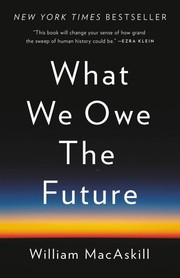
What We Owe the Future
First published 2022. Subjects: altruism, civilization, eudaemonics, existential threats, forecasting.

The future as history
First published 1959. Subjects: World politics, Relations, Foreign relations, Long Now Manual for Civilization, Relations extérieures.

The art of the long view
First published 1991. Subjects: Management, Strategic planning, Organizational change, Business forecasting, Strategische planning.

The Future of Life
First published 2002. Subjects: Environmental degradation, Endangered species, Nature conservation, Zukunft, Biodiversiteit.
eBay marketplace picks
Marketplace Samples
Example marketplace items related to this page. Use the search link to explore similar finds on eBay.

Example eBay listing
A.I. Artificial Intelligence Original Movie Poster Signed By Jude Law
USD 125.00 | Shipping USD 25.00 | US

Example eBay listing
Artificial Intelligence D/S Original Movie Poster - 27 x 40"
USD 19.50 | Shipping USD 13.65 | US

Example eBay listing
612388 Artificial Intelligence Movie Science Fiction Drama Wall Print Poster
USD 22.95 | Shipping USD 12.95 | JP

Example eBay listing
Companion - Artificial Intelligence Dark Comedy Cinema Film - POSTER 20"x30"
USD 23.99 | Free shipping | US

Example eBay listing
A.I. Artificial Intelligence Movie Film Poster Art Print
GBP 4.99 | Free shipping | GB

Example eBay listing
A I Artificial Intelligence 6 Movie Poster Art Print Print Classic Rare Gallery
GBP 49.00 | Free shipping | GB

Example eBay listing
AI - Artificial Intelligence (Poster + Slipcase) Blu-Ray
GBP 10.49 | Free shipping | GB

Example eBay listing
A. I. Artificial Intelligence. Jude Law. Original UK Video Poster.
GBP 8.11 | Shipping GBP 3.38 | GB
Topic Tree
Follow this branch
Parent topic
AI Bloom FuturesRelated pages 9
- Abundant Intelligence
- AI Medicine
- AI Tutors
- Coordination
- Discovery
- Energy Limits
- Robots and Work
- Shared Gains
- +1 more in sidebar