Within AI Bloom Futures
AI Tutors and Learning
AI tutors could widen access to good teaching, especially when they support teachers instead of replacing them.
On this page
- What good AI tutoring can add
- Why teacher support still matters
- Risks of copying and shallow learning
Page outline Jump by section
Introduction
AI tutors could become one of the most important routes from ordinary AI productivity gains to a larger human bloom: a world where more people can learn well, change direction in adulthood, and contribute to science, culture and civic life. The strongest case is not that chatbots replace teachers. It is that well-designed AI tutors could make patient, personalised practice far more available, especially where human tutoring is scarce or expensive. Early evidence is genuinely promising: studies in Nigeria, live tutoring programmes and university classrooms report meaningful learning gains when AI is used with structure and teacher support. But the warning is just as clear. Unguarded AI can tempt students to copy answers, skip effort and feel more capable than they really are. The future of learning depends less on whether AI can explain things, and more on whether schools use it to strengthen attention, practice, feedback, curiosity and human teaching rather than hollowing them out. [Open Knowledge Repository]openknowledge.worldbank.orgSource details in endnotes.
What good AI tutoring can add
The old dream behind AI tutors is simple: every learner gets something closer to one-to-one help. Human tutoring has long been treated as unusually powerful because a tutor can notice confusion, adjust the pace, ask a better question and keep the learner working just beyond their comfort zone. Benjamin Bloom’s famous “two sigma” paper made this ambition vivid in 1984 by asking whether group instruction could ever approach the benefits of one-to-one tutoring. [Sage Journals]journals.sagepub.comSource details in endnotes.
Generative AI changes the economics of that question. A well-designed tutor can generate explanations, hints, examples, quizzes and feedback on demand. It can let a student ask the “silly” question three times without embarrassment. It can translate an idea into simpler language, produce another practice problem, or spot a misconception in a written answer. For adults, it can support retraining when formal education is too costly or slow. For children, it can give extra practice between lessons, especially in subjects such as maths, languages and coding where frequent feedback matters.
The strongest early results are not from casual chatbot use, but from structured programmes. A World Bank study in Nigeria tested Microsoft Copilot, powered by GPT-4, with first-year senior secondary students studying English over six weeks. The randomised controlled trial reported a 0.31 standard deviation improvement on an assessment covering curriculum-aligned English, AI knowledge and digital skills. The intervention was not simply “give children a chatbot”: it was an after-school programme with prompts, a defined subject focus and teacher involvement. [Open Knowledge Repository]openknowledge.worldbank.orgSource details in endnotes.
A separate randomised trial of Tutor CoPilot tested AI as support for human tutors rather than as a standalone tutor. It involved 900 tutors and 1,800 K-12 students from historically underserved communities. Students whose tutors had access to the AI support were 4 percentage points more likely to master topics, with the largest gains for students taught by lower-rated tutors. That matters because it points to one of the most socially valuable uses of AI in education: not replacing expert teachers, but helping less experienced tutors make better instructional moves in real time. [arXiv]arxiv.orgarXiv Tutor Co Pilot: A Human-AI Approach for Scaling Real-Time ExpertisearXiv Tutor Co Pilot: A Human-AI Approach for Scaling Real-Time Expertise
There is also promising evidence from higher education. A 2025 randomised controlled trial in a college physics setting found that students using a custom AI tutor learned more in less time than students in an active-learning class, while also reporting higher engagement and motivation. This does not mean all AI tutors outperform good classrooms. It does show that, under some conditions, an AI system designed around sound pedagogy can deliver more than generic automated help. [Nature]nature.comOpen source on nature.com.
The bloom-relevant point is that good tutoring expands capability. A child who finally understands fractions, an adult who learns programming after work, or a nurse who retrains into data analysis is not merely becoming more “productive”. They are gaining more freedom over what they can do and become. If AI makes high-quality learning support cheap and broadly available, it could loosen one of the deepest constraints on human flourishing: unequal access to patient, skilled teaching.
Why teacher support still matters
The most realistic future is not “AI tutor versus teacher”. It is a triangle: teacher, learner and AI system. The teacher still provides judgement, care, classroom culture, motivation, safeguarding and a sense of what matters. The AI provides extra practice, fast feedback and adaptive explanation. The danger comes when policymakers treat the cheaper part of the system as a substitute for the whole.
UNESCO’s guidance on generative AI in education argues for a human-centred approach, including privacy protection, age-appropriate use and safeguards for human agency. Its 2024 AI competency framework for teachers explicitly frames education as a new teacher-AI-student relationship, not a machine takeover of teaching. The framework identifies teacher competencies across human-centred thinking, ethics, AI foundations, AI pedagogy and professional learning. [UNESCO]unesco.orgguidance generative ai education and researchguidance generative ai education and research
The UK Department for Education has taken a similar line. Its guidance says generative AI may support education if used safely, effectively and with the right infrastructure, but it places responsibility on schools and colleges to manage risks around accuracy, data, intellectual property and responsible use. UK policy interest has also focused heavily on reducing teacher workload, such as lesson preparation, marking support and feedback, rather than presenting AI as a replacement for professional educators. [GOV.UK]GOV.UKGenerative artificial intelligence (AI) in educationGenerative artificial intelligence (AI) in education
This distinction is crucial. Some of the most valuable uses of AI may be invisible to pupils: helping teachers create differentiated exercises, draft feedback, identify misconceptions, adapt material for pupils with special educational needs, or prepare revision questions. When this works, teachers gain time for the human parts of teaching: relationships, judgement, encouragement, behaviour, discussion and noticing when a child is lost.
Tutor CoPilot is a useful concrete example because it improved human tutoring rather than bypassing it. The AI suggested questions, hints and strategies during live tutoring sessions. Researchers found that tutors with access to the system were more likely to use high-quality strategies such as guiding questions and less likely to simply give away answers. That is an important design principle: AI should often help adults teach better, not just help students get answers faster. [arXiv]arxiv.orgarXiv Tutor Co Pilot: A Human-AI Approach for Scaling Real-Time ExpertisearXiv Tutor Co Pilot: A Human-AI Approach for Scaling Real-Time Expertise
The OECD has also stressed that education systems need to think beyond narrow AI adoption and reconsider what students should learn as AI capabilities expand. If AI can increasingly read, write, calculate, translate and explain, schools must ask which human capabilities become more important: judgement, collaboration, curiosity, deep knowledge, moral reasoning, practical skill, resilience and the ability to use powerful tools without becoming dependent on them. [OECD]oecd.orgOpen source on oecd.org.
That is why teacher support still matters even in a world of very capable AI tutors. Learning is not only the transfer of information. It is the formation of attention, confidence, habits, standards and identity. A good teacher does not merely answer questions. They help students learn what questions are worth asking.
Risks of copying and shallow learning
The strongest objection to AI tutoring is not that it cannot help. It is that it can help in the wrong way.
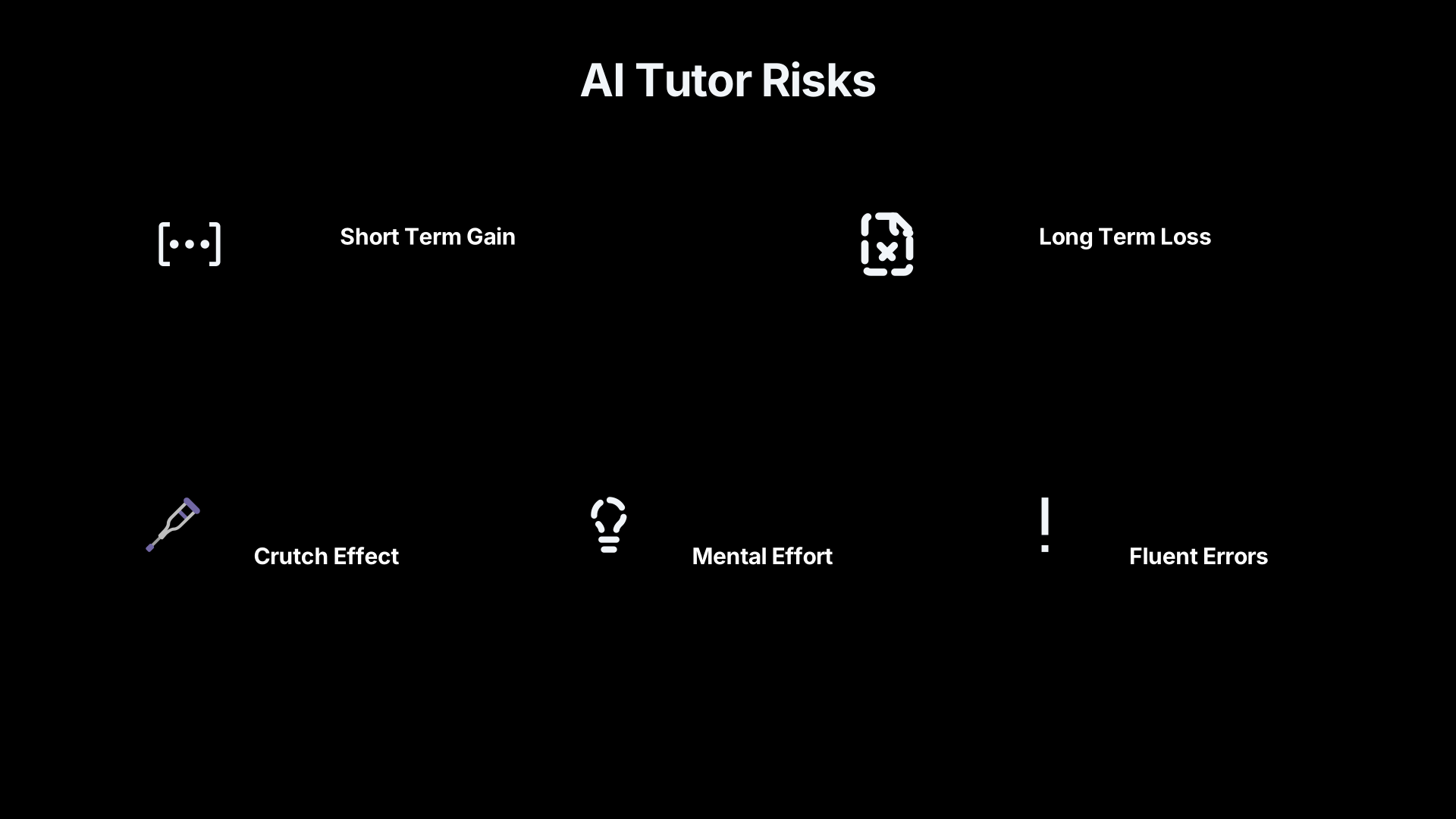
A 2024 Wharton-led field experiment, later associated with publication in the Proceedings of the National Academy of Sciences, tested generative AI tutors with nearly 1,000 high school maths students. During practice, access to GPT-4 improved performance: students could solve more problems while the tool was available. But when access was removed, students who had used a standard chatbot-style interface performed worse than students who never had access. The researchers found that the tool could become a crutch: students used it to obtain answers rather than build durable understanding. A more carefully designed “GPT Tutor” version reduced these harms by adding learning safeguards. [SSRN]papers.ssrn.comOpen source on ssrn.com.
This is the central design problem for AI tutors. A system that gives answers too quickly may raise short-term scores while weakening long-term learning. A system that asks guiding questions, requires attempts, gives hints gradually and checks understanding is more likely to build skill. The difference is not cosmetic. It is the difference between outsourcing thought and practising thought.
Similar concerns appear in coding education. A 2024 study on ChatGPT in learning contexts found both positive and negative mechanisms. Students benefited when they used AI conversationally as a tutor, asking for explanations and engaging with the topic. Learning suffered when students relied on the model to solve exercises for them without sufficient mental effort. The authors also warned that students may overestimate how much they have learned after using AI. [arXiv]arxiv.orgarXiv Tutor Co Pilot: A Human-AI Approach for Scaling Real-Time ExpertisearXiv Tutor Co Pilot: A Human-AI Approach for Scaling Real-Time Expertise
This problem is especially serious because generative AI is fluent even when wrong. A weak explanation can sound confident. A plausible answer can conceal a mistake. A student who lacks the knowledge to judge the response may copy it, trust it or misunderstand it. That makes AI literacy part of the core curriculum: learners need to know how to question AI outputs, verify claims, ask for reasoning, compare answers and recognise when they are not actually doing the work.
There is also a wider assessment problem. In universities, surveys and reporting have shown extensive student use of AI for essays and assessed work, forcing institutions to rethink the boundary between support, collaboration and cheating. A UK survey reported by the Guardian in 2024 found that more than half of undergraduates said they used AI to help with essays, although direct copying was much less commonly admitted. [The Guardian]theguardian.comSource details in endnotes.
The lesson is not to ban AI tutors everywhere. It is to stop pretending that access alone is educational. A good AI tutor must be designed to preserve productive struggle: the mental effort through which people actually learn.
Who gains, and who could be left further behind
AI tutoring could be a major force for educational equality, but only if access, design and support are taken seriously.
The optimistic case is strongest in places where good tutoring is scarce. If a rural school, an overcrowded classroom or an adult learner with no local course can access patient AI-supported practice, the gains could be large. The Nigeria trial is important partly because it tested AI tutoring in a setting where additional high-quality instruction can be hard to scale quickly. [Open Knowledge Repository]openknowledge.worldbank.orgSource details in endnotes.
But the same technology could also widen inequality. Wealthier families may buy better AI tutors, faster devices, more reliable internet and human coaching on top. Better-resourced schools may integrate AI into thoughtful teaching, while poorer schools may receive cheaper, more automated systems with less adult support. If AI becomes a substitute for teachers mainly in underfunded communities, it could create a two-tier system: rich children get human relationships enhanced by AI; poor children get screens.
The evidence base is also uneven. A 2025 review of AI in elementary STEM education found that studies were geographically concentrated, with most coming from North America, East Asia and Europe. It also identified gaps around infrastructure, privacy, developmental appropriateness, teacher marginalisation and narrow assessment. That makes it risky to generalise too quickly from a few successful pilots to every school system. [arXiv]arxiv.orgarXiv Tutor Co Pilot: A Human-AI Approach for Scaling Real-Time ExpertisearXiv Tutor Co Pilot: A Human-AI Approach for Scaling Real-Time Expertise
Equity also includes language and culture. A tutor that works well in English for a standard curriculum may fail students who speak minority languages, use different examples, or need culturally relevant teaching. UNESCO’s guidance warns that inclusion, linguistic diversity and bias must be addressed directly if generative AI is to support rather than undermine equity in education. [UNESCO]unesco.orgAI competency framework for teachers | UNESCOAI competency framework for teachers | UNESCO
The most democratic version of AI tutoring would therefore require more than apps. It would need public investment in connectivity, devices, teacher training, curriculum-aligned models, independent evaluation, accessibility standards and strong privacy rules for children’s data.
What a good AI tutor should do
The early evidence points towards a practical distinction between answer machines and learning machines.
An answer machine responds to the student’s prompt as efficiently as possible. It solves the problem, writes the paragraph, provides the summary or generates the code. That can be useful in work settings, but it can be damaging in learning settings if the student skips the process that builds competence.
A learning machine behaves differently. It asks what the student has tried. It gives a hint before an answer. It invites the learner to explain their reasoning. It adapts difficulty gradually. It notices repeated errors. It encourages retrieval practice, where students recall knowledge rather than merely reread it. It helps teachers see patterns across a class. It makes the learner stronger when the tool is removed.
Good AI tutoring should therefore be judged by several questions:
- Does it improve independent performance later, not just performance while the tool is available?
- Does it ask students to think, attempt and explain?
- Does it help teachers understand what students are struggling with?
- Does it protect children’s data and avoid manipulative engagement tactics?
- Does it work for lower-achieving learners, disabled learners and students without strong self-study habits?
- Does it reduce teacher workload without reducing teacher authority?
- Does it make learning more humanly meaningful, not just more automated?
The Wharton maths study is valuable because it shows that design choices matter. Unguarded access harmed later performance, while a tutor-like version with safeguards mitigated the damage. The Tutor CoPilot study is valuable because it shows that AI can improve the quality of human tutoring in real time. The Nigeria study is valuable because it shows that structured AI-supported learning can produce gains in a lower-resource setting. Together, they suggest that “AI tutoring works” and “AI tutoring harms learning” are both too crude. The better question is: what kind of AI tutor, used by whom, under what supervision, for which learning goal? [SSRN]papers.ssrn.comOpen source on ssrn.com. [arXiv]arxiv.orgarXiv Tutor Co Pilot: A Human-AI Approach for Scaling Real-Time ExpertisearXiv Tutor Co Pilot: A Human-AI Approach for Scaling Real-Time Expertise
Why this matters for the long future
Education is one of the deepest bottlenecks in human civilisation. Talent is widely distributed, but excellent teaching is not. Millions of people never get the chance to develop their abilities fully because they lack time, money, safety, confidence, language support, expert feedback or a teacher who can meet them where they are.
If AI tutors genuinely widen access to good learning, the long-term effects could be enormous. More people could understand science, retrain during economic change, participate in democracy, create art, found companies, solve local problems, care for others and contribute to research. In the strongest AI bloom scenario, intelligence is not merely concentrated in machines or elite institutions. It becomes a shared layer of support around human development.
But education also reveals the central tension in the bloom thesis. AI can amplify human agency, or it can weaken it. It can help learners think better, or help them avoid thinking. It can support teachers, or become an excuse to underfund them. It can close gaps, or deepen them. It can make knowledge more abundant, while making attention, trust and judgement more scarce.
The future of AI tutoring should therefore be judged by a demanding standard: not whether it produces impressive demonstrations, but whether it helps people become more capable without becoming more dependent. A civilisation that blooms needs more than fast answers. It needs learners who can ask better questions, test claims, build skill, care about truth and keep growing throughout life.
Endnotes
-
Source: arxiv.org
Title: arXiv Tutor Co Pilot: A Human-AI Approach for Scaling Real-Time Expertise
Link: https://arxiv.org/abs/2410.03017 -
Source: papers.ssrn.com
Link: https://papers.ssrn.com/sol3/papers.cfm?abstract_id=4895486 -
Source: nature.com
Link: https://www.nature.com/articles/s41598-025-97652-6 -
Source: unesco.org
Title: guidance generative ai education and research
Link: https://www.unesco.org/en/articles/guidance-generative-ai-education-and-research?hub=67098 -
Source: unesco.org
Title: AI competency framework for teachers | UNESCO
Link: https://www.unesco.org/en/articles/ai-competency-framework-teachers?fbp=fb.1.1747949233331.384224695923233560&refSource=copy&referralCode=6irv564 -
Source: GOV.UK
Title: Generative artificial intelligence (AI) in education
Link: https://www.gov.uk/government/publications/generative-artificial-intelligence-in-education/generative-artificial-intelligence-ai-in-education?pStoreID=hp_education%27%5B0%5D%27 -
Source: GOV.UK
Title: Generative artificial intelligence (AI) in education
Link: https://www.gov.uk/government/publications/generative-artificial-intelligence-in-education -
Source: oecd.org
Link: https://www.oecd.org/en/publications/what-should-teachers-teach-and-students-learn-in-a-future-of-powerful-ai_ca56c7d6-en.html -
Source: arxiv.org
Title: arXiv AI Meets the Classroom: When Does Chat GPT Harm Learning?
Link: https://arxiv.org/abs/2409.09047 -
Source: arxiv.org
Link: https://arxiv.org/abs/2511.00105 -
Source: oecd.org
Link: https://www.oecd.org/en/publications/reimagining-teaching-in-an-accelerating-world_d0edfe8c-en/full-report/component-6.html -
Source: oecd.org
Title: oecd digital education outlook 2026 062a7394 en
Link: https://www.oecd.org/en/publications/oecd-digital-education-outlook-2026_062a7394-en.html?wcmmode=disabled%27%27.html -
Source: oecd.ai
Title: Recommendations on AI in education, teaching and training
Link: https://oecd.ai/en/dashboards/policy-initiatives/recommendations-on-ai-in-education%2C-teaching-and-training -
Source: GOV.UK
Title: www.gov.uk Generative artificial intelligence (AI) in education
Link: https://www.gov.uk/government/publications/generative-artificial-intelligence-in-education/generative-artificial-intelligence-ai-in-education?pStoreID=hp_education%270%27%5B0%5D%27%5B0%5D -
Source: nature.com
Link: https://www.nature.com/articles/s41539-025-00320-7 -
Source: GOV.UK
Title: www.gov.uk National Tutoring Programme year 3: impact evaluation
Link: https://www.gov.uk/government/publications/national-tutoring-programme-year-3-impact-evaluation -
Source: unesco.org
Link: https://www.unesco.org/en/digital-education/ai-future-learning/competency-frameworks?hub=1081 -
Source: papers.ssrn.com
Link: https://papers.ssrn.com/sol3/Delivery.cfm/4898213.pdf?abstractid=4898213 -
Source: papers.ssrn.com
Link: https://papers.ssrn.com/abstract%3D4895486 -
Source: papers.ssrn.com
Link: https://papers.ssrn.com/sol3/Delivery.cfm/4895486.pdf?abstractid=4895486&mirid=1 -
Source: unesco.org
Title: Orientations pour l’intelligence artificielle générative dans
Link: https://www.unesco.org/fr/articles/orientations-pour-lintelligence-artificielle-generative-dans-leducation-et-la-recherche?hub=67098 -
Source: unesco.org
Title: Guía para el uso de IA generativa en educación e investigación
Link: https://www.unesco.org/es/articles/guia-para-el-uso-de-ia-generativa-en-educacion-e-investigacion?hub=83250 -
Source: GOV.UK
Title: www.gov.uk Generative AI in education: educator and expert views
Link: https://www.gov.uk/government/publications/generative-ai-in-education-educator-and-expert-views -
Source: unesco.org
Title: guidance generative ai education and research
Link: https://www.unesco.org/ar/articles/guidance-generative-ai-education-and-research?hub=67098 -
Source: consult.education.gov.uk
Link: https://consult.education.gov.uk/digital-strategy/generative-artificial-intelligence-in-education/ -
Source: en.unesco.org
Link: https://en.unesco.org/artificial-intelligence/education -
Source: oecd.org
Link: https://www.oecd.org/en/about/projects/artificial-intelligence-and-future-of-skills.html -
Source: oecd.org
Link: https://www.oecd.org/en/topics/artificial-intelligence-and-education-and-skills -
Source: oecd.org
Link: https://www.oecd.org/en/topics/artificial-intelligence-and-education-and-skills.html -
Source: iicba.unesco.org
Title: artificial intelligence and education systems
Link: https://www.iicba.unesco.org/en/artificial-intelligence-and-education-systems -
Source: iicba.unesco.org
Title: ai competency framework teachers
Link: https://www.iicba.unesco.org/ru/africa-education-knowledge-platform/ai-competency-framework-teachers -
Source: openknowledge.worldbank.org
Link: https://openknowledge.worldbank.org/entities/publication/15e1ff08-15ae-4f7a-b2a8-d146e6c113ee -
Source: journals.sagepub.com
Link: https://journals.sagepub.com/doi/10.3102/0013189X013006004 -
Source: theguardian.com
Link: https://www.theguardian.com/technology/2024/feb/01/more-than-half-uk-undergraduates-ai-essays-artificial-intelligence -
Source: cedefop.europa.eu
Title: unesco ai competency framework teachers
Link: https://www.cedefop.europa.eu/en/tools/vet-toolkit-tackling-early-leaving/resources/unesco-ai-competency-framework-teachers -
Source: unesco-floods.eu
Link: https://www.unesco-floods.eu/unesco-publishes-first-ever-global-guidance-on-generative-ai-in-education-september-2023/
Published: september 2023 -
Source: unesco.org.nz
Link: https://unesco.org.nz/knowledge-hub/unesco-ai-competency-framework-for-students-and-teachers
Additional References
-
Source: youtube.com
Title: AI Tutors to Help Prepare Students for the 21st-Century Workforce
Link: https://www.youtube.com/watch?v=t2Hya9i7djQSource snippet
AI Tutor Revolutionizing Student Education feat. Khanmigo...
-
Source: pubmed.ncbi.nlm.nih.gov
Link: https://pubmed.ncbi.nlm.nih.gov/40537565/ -
Source: youtube.com
Title: How AI tutors and teaching assistants will transform education
Link: https://www.youtube.com/watch?v=qlh8fiLiovISource snippet
Imagining the future of education with AI...
-
Source: youtube.com
Title: Imagining the future of education with AI
Link: https://www.youtube.com/watch?v=2rv_e3cU7gYSource snippet
AI Tutors to Help Prepare Students for the 21st-Century Workforce...
-
Source: followin.io
Link: https://followin.io/en/feed/15689479 -
Source: edpreplab.org
Link: https://edpreplab.org/resource-library/ai-competency-framework-teachers -
Source: erctpapers.com
Link: https://erctpapers.com/papers/31-kestin-et-al-2025-ai-tutoring-active-learning-rct.html -
Source: lifescience.net
Link: https://www.lifescience.net/publications/1340181/ai-tutoring-outperforms-in-class-active-learning-a/ -
Source: sciety.org
Link: https://sciety.org/articles/activity/10.1038/s41598-025-97652-6 -
Source: sciety.org
Link: https://sciety.org/articles/activity/10.21203/rs.3.rs-4243877/v1
Amazon book picks
Further Reading
Books and field guides related to AI Tutors and Learning. Use these as the next step if you want deeper reading beyond the article.
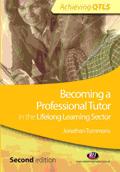
Becoming a Professional Tutor in the Lifelong Learning Sector
First published 2010. Subjects: College teachers, Continuing education, Tutors and tutoring.
Open learning tutor skills
First published 1991. Subjects: Distance education, Tutors and tutoring, Independent study.
Intelligent language tutors
First published 1995. Subjects: Computer-assisted instruction, Computational linguistics, Language and languages, Programming languages (...
eBay marketplace picks
Marketplace Samples
Example marketplace items related to this page. Use the search link to explore similar finds on eBay.

Example eBay listing
Artificial intelligence Framed Wall Art Poster Canvas Print Picture
USD 40.12 | GB

Example eBay listing
Artificial intelligence Framed Wall Art Poster Canvas Print Picture
USD 40.12 | GB
Example eBay listing
A.I. Artificial Intelligence Movie Poster Print, Wall Art - Unframed
USD 8.99 | Free shipping | US
Example eBay listing
612388 Artificial Intelligence Movie Science Fiction Drama Wall Print Poster
USD 22.95 | Shipping USD 12.95 | JP
Example eBay listing
A.I. Artificial Intelligence Movie Film Poster Art Print
GBP 4.99 | Free shipping | GB

Example eBay listing
A I Artificial Intelligence 6 Movie Poster Art Print Print Classic Rare Gallery
GBP 49.00 | Free shipping | GB
Example eBay listing
AI - Artificial Intelligence (Poster + Slipcase) Blu-Ray
GBP 10.49 | Free shipping | GB
Example eBay listing
A. I. Artificial Intelligence. Jude Law. Original UK Video Poster.
GBP 8.11 | Shipping GBP 3.38 | GB
Topic Tree
Follow this branch
Parent topic
AI Bloom FuturesRelated pages 9
- Abundant Intelligence
- AI Medicine
- Coordination
- Discovery
- Energy Limits
- Long Future
- Robots and Work
- Shared Gains
- +1 more in sidebar