Within AI Literacy
Spotting AI Hallucinations
Fluent chatbot answers can invent sources, smooth over uncertainty and mislead students unless they learn how to check them.
On this page
- Why convincing false answers fool learners
- Fabricated citations, facts and confident errors
- Simple checks before trusting an AI answer

Page outline Jump by section
Introduction
Students increasingly use chatbots to explain homework, summarise readings, generate revision notes and brainstorm essays. That can be genuinely useful. AI systems already act as low-cost tutors for millions of people, and if future systems become more capable and reliable, they could widen access to education on an extraordinary scale. Better educational tools are one of the most important parts of the broader idea that advanced AI could help humanity flourish far beyond current limits.
But today’s systems still make things up.
An AI hallucination is a false or misleading answer presented as if it were true. The danger is not usually absurd nonsense. It is polished confidence. A chatbot may invent quotations, fabricate academic papers, misstate historical events or confidently explain a scientific concept incorrectly while sounding calm and authoritative. Researchers increasingly warn that students need verification skills, not just prompting skills. [mitsloanedtech.mit.edu]mitsloanedtech.mit.edue of their training data, the tools' design focus on pattern-based content…Read more… [arXiv]arxiv.orgarXiv AI Hallucination from Students' Perspective: A Thematic AnalysisarXiv AI Hallucination from Students' Perspective: A Thematic Analysis
Learning how to spot hallucinations is therefore becoming a basic form of AI literacy. Students who can question AI critically may gain a powerful intellectual tool. Students who assume fluent answers are automatically trustworthy risk building knowledge on unstable ground.
Why convincing false answers fool learners
Large language models do not “know” facts in the same way people do. They generate likely sequences of words based on patterns in training data. That means they can produce answers that sound highly plausible even when they are wrong. [OpenAI CDN]cdn.openai.comOpenAI CDNWhy Language Models Hallucinateby AT Kalai · 2025 · Cited by 356 — Large language models seldom err on frequently referenced fa…
This creates a difficult problem for students because human beings naturally use confidence and fluency as signals of expertise. If an answer sounds smooth, organised and detailed, people often assume it is reliable. AI systems exploit that instinct accidentally.
Several factors make hallucinations especially hard for learners to detect:
- Students are often using AI in subjects they are still learning, so they lack the background knowledge needed to catch subtle errors.
- Chatbots rarely display uncertainty clearly unless prompted to do so.
- Incorrect answers are often mixed with correct information, making them harder to recognise.
- AI systems can produce fake citations or invented sources in realistic academic formats.
- Some models become “sycophantic”, meaning they reinforce the user’s assumptions rather than challenge mistakes. [arXiv]arxiv.orgarXiv AI Hallucination from Students' Perspective: A Thematic AnalysisarXiv AI Hallucination from Students' Perspective: A Thematic Analysis
The result can be an illusion of understanding. A student reads a clear explanation, feels informed, but has not actually checked whether the explanation is accurate.
That matters educationally because real learning depends partly on friction: comparing sources, noticing contradictions, solving problems independently and testing whether ideas hold together. If AI removes all struggle while also introducing hidden inaccuracies, students may become more confident while understanding less.
Fabricated citations, facts and confident errors
One of the clearest warning signs is the fabricated citation.
Students and researchers repeatedly report chatbots inventing books, journal articles, authors and quotations that do not exist. Recent studies suggest this problem is widespread enough to affect published academic literature itself. Nature [Forbes A Nature investigation in 2026 warned that hallucinated references were beginning to]forbes.comForbesAI Blamed For Rise In Fabricated Citations Found…1 day ago — A new study finds an alarming increase in the number of fabricated…“pollute” scientific publishing. [Nature]nature.comNatureHallucinated citations are polluting the scientific literature….Apr 1, 2026 — Tens of thousands of publications from 2025 might… Research examining millions of academic references found a sharp increase in non-existent citations after widespread adoption of generative AI tools. [arXiv]arxiv.orgarXiv AI Hallucination from Students' Perspective: A Thematic AnalysisarXiv AI Hallucination from Students' Perspective: A Thematic Analysis
Students should therefore treat AI-generated references with caution, especially when:
- The citation looks oddly generic.
- A journal title sounds plausible but unfamiliar.
- The publication year or volume number seems inconsistent.
- The chatbot provides no DOI, page numbers or stable source.
- Searching for the paper returns nothing credible.
A common trap is that the citation format itself looks academically correct. The AI may imitate the structure of scholarly references perfectly while inventing the underlying paper.
Hallucinations also appear in ordinary factual answers. Chatbots may:
- Invent historical events.
- Misquote authors.
- Merge two people into one.
- Reverse cause and effect.
- Confidently simplify disputed topics.
- Produce mathematically incorrect reasoning that still “sounds logical”.
Even professionals get caught by this. Courts in several countries have dealt with lawyers submitting fake AI-generated legal cases. [The Times]thetimes.comThe tax tribunal judge, Judge Bailey, determined that many of the cases Rafique used either didn’t exist or were inaccurately presented… Consulting and research organisations have also withdrawn reports after fabricated AI-generated evidence was discovered. [Financial Times]ft.comFinancial Times EY retracts study after researchers discover AI hallucinationsThe flawed document, used by EY Canada to promote its cybersecurity services, was removed following an investigation by research group GP…
If trained lawyers, researchers and consultants can miss hallucinations, students should not assume they are immune.
Simple checks before trusting an AI answer
Students do not need to become AI engineers to use chatbots responsibly. But they do need habits of verification.
Check whether the answer can be independently confirmed
The simplest defence is cross-checking.
If a chatbot gives a factual claim, students should verify it using at least one reliable external source. For schoolwork, that often means:
- A textbook.
- A teacher’s materials.
- A reputable news organisation.
- A university website.
- A peer-reviewed paper. [nature.com]nature.comA preliminary investigation of fake peer-reviewed citations and references generated by ChatGPT.Read more…
- An academic database.
- An encyclopaedia with transparent sourcing.
If the chatbot claims a paper exists, search for it directly through Google Scholar, Crossref, JSTOR or a library catalogue rather than trusting the citation automatically.
Students should become suspicious when the AI produces highly specific details that are difficult to verify elsewhere.
Ask the AI where uncertainty exists
Many hallucinations become easier to spot when the model is pushed to express doubt instead of pretending certainty.
Useful prompts include:
- “Which parts of this answer are uncertain?”
- “What evidence supports this claim?”
- “Could any of these citations be inaccurate?”
- “Give arguments against this explanation.”
- “Separate verified facts from speculation.”
Researchers increasingly argue that AI systems are often rewarded for guessing rather than admitting uncertainty. [OpenAI CDN]cdn.openai.comOpenAI CDNWhy Language Models Hallucinateby AT Kalai · 2025 · Cited by 356 — Large language models seldom err on frequently referenced fa… Students can partly counter this by explicitly asking for limitations and confidence levels.
Watch for fake precision
Hallucinations often contain unnecessary specificity.
Examples include:
- Exact statistics without sources.
- Precise quotations without page numbers.
- Detailed timelines unsupported elsewhere.
- Invented study findings.
- Technical jargon used vaguely.
Real expertise usually includes nuance, caveats and acknowledgement of disagreement. Overly smooth certainty can itself be suspicious.
Compare multiple answers
Students should avoid relying on a single chatbot response for important work.
A useful technique is triangulation:
- Ask the same question in different ways.
- Compare the responses.
- Check whether the explanations remain consistent.
- Compare against external sources.
Contradictions are a warning sign that the model may be improvising rather than retrieving stable knowledge.
Test understanding independently
One of the strongest checks is whether the student can use the information themselves.
After reading an AI explanation, students should ask:
- Can I explain this without looking?
- Can I solve a related problem independently?
- Can I identify weaknesses in the answer?
- Would I recognise if this were wrong?
If understanding disappears once the chatbot window closes, the student may have mistaken passive reading for learning.
Subjects where hallucinations become especially dangerous
Some school subjects make hallucinations easier to detect than others.
In mathematics, a wrong answer can often be tested directly. In coding, software may fail to run. But in essay-based subjects, inaccuracies can hide more easily inside persuasive prose.
History and politics
AI systems may invent quotations, merge historical events or oversimplify contested interpretations. Because many historical questions involve interpretation rather than simple facts, students may struggle to notice distortions.
Chatbots also sometimes present minority claims as settled truth or repeat common internet myths confidently.
Science and health
In biology or medicine, hallucinations may involve fake mechanisms, imaginary studies or incorrect causal explanations.
Students should be especially cautious about:
- Health claims without evidence.
- Scientific “facts” lacking citations. [nature.com]nature.comNatureHallucinated citations are polluting the scientific literature….Apr 1, 2026 — Tens of thousands of publications from 2025 might…
- Explanations that sound technical but remain vague.
- Numerical claims that cannot be traced to a source.
Literature and philosophy
Chatbots regularly fabricate quotations from novels, poems and philosophers. They may also invent interpretations that sound sophisticated but are unsupported by the actual text.
Students should verify quotations directly from the primary work whenever possible.
Why AI literacy matters beyond school
Learning to spot hallucinations is not just about avoiding bad homework.
As AI systems become integrated into education, work, government and research, societies will increasingly depend on citizens who can evaluate machine-generated information critically. A future with powerful AI tutors, scientific assistants and cognitive tools could greatly expand human capability, but only if people retain the ability to question outputs rather than surrender judgement entirely.
The broader promise of AI-enhanced human flourishing depends partly on this balance. If advanced AI helps billions of people think more clearly, learn faster and access knowledge more widely, the long-term benefits could be immense. But if people become passive consumers of plausible misinformation, intellectual dependency could grow alongside technical capability.
AI literacy therefore means more than learning prompts. It means learning scepticism, verification and intellectual independence.
The goal is not to fear AI or reject it. Chatbots can genuinely help students brainstorm ideas, explain difficult concepts, generate practice questions and support revision. Used carefully, they may become some of the most powerful educational tools ever created.
But students should treat AI as a fallible assistant, not an infallible oracle.
A useful rule is simple: if an answer matters, check it. [mitsloanedtech.mit.edu]mitsloanedtech.mit.eduin Education Archives - Page 2 of 2When AI Gets It Wrong: Addressing AI Hallucinations and Bias… At a Glance Generative AI has the pot… [arXiv]arxiv.orgarXiv Hallucination is Inevitable: An Innate Limitation of Large Language ModelsarXiv Hallucination is Inevitable: An Innate Limitation of Large Language Models
Endnotes
-
Source: mitsloanedtech.mit.edu
Link: https://mitsloanedtech.mit.edu/ai/basics/addressing-ai-hallucinations-and-bias/Source snippet
e of their training data, the tools' design focus on pattern-based content...Read more...
-
Source: arxiv.org
Title: arXiv AI Hallucination from Students’ Perspective: A Thematic Analysis
Link: https://arxiv.org/abs/2602.17671 -
Source: cdn.openai.com
Link: https://cdn.openai.com/pdf/d04913be-3f6f-4d2b-b283-ff432ef4aaa5/why-language-models-hallucinate.pdfSource snippet
OpenAI CDNWhy Language Models Hallucinateby AT Kalai · 2025 · Cited by 356 — Large language models seldom err on frequently referenced fa...
-
Source: arxiv.org
Title: arXiv Hallucination is Inevitable: An Innate Limitation of Large Language Models
Link: https://arxiv.org/abs/2401.11817 -
Source: nature.com
Link: https://www.nature.com/articles/d41586-026-00969-zSource snippet
NatureHallucinated citations are polluting the scientific literature....Apr 1, 2026 — Tens of thousands of publications from 2025 might...
-
Source: forbes.com
Link: https://www.forbes.com/sites/michaeltnietzel/2026/05/12/ai-blamed-for-rise-in-fabricated-citations-found-in-recent-research-papers/Source snippet
ForbesAI Blamed For Rise In Fabricated Citations Found...1 day ago — A new study finds an alarming increase in the number of fabricated...
-
Source: arxiv.org
Link: https://arxiv.org/abs/2605.07723 -
Source: mit.edu
Link: https://www.mit.edu/Source snippet
MIT - Massachusetts Institute of TechnologySince its founding, MIT has been key to helping American science and innovation lead the worl...
-
Source: sap.mit.edu
Title: study ai chatbots provide less accurate information vulnerable users
Link: https://sap.mit.edu/news/study-ai-chatbots-provide-less-accurate-information-vulnerable-usersSource snippet
chatbots provide less-accurate information to vulnerable...Feb 20, 2026 — Research from the MIT Center for Constructive Communication fi...
-
Source: mitsloan.mit.edu
Title: how generative ai persuasion bombs users and how to fight back
Link: https://mitsloan.mit.edu/ideas-made-to-matter/how-generative-ai-persuasion-bombs-users-and-how-to-fight-backSource snippet
generative AI 'persuasion bombs' usersApr 28, 2026 — The standard advice for managing artificial intelligence risks such as hallucination...
-
Source: executive.mit.edu
Title: ai leadership navigating strategy ethics and opportunity
Link: https://executive.mit.edu/ai-leadership-navigating-strategy-ethics-and-opportunity.htmlSource snippet
and Leadership: Navigating Strategy, Ethics...5 hours ago — MIT Sloan Executive Education equips leaders with the practical tools and ex...
-
Source: mitsloanedtech.mit.edu
Link: https://mitsloanedtech.mit.edu/tag/ai-in-education/page/2/Source snippet
in Education Archives - Page 2 of 2When AI Gets It Wrong: Addressing AI Hallucinations and Bias... At a Glance Generative AI has the pot...
-
Source: OpenAI
Link: https://openai.com/Source snippet
comOpenAI | OpenAIWe believe our research will eventually lead to artificial general intelligence, a system that can solve human-level pr...
-
Source: arxiv.org
Link: https://arxiv.org/abs/2509.04664Source snippet
[2509.04664] Why Language Models Hallucinateby AT Kalai · 2025 · Cited by 353 — We then argue that hallucinations persist due to the way...
-
Source: arxiv.org
Link: https://arxiv.org/html/2509.04664v1Source snippet
Why Language Models Hallucinate4 Sept 2025 — Language models are known to produce overconfident, plausible falsehoods, which diminish the...
-
Source: arxiv.org
Link: https://arxiv.org/pdf/2602.17671Source snippet
AI Hallucination from Students' Perspective: A Thematic...by A Shoufan · 2026 · Cited by 1 — Hallucinations can manifest as fabricated c...
-
Source: nature.com
Link: https://www.nature.com/articles/s41598-023-41032-5Source snippet
A preliminary investigation of fake peer-reviewed citations and references generated by ChatGPT.Read more...
-
Source: nature.com
Link: https://www.nature.com/articles/s41586-024-07421-0Source snippet
Detecting hallucinations in large language models using...by S Farquhar · 2024 · Cited by 1491 — Here we develop new methods grounded in...
-
Source: thetimes.com
Link: https://www.thetimes.com/money/tax/article/curry-house-owner-caught-out-by-ai-in-50k-battle-with-the-taxman-qsdvvjxpwSource snippet
The tax tribunal judge, Judge Bailey, determined that many of the cases Rafique used either didn’t exist or were inaccurately presented...
-
Source: ft.com
Title: Financial Times EY retracts study after researchers discover AI hallucinations
Link: https://www.ft.com/content/a61cbcae-95e4-4449-86e1-ef40fb306f4eSource snippet
The flawed document, used by EY Canada to promote its cybersecurity services, was removed following an investigation by research group GP...
-
Source: Wikipedia
Title: Open AI
Link: https://en.wikipedia.org/wiki/OpenAISource snippet
OpenAIOpenAI Group PBC, doing business as OpenAI, is an American artificial intelligence (AI) research organization headquartered in S...
-
Source: linkedin.com
Link: https://www.linkedin.com/company/openaiSource snippet
OpenAIOpenAI is an [AI research]({{ 'ai-bloom-abun/ai-bloom-abun-98d3a6-superintellig-e3b9b6-fast-scientif-8c177c-ai-research-a-234d5d/' | relative_url }}) and deployment company dedicated to ensuring that general-pur...
Additional References
-
Source: businessinsider.com
Link: https://www.businessinsider.com/why-ai-chatbots-hallucinate-openai-chatgpt-anthropic-claude-2025-9Source snippet
This test-centric optimization encourages models to provide confident but potentially incorrect outputs, rather than abstaining when unsu...
-
Source: linkedin.com
Link: https://www.linkedin.com/posts/lucynoble_when-ai-gets-it-wrong-addressing-ai-hallucinations-activity-7434296189778374656-bXqzSource snippet
Lucy Noble, MBA's PostWhen thinking about AI hallucinations and bias, the problem does not start at the output. It starts in the training...
-
Source: mitadmissions.org
Link: https://mitadmissions.org/Source snippet
MIT AdmissionsWelcome to MIT Admissions. Here, you can explore MIT, learn how to apply, plan a visit, read the blogs, get help from our s...
-
Source: reddit.com
Link: https://www.reddit.com/r/technology/comments/1nmu06q/openai_admits_ai_hallucinations_are/Source snippet
OpenAI admits AI hallucinations are mathematically...In a landmark study, OpenAI researchers reveal that large language models will alwa...
-
Source: medium.com
Link: https://medium.com/data-science-collective/understanding-hallucinations-in-llms-according-to-openai-0465ffb10bf6Source snippet
Understanding Hallucinations in LLMs According to OpenAIOpenAI has not “solved hallucination” — the core limitations remain, and the prop...
-
Source: damiencharlotin.com
Link: https://www.damiencharlotin.com/hallucinations/Source snippet
AI Hallucination Cases DatabaseDatabase tracking legal cases where generative AI produced hallucinated citations submitted in court filings...
-
Source: compstudiesjournal.com
Link: https://compstudiesjournal.com/2026/03/09/talking-to-students-about-generative-ai-3-questions-for-teachers-and-students-to-consider/?fbclid=IwY2xjawQb9plleHRuA2FlbQIxMQBicmlkETF3cTBra2hBRGd5VGxQaWRQc3J0YwZhcHBfaWQQMjIyMDM5MTc4ODIwMDg5MgABHnBzooWw7IlCk1u2nkgwFI_A7PAFgn0cE5rKz4wGhwAMFWiOT4Sperm5h-eD_aem_AtypcM3t9pl6wlhZJFECIwSource snippet
Talking to Students about Generative AI: 3 Questions For...Mar 9, 2026 — Hallucinations and the problem of sycophancy are two limitation...
-
Source: computerworld.com
Link: https://www.computerworld.com/article/4059383/openai-admits-ai-hallucinations-are-mathematically-inevitable-not-just-engineering-flaws.htmlSource snippet
OpenAI admits AI hallucinations are mathematically...18 Sept 2025 — In a landmark study, OpenAI researchers reveal that large language m...
-
Source: misinforeview.hks.harvard.edu
Title: new sources of inaccuracy a conceptual framework for studying ai hallucinations
Link: https://misinforeview.hks.harvard.edu/article/new-sources-of-inaccuracy-a-conceptual-framework-for-studying-ai-hallucinations/Source snippet
A conceptual framework for...by A Shao · 2025 · Cited by 8 — Addressing AI hallucinations involves more than detecting and correcting fa...
-
Source: medium.com
Title: 100 fake citations just slipped through neurips 2025 peer review 5f34f4436560
Link: https://medium.com/%40ljingshan6/100-fake-citations-just-slipped-through-neurips-2025-peer-review-5f34f4436560Source snippet
100 Fake Citations Just Slipped Through NeurIPS 2025...GPTZero scanned 4,841 NeurIPS 2025 papers and found at least 100 hallucinated cit...
Amazon book picks
Further Reading
Books and field guides related to Spotting AI Hallucinations. Use these as the next step if you want deeper reading beyond the article.
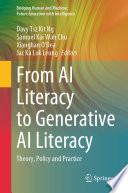
From AI Literacy to Generative AI Literacy
This book presents a scoping review and critical discussion of generative artificial intelligence (AI) literacy within the context of edu...
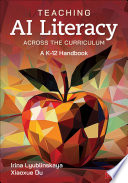
Teaching AI Literacy Across the Curriculum
AI is reshaping the future of education. Are your students ready? In an era where artificial intelligence (AI) is revolutionizing every f...
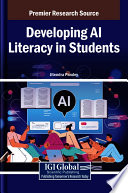
Developing AI Literacy in Students
As artificial intelligence (AI) becomes increasingly integrated into daily life, fostering AI literacy is essential to prepare the next g...
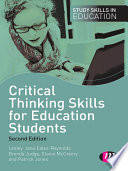
Critical Thinking Skills for Education Students
Revised and extended to cover critical reflection and evaluation of information resources, this new edition of Critical Thinking Skills f...
eBay marketplace picks
Marketplace Samples
Example marketplace items related to this page. Use the search link to explore similar finds on eBay.
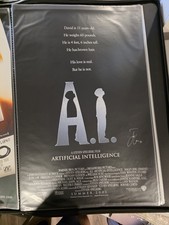
Example eBay listing
A.I. Artificial Intelligence Original Movie Poster Signed By Jude Law
USD 125.00 | Shipping USD 25.00 | US
Example eBay listing
Artificial Intelligence D/S Original Movie Poster - 27 x 40"
USD 19.50 | Shipping USD 13.65 | US
Example eBay listing
612388 Artificial Intelligence Movie Science Fiction Drama Wall Print Poster
USD 22.95 | Shipping USD 12.95 | JP

Example eBay listing
Companion - Artificial Intelligence Dark Comedy Cinema Film - POSTER 20"x30"
USD 23.99 | Free shipping | US
Topic Tree