Within Eye Exams
Can AI Eye Exams Reduce Screening Inequality?
Point-of-care screening can reduce disparities in completed eye exams, but insurance, transport and treatment access still shape who avoids vision loss.
On this page
- Why underserved groups miss annual eye examinations
- Where point of care screening appears to narrow gaps
- The barriers an autonomous test cannot remove
Page outline Jump by section
Introduction
Autonomous AI eye screening can help reduce important inequalities in access to diabetic eye examinations, but it cannot eliminate them on its own. The strongest evidence suggests that bringing validated retinal screening into primary care clinics, diabetes centres and community health settings substantially increases the number of people who actually complete recommended eye checks, particularly among groups that have historically been underserved. However, preventing blindness depends on more than screening. Patients still need affordable follow-up care, transport where specialist treatment is required, insurance or public funding, and healthcare systems capable of acting quickly on positive results. Autonomous screening therefore narrows one of the largest access gaps—the screening visit itself—rather than solving every cause of unequal vision outcomes.
Within the broader vision of AI supporting healthier, longer lives, this is an instructive example. Rather than creating a new cure, AI makes an established preventive service easier to reach. The remaining question is whether health systems can ensure that earlier diagnosis is matched by equitable treatment.
Why underserved groups miss annual eye examinations
Diabetic retinopathy is one of the leading causes of preventable blindness, yet many people with diabetes never receive the recommended annual retinal examination. The burden falls disproportionately on people who already face barriers to healthcare.
Common obstacles include:
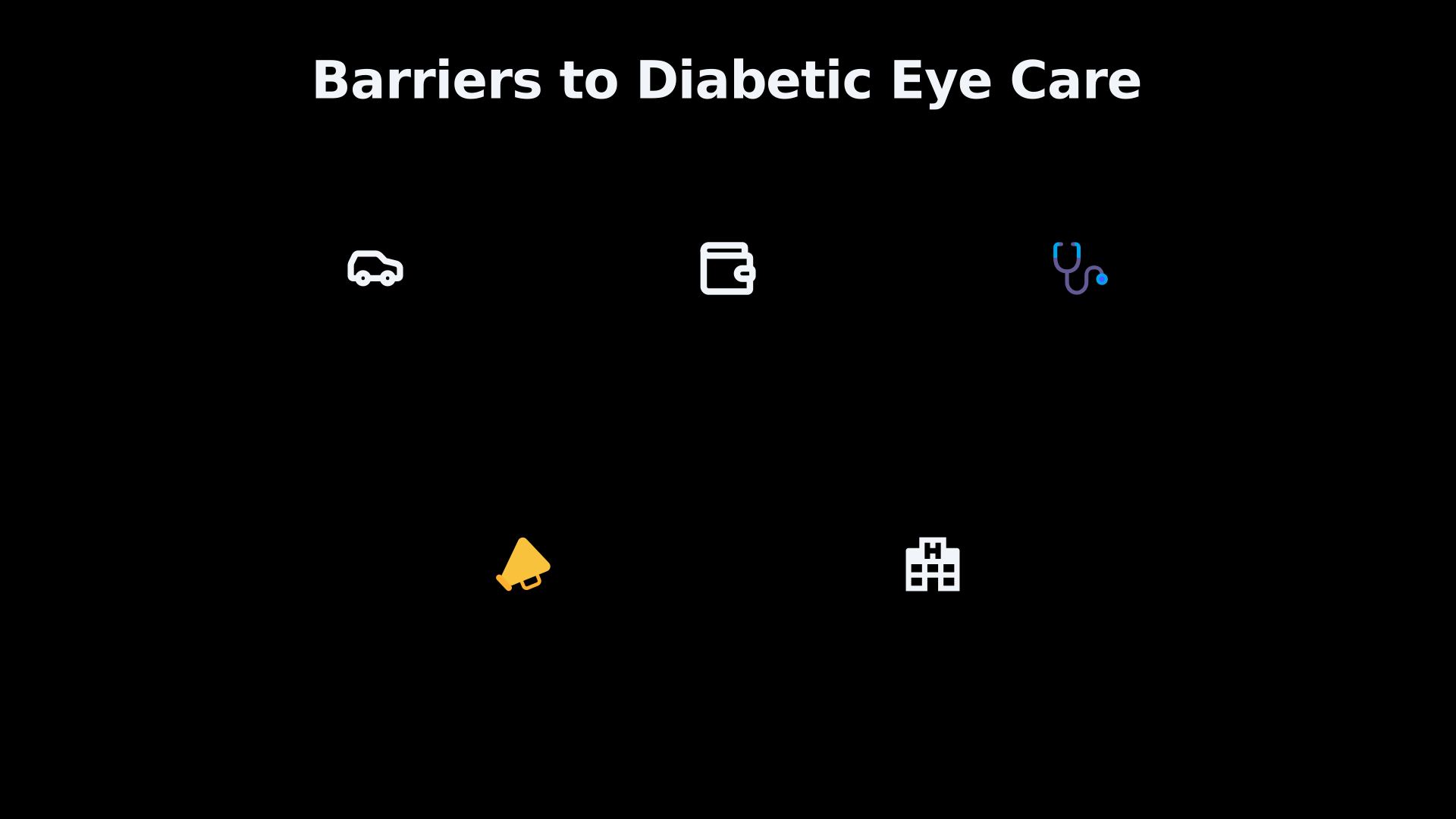
- Long travel distances to ophthalmology clinics, especially in rural communities.
- Time away from work and loss of income for multiple appointments.
- Childcare and family responsibilities.
- Limited insurance coverage or high out-of-pocket costs.
- Shortages of eye specialists in many regions.
- Language, cultural or health-literacy barriers.
- Referral systems that require patients to arrange a separate appointment after seeing their diabetes clinician.
These barriers interact. A patient may understand the importance of screening but still postpone it because arranging transport, taking unpaid leave and travelling to another clinic becomes too difficult. Every additional step increases the chance that screening is delayed or never completed.
This pattern contributes to well-documented inequalities. In many healthcare systems, people from lower-income households, rural communities and some ethnic minority groups are less likely to receive recommended diabetic eye screening despite often carrying a higher burden of diabetes and its complications.[PubMed]pubmed.ncbi.nlm.nih.govAutonomous artificial intelligence for diabetic eye disease increases access and health equity in underserved populations - PubMedJ…
Where point-of-care screening appears to narrow gaps
The principal advantage of autonomous AI is not simply that it analyses retinal photographs accurately. It changes where screening happens.
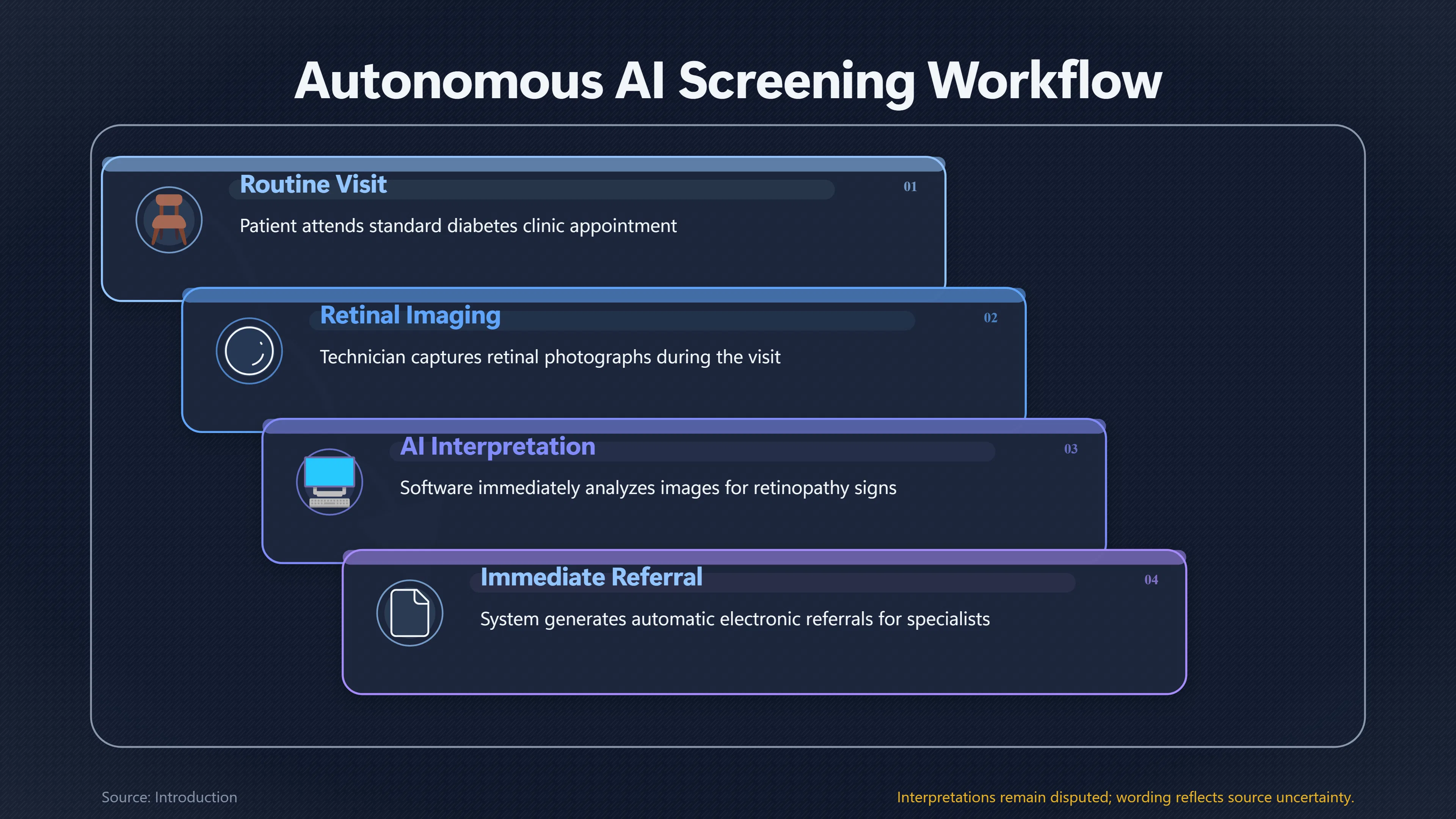
Instead of asking patients to book a later appointment with an eye specialist, retinal photographs can be taken during an ordinary diabetes visit. The AI immediately determines whether the patient requires referral or whether routine follow-up is sufficient.
This redesign removes several common barriers simultaneously:
- no separate screening appointment;
- fewer additional journeys;
- reduced administrative delays;
- immediate discussion of results;
- referrals arranged while the patient is still in the clinic.
For patients who struggle to attend specialist appointments, eliminating these extra steps can make the difference between being screened and remaining unscreened.
A randomised controlled trial involving children and young adults with diabetes illustrates the effect. Participants offered autonomous AI screening during their diabetes clinic visit achieved a 100% screening completion rate within the study period, compared with 22% among those receiving conventional referral and education. Patients with abnormal AI findings were also substantially more likely to attend specialist follow-up. The study deliberately enrolled a racially and ethnically diverse population, reflecting groups that often experience lower screening rates.[PubMed]pubmed.ncbi.nlm.nih.govAutonomous artificial intelligence increases screening and follow-up for diabetic retinopathy in youth: the ACCESS randomized contr…
The implication is important. The technology improves access primarily by changing the care pathway rather than by persuading patients to behave differently.
Early evidence that disparities can shrink
The strongest evidence that autonomous screening may improve health equity comes from real-world implementation rather than laboratory testing.
After autonomous diabetic eye screening was introduced across selected primary care sites within the Johns Hopkins Medicine health system, researchers compared changes in screening adherence with similar clinics that had not yet adopted the technology.
They found several encouraging patterns:
- overall diabetic eye screening increased significantly more at clinics using autonomous AI;
- screening among Black patients rose substantially while remaining largely unchanged at comparison sites;
- racial differences in screening completion narrowed markedly over the study period.
These findings do not prove that AI alone eliminated inequality. The health system introduced a new clinical workflow, trained staff and integrated screening into routine diabetes care. Nevertheless, the results suggest that removing logistical barriers can disproportionately benefit groups that previously experienced the greatest obstacles.[PubMed]pubmed.ncbi.nlm.nih.govAutonomous artificial intelligence for diabetic eye disease increases access and health equity in underserved populations - PubMedJ…
Similar observations have been reported in studies involving minority youth with diabetes, where point-of-care autonomous screening produced very high completion rates across demographic groups despite clear inequalities in previous access to eye examinations.[Diabetes Journals]diabetesjournals.orgAmerican Diabetes AssociationJune 20, 2023…
The barriers an autonomous test cannot remove
Screening is only the first stage of preventing blindness.
When AI identifies referable diabetic retinopathy, patients still require timely assessment by ophthalmologists and, where necessary, treatments such as laser therapy, intravitreal injections or surgery.
Several important inequalities remain beyond the reach of autonomous screening alone.
Treatment capacity. Earlier diagnosis creates value only if specialist services have enough capacity to see referred patients promptly.
Financial barriers. Insurance coverage, reimbursement policies and treatment costs continue to influence whether patients complete specialist care.
Transport. Patients with positive screening results may still need to travel considerable distances for retinal treatment.
Workforce shortages. Rural regions may have too few retina specialists even if screening becomes widely available.
Social determinants of health. Housing instability, competing medical priorities, language barriers and socioeconomic disadvantage continue to affect long-term disease management.
The ACCESS trial illustrates this distinction. Although autonomous AI dramatically increased screening completion, follow-through after an abnormal result was still lower among participants facing socioeconomic disadvantage, including those insured through Medicaid and some Black participants, although subgroup numbers were small. This suggests that improving access to screening does not automatically remove barriers to treatment.[PubMed Central (PMC)]pmc.ncbi.nlm.nih.govPubMed Central (PMC)Autonomous artificial intelligence increases screening and follow-up for diabetic retinopathy in youth: the ACCESS ra…
What health systems must do for screening to reduce blindness
Autonomous AI delivers the greatest public-health benefit when it forms part of a complete care pathway rather than operating as an isolated diagnostic tool.
Successful programmes generally combine:
- retinal imaging during routine diabetes appointments;
- immediate AI interpretation;
- automatic electronic referrals;
- patient navigation and appointment scheduling;
- clear communication of results;
- monitoring to ensure patients complete specialist follow-up.
Research is increasingly focusing on this broader implementation challenge. Trials within federally qualified health centres in the United States are evaluating how AI screening can be integrated with electronic health records, referral systems and patient education to improve screening and ensure that positive findings lead to appropriate treatment.[PubMed]pubmed.ncbi.nlm.nih.govDiabetic Retinopathy Screening Among Federally Qualified Health Center Patients Using Point-of-Care AI: DRES-POCAI: A Trial Protoco…
This reflects an important shift in thinking. The limiting factor is no longer only diagnostic accuracy but the design of healthcare delivery.
What this means for AI and human flourishing
Autonomous eye screening offers a grounded example of how AI may contribute to broader human flourishing without requiring speculative breakthroughs.
The technology does not replace ophthalmologists or cure diabetic eye disease. Instead, it makes specialist expertise available earlier and closer to where patients already receive care. For populations that have historically been underserved, this can reduce avoidable blindness by improving access to preventive medicine before irreversible damage occurs.
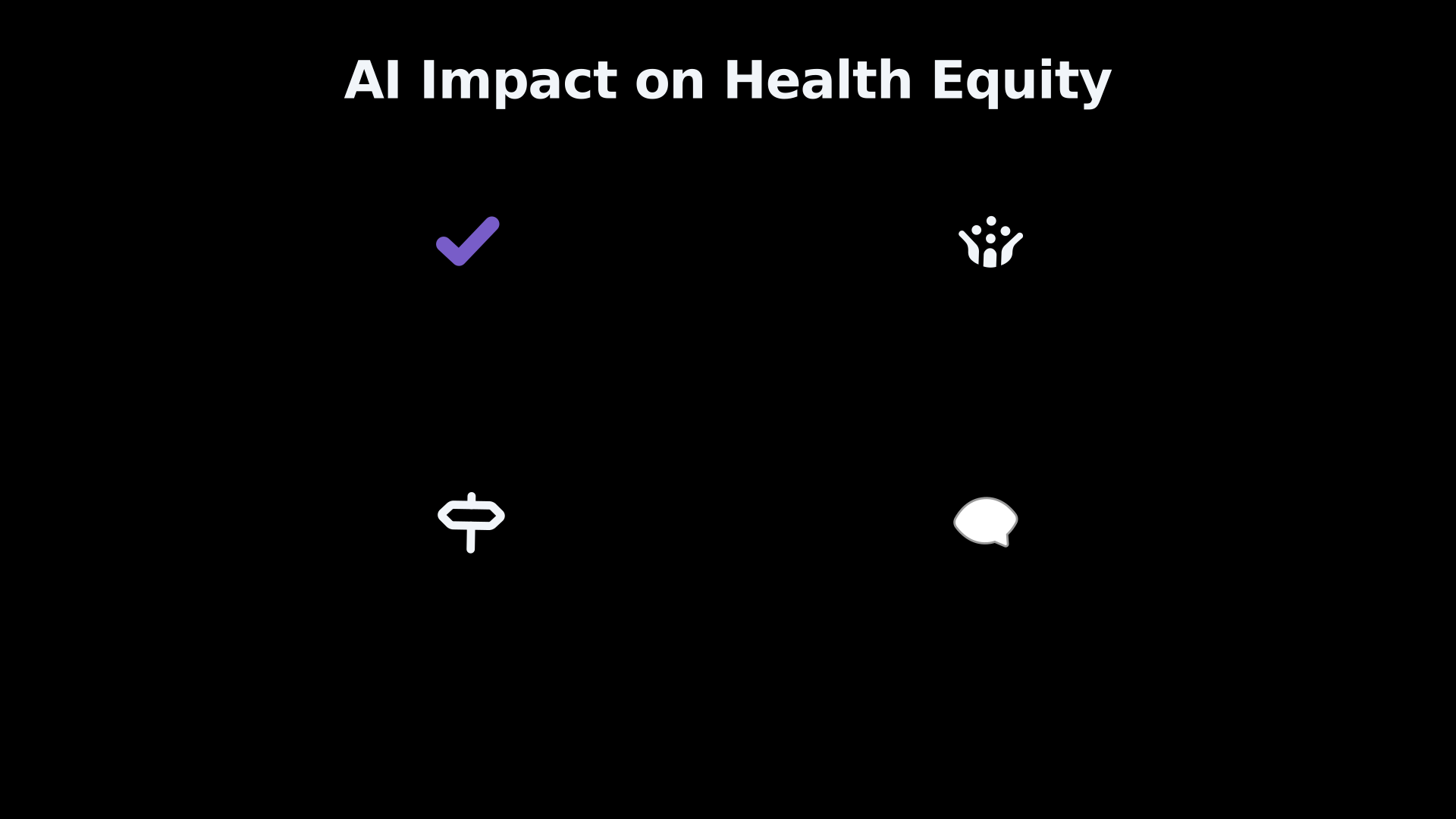
At the same time, the evidence argues against technological optimism that overlooks social realities. AI can narrow one of the most significant access gaps—the missed screening appointment—but it cannot overcome inadequate insurance, poverty, shortages of specialists or unequal access to treatment.
For the wider AI abundance debate, this distinction matters. Technologies that expand access to healthcare create the greatest social benefit when they are embedded within systems that also distribute follow-up care fairly. Autonomous eye screening therefore represents both a promising advance and a reminder that broad human flourishing depends on combining technological capability with equitable healthcare delivery.
Amazon book picks
Further Reading
Books and field guides related to Can AI Eye Exams Reduce Screening Inequality?. Use these as the next step if you want deeper reading beyond the article.

Deep Medicine: How Artificial Intelligence Can Make Healthcar...
First published 2019. Subjects: Artificial intelligence, Medical informatics, Medical applications, Diagnosis, Data processing.
The Digital Doctor: Hope, Hype, and Harm at the Dawn of Medic...
The New York Times Science Bestseller from Robert Wachter, Modern Healthcare’s #1 Most Influential Physician-Executive in the US While mo...
The Patient Will See You Now: The Future of Medicine Is in Yo...
A revolutionary argument for how putting patients in charge will make healthcare better for everyone

The Heartbeat of Wounded Knee
First published 2019. Subjects: Indians of north america, history, nyt:hardcover-nonfiction=2019-02-10, New York Times bestseller, New Yo...
eBay marketplace picks
Marketplace Samples
Live-tested eBay searches with available results related to this page.
Selected frommedical poster oneBay.co.uk.



Endnotes
1.
Source: pubmed.ncbi.nlm.nih.gov
Link:https://pubmed.ncbi.nlm.nih.gov/39039218/
Source snippet
Autonomous artificial intelligence for diabetic eye disease increases access and health equity in underserved populations - PubMedJ...
2.
Source: pmc.ncbi.nlm.nih.gov
Link:https://pmc.ncbi.nlm.nih.gov/articles/PMC10784572/
Source snippet
PubMed Central (PMC)Autonomous artificial intelligence increases screening and follow-up for diabetic retinopathy in youth: the ACCESS ra...
3.
Source: pubmed.ncbi.nlm.nih.gov
Link:https://pubmed.ncbi.nlm.nih.gov/38212308/
Source snippet
Autonomous artificial intelligence increases screening and follow-up for diabetic retinopathy in youth: the ACCESS randomized contr...
4.
Source: diabetesjournals.org
Link:https://diabetesjournals.org/diabetes/article/72/Supplement_1/110-OR/149364/110-OR-Autonomous-Artificial-Intelligence-Diabetic
Source snippet
American Diabetes AssociationJune 20, 2023...
Published: June 20, 2023
5.
Source: pubmed.ncbi.nlm.nih.gov
Link:https://pubmed.ncbi.nlm.nih.gov/41118165/
Source snippet
Diabetic Retinopathy Screening Among Federally Qualified Health Center Patients Using Point-of-Care AI: DRES-POCAI: A Trial Protoco...
6.
Source: pubmed.ncbi.nlm.nih.gov
Link:https://pubmed.ncbi.nlm.nih.gov/42295755/
Source snippet
2026 Jun 15:e267025. doi: 10.1001/jama.2026.7025. Online ahead of print. AN AI-BASED OCT SYSTEM TO DETECT DIABETIC MACULAR EDEMA: A PROSP...
7.
Source: pmc.ncbi.nlm.nih.gov
Link:https://pmc.ncbi.nlm.nih.gov/articles/PMC11825398/
8.
Source: pmc.ncbi.nlm.nih.gov
Link:https://pmc.ncbi.nlm.nih.gov/articles/PMC11263546/
9.
Source: diabetesjournals.org
Link:https://diabetesjournals.org/diabetes/article/73/Supplement_1/14-OR/156090/14-OR-Autonomous-Artificial-Intelligence-Diabetic
10.
Source: pubmed.ncbi.nlm.nih.gov
Link:https://pubmed.ncbi.nlm.nih.gov/38656241/
11.
Source: pmc.ncbi.nlm.nih.gov
Link:https://pmc.ncbi.nlm.nih.gov/articles/PMC10980149/
12.
Source: pmc.ncbi.nlm.nih.gov
Link:https://pmc.ncbi.nlm.nih.gov/articles/PMC10232822/
13.
Source: pubmed.ncbi.nlm.nih.gov
Link:https://pubmed.ncbi.nlm.nih.gov/33479160/
14.
Source: pubmed.ncbi.nlm.nih.gov
Link:https://pubmed.ncbi.nlm.nih.gov/39957639
Additional References
15.
Source: nature.com
Link:https://www.nature.com/articles/s41746-026-02460-5
Source snippet
tients | npj Digital MedicineMarch 5, 2026 — Autonomous AI-assisted diabetic retinopathy screening at primary care is associated with inc...
Published: March 5, 2026
16.
Source: youtube.com
Link:https://www.youtube.com/watch?v=NzxXX0jZPDQ
Source snippet
Building Bridges in Eye Care: How SSM Health Connected Primary Care and Ophthalmology...
17.
Source: youtube.com
Link:https://www.youtube.com/watch?v=X_CbtFu8SZg
Source snippet
Lessons Learned from AI-Enabled Diabetic Retinopathy Screening at San Ysidro Health...
18.
Source: youtube.com
Title: How Digital Diagnostics Is Transforming Diabetes Care Through AI
Link:https://www.youtube.com/watch?v=iTMLaWIFXuw
Source snippet
Dr. Alvin Liu, Johns Hopkins Medicine| Scaling Autonomous AI for Diabetic Retinopathy...
19.
Source: youtube.com
Link:https://www.youtube.com/watch?v=60mBoXUIbqM
Source snippet
Curiosity Ignited: AI and the Eye by Dr. Sally Baxter...
20.
Source: clinicaltrials.gov
Link:https://clinicaltrials.gov/study/NCT07559292
Source snippet
Study Details | NCT07559292 | Implementing Artificial Intelligence to Prevent Vision Loss From Diabetes | ClinicalTrials.govApril 30, 202...
21.
Source: nature.com
Link:https://www.nature.com/articles/s41746-024-01197-3
22.
Source: nature.com
Link:https://www.nature.com/articles/s41467-023-44676-z
23.
Source: youtube.com
Title: Curiosity Ignited: AI and the Eye by Dr. Sally Baxter
Link:https://www.youtube.com/watch?v=-MnjhFuMiag
24.
Source: clinicaltrials.gov
Link:https://clinicaltrials.gov/study/NCT05131451