Within Housing Limits
Would Robot Builders End Housing Scarcity?
Robotics may cut labour and building costs, yet land, infrastructure, materials and desirable locations would still prevent unlimited housing supply.
On this page
- Tasks construction robots could automate
- Physical bottlenecks that automation leaves behind
- Why desirable locations remain scarce
Page outline Jump by section
Introduction
Construction robots could make housing significantly cheaper and faster to build, but they are unlikely to make homes truly abundant in the sense implied by a post-scarcity economy. Robotics can automate repetitive, dangerous and labour-intensive work, reducing some of the industry’s largest costs and helping address chronic shortages of skilled workers. Yet homes are not software. Every new dwelling still requires land, planning permission, infrastructure, finance, energy and access to locations where people actually want to live.
This distinction matters for the wider debate about AI-enabled abundance. If advanced AI and robotics eventually transform construction, they may allow society to build many more homes with fewer workers and lower costs. That would be a major gain for human flourishing. However, even highly automated construction leaves physical, legal and geographical constraints largely intact. Housing therefore illustrates why making intelligence abundant does not automatically make every physical good abundant.
Which construction tasks can robots realistically automate?
Construction remains one of the least automated major industries despite decades of advances in manufacturing robotics. Unlike factories, every building site differs in terrain, weather, layout and sequencing, making automation technically difficult. Even so, robots are steadily taking over a growing range of tasks.
Current and emerging systems include:
- Robotic bricklaying and block laying.
- Automated concrete printing and placement.
- Rebar tying and steel fabrication.
- Robotic welding and cutting.
- Drywall finishing and painting.
- Site surveying using drones and autonomous vehicles.
- Material transport using autonomous carriers.
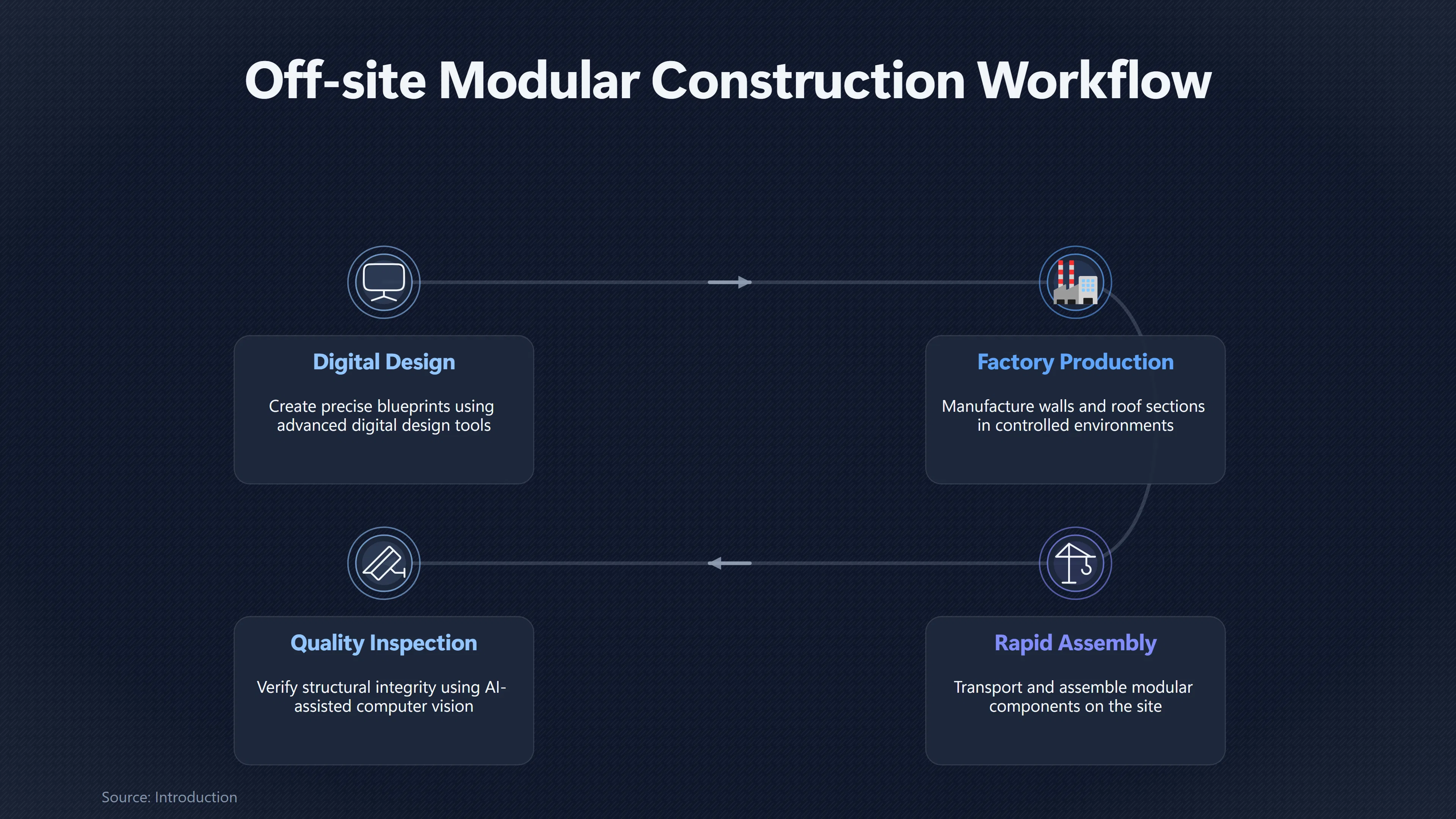
- Factory-based production of modular building components.
- AI-assisted quality inspection using computer vision.
Much of the greatest productivity improvement may come not from humanoid robots replacing every tradesperson, but from moving more work into highly automated factories. Off-site manufacturing allows walls, floors and roof sections to be produced under controlled conditions before rapid assembly on site. Research and industry analyses suggest that combining automation, digital design and prefabrication can substantially improve productivity while reducing waste and delays.[McKinsey & Company]mckinsey.comMc Kinsey & Company The impact and opportunities of automation in constructionMcKinsey & CompanyThe impact and opportunities of automation in constructionDecember 1, 2019…
Importantly, construction robots often complement rather than replace skilled workers. Studies of human-robot collaboration consistently find that productivity gains depend on careful coordination between machines and people rather than full automation.[arXiv]arxiv.orgHow human-robot collaboration impacts construction productivity: an agent-based multi-fidelity modeling approachMarch 4, 2022…
Why robots do not eliminate the biggest housing bottlenecks
Even if robots dramatically reduced construction labour costs, the overall price of housing would still depend on several scarce resources.
Land cannot be automated
The most obvious constraint is land itself.
Robots can construct a tower more quickly, but they cannot create additional central London neighbourhoods, beachfront property or homes within walking distance of major employment centres. Desirable locations remain scarce because geography is scarce.
Economic research repeatedly finds that in the most expensive housing markets, land values and land-use restrictions account for a large share of housing costs. Where planning rules severely limit development, prices can rise far above the physical cost of constructing the building itself.[National Bureau of Economic Research]nber.orgOpen source on nber.org.
This means that making construction twice as efficient does not necessarily halve house prices in places where land dominates total value.
Infrastructure still has to exist
A house requires far more than walls and a roof.
Large housing developments depend upon:
- Water and sewage networks.
- Electricity distribution.
- Roads and public transport.
- Schools and healthcare.
- Flood protection and drainage.
- Broadband and communications infrastructure.
These systems involve major public investment, environmental assessment and long planning horizons. Construction robots may help build them, but they do not remove the need for them.
Materials remain physical
Robots also consume materials rather than replacing them.
Concrete, steel, glass, copper, insulation, bricks and timber all require mining, manufacturing, transport and energy. AI may optimise material use and reduce waste, but it cannot eliminate the physical inputs needed for millions of homes.
Future breakthroughs in advanced materials or cleaner manufacturing could lower costs further, yet housing would still depend on supply chains operating in the physical world.
Could robots make housing much cheaper?
Potentially yes—but the effects would vary enormously between places.
Where labour accounts for a large fraction of construction costs, automation could noticeably reduce the cost of producing new homes. Faster building also lowers financing costs because developers borrow money for shorter periods before properties can be sold.
Automation may also help solve labour shortages. Many advanced economies face ageing construction workforces alongside insufficient numbers of younger tradespeople entering the industry. Robotics could allow smaller teams to complete larger projects while making some work safer and less physically demanding. McKinsey argues that automation is most likely to raise productivity rather than simply eliminate jobs.[McKinsey & Company]mckinsey.comMc Kinsey & Company The impact and opportunities of automation in constructionMcKinsey & CompanyThe impact and opportunities of automation in constructionDecember 1, 2019…
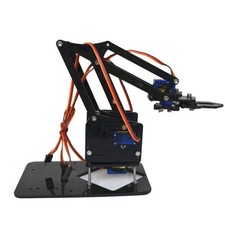
Recent experiments illustrate this direction. Portable robotic timber “microfactories”, automated timber-frame production and other off-site manufacturing systems aim to speed housing delivery by shifting repetitive work into factory environments rather than relying entirely on traditional site construction.[The Times]thetimes.co.ukThe Times Can robots solve the housing crisis?Their software, Master Builder, can program 13ft robotic arms to cut timber and construct houses efficiently on-site using portable "micr…
However, the impact on final sale prices depends on local conditions.
In regions where construction costs dominate, robotics could produce meaningful affordability gains.
In high-demand cities where land values and planning constraints dominate, lower building costs may represent only a modest fraction of the final purchase price.
Why desirable locations remain scarce
The strongest argument against housing becoming post-scarcity is not technological but geographical.
People do not simply demand “a house.” They demand access to jobs, universities, transport, culture, healthcare, family networks and attractive environments.
These preferences concentrate demand into relatively small areas.
Suppose robots reduced construction costs close to zero. A flat overlooking Hyde Park or an apartment beside a major railway station would still command a premium because millions of people cannot occupy the same location simultaneously.
This is a classic example of positional scarcity: value derives partly from where something is rather than how difficult it is to manufacture.
Technology can weaken this effect by making remote work easier or improving transport links, thereby expanding the range of attractive locations. But it cannot remove geography altogether.

The role of planning and regulation
Construction robotics also does not eliminate legal constraints.
Most housing developments still require planning approval, environmental review, utility connections and compliance with building regulations.
Research on housing economics consistently finds that land-use regulation influences both housing supply and land prices. Relaxing unnecessary constraints can increase development, although the magnitude varies considerably across locations and policies. Conversely, restrictive regulation can reduce incentives for firms to invest in larger-scale, more automated construction because projects remain fragmented and uncertain.[National Bureau of Economic Research]nber.orgOpen source on nber.org.
This creates an important interaction between robotics and institutions. Better robots alone may deliver less than expected if planning systems continue to restrict where and how much housing can be built.
What this means for AI-enabled abundance
Construction robotics fits well within the broader AI bloom vision because it offers a plausible route to higher productivity, safer work and greater material prosperity. If AI can automate much of construction, society could build more homes with fewer workers, complete infrastructure more quickly and redirect labour towards other valuable activities.
Yet housing also demonstrates the limits of equating cheaper intelligence with post-scarcity.
Robots can reduce one important bottleneck—construction labour—but they do not abolish the scarcity of land, infrastructure, desirable locations, natural resources or political decisions about urban development. Truly abundant housing therefore depends on a combination of technological progress, planning reform, infrastructure investment and better governance, not on AI alone.
For that reason, construction robots are best understood as an important contributor to greater housing abundance rather than a technology capable of ending housing scarcity by themselves.
Amazon book picks
Further Reading
Books and field guides related to Would Robot Builders End Housing Scarcity?. Use these as the next step if you want deeper reading beyond the article.
The Future Is Faster Than You Think
From the New York Times bestselling authors of Abundance and Bold comes a practical playbook for technological convergence in our modern...

The Fourth Industrial Revolution
Professor Klaus Schwab, Founder and Executive Chairman of the World Economic Forum, has been at the center of global affairs for over fou...

Robotics: A Very Short Introduction
First published 2012. Subjects: Roboter, Robotics, Robots.
The industries of the future
Rating: 3.5/5 from 6 Google Books ratings
First published 2016. Subjects: Industries, Technological innovations, Industrial Research, Economic aspects, TECHNOLOGY & ENGINEERING /...
eBay marketplace picks
Marketplace Samples
Live-tested eBay searches with available results related to this page.
Selected fromrobotics kit oneBay.co.uk.



Endnotes
1.
Source: mckinsey.com
Title: Mc Kinsey & Company The impact and opportunities of automation in construction
Link:https://www.mckinsey.com/capabilities/operations/our-insights/the-impact-and-opportunities-of-automation-in-construction
Source snippet
McKinsey & CompanyThe impact and opportunities of automation in constructionDecember 1, 2019...
Published: December 1, 2019
2.
Source: mckinsey.com
Title: Mc Kinsey & Company Reinventing construction through a productivity revolution
Link:https://www.mckinsey.com/capabilities/operations/our-insights/reinventing-construction-through-a-productivity-revolution
3.
Source: arxiv.org
Link:https://arxiv.org/abs/2412.20867
4.
Source: arxiv.org
Link:https://arxiv.org/abs/2203.02393
Source snippet
How human-robot collaboration impacts construction productivity: an agent-based multi-fidelity modeling approachMarch 4, 2022...
Published: March 4, 2022
5.
Source: arxiv.org
Link:https://arxiv.org/abs/2404.13143
6.
Source: mckinsey.com
Title: How agentic AI is transforming the AEC industry | Mc Kinsey
Link:https://www.mckinsey.com/industries/engineering-construction-and-building-materials/our-insights/how-ai-is-reshaping-the-future-of-the-aec-industry
7.
Source: mckinsey.com
Title: How AI is reshaping value creation in residential real estate
Link:https://www.mckinsey.com/industries/real-estate/our-insights/how-ai-is-reshaping-value-creation-in-residential-real-estate
8.
Source: mckinsey.com
Title: Humanoid robots in the construction industry: A future vision
Link:https://www.mckinsey.com/industries/engineering-construction-and-building-materials/our-insights/humanoid-robots-in-the-construction-industry-a-future-vision
9.
Source: mckinsey.com
Title: Delivering on construction productivity is no longer optional
Link:https://www.mckinsey.com/capabilities/operations/our-insights/delivering-on-construction-productivity-is-no-longer-optional?cid=other-soc—-oth—-ip&linkId=566929652&sid=soc-POST_ID
10.
Source: mckinsey.com
Title: Housing affordability: A supply-side tool kit for cities
Link:https://www.mckinsey.com/featured-insights/future-of-cities/housing-affordability-a-supply-side-tool-kit-for-cities
11.
Source: mckinsey.de
Title: Improving construction productivity | Germany
Link:https://www.mckinsey.de/business-functions/operations/our-insights/improving-construction-productivity
12.
Source: nber.org
Link:https://www.nber.org/papers/w28993
13.
Source: nber.org
Link:https://www.nber.org/papers/w8835
14.
Source: nber.org
Link:https://www.nber.org/papers/w33694
15.
Source: thetimes.co.uk
Title: The Times Can robots solve the housing crisis?
Link:https://www.thetimes.co.uk/article/can-robots-solve-the-housing-crisis-mmtf2zv8m
Source snippet
Their software, Master Builder, can program 13ft robotic arms to cut timber and construct houses efficiently on-site using portable "micr...
16.
Source: nber.org
Link:https://www.nber.org/papers/w20536
17.
Source: nber.org
Link:https://www.nber.org/papers/w33188
18.
Source: nber.org
Link:https://www.nber.org/papers/w29440
19.
Source: nber.org
Link:https://www.nber.org/papers/w23030
20.
Source: nber.org
Link:https://www.nber.org/papers/w4456
Additional References
21.
Source: reuters.com
Link:https://www.reuters.com/business/environment/could-robotics-timber-tackle-britains-housing-challenges-2025-08-14/
Source snippet
Yet, recent improvements in building regulations have addressed many safety concerns. The off-site timber construction industry could pot...
22.
Source: nature.com
Link:https://www.nature.com/articles/s41598-026-46773-7
23.
Source: youtube.com
Link:https://www.youtube.com/watch?v=Z7eJzw2MxjQ
Source snippet
A Look at 3D-Printed Concrete Homes: Cost, Design, and Carbon Impact...
24.
Source: youtube.com
Title: A Look at 3D-Printed Concrete Homes: Cost, Design, and Carbon Impact
Link:https://www.youtube.com/watch?v=8O7es7W-dtg
Source snippet
Confronting the affordable-housing crisis...
25.
Source: youtube.com
Title: Can Robots Solve the Affordable Housing Crisis?
Link:https://www.youtube.com/watch?v=84pb2PxcyRY
Source snippet
What's REALLY Changing in House Construction in 2025?...
26.
Source: frontiersin.org
Link:https://www.frontiersin.org/journals/built-environment/articles/10.3389/fbuil.2025.1713686/full
27.
Source: t.co
Link:https://t.co/7hGD6gkOQW
28.
Source: sciencedirect.com
Link:https://www.sciencedirect.com/science/article/pii/S0959652625028197/pdf
29.
Source: livrepository.liverpool.ac.uk
Link:https://livrepository.liverpool.ac.uk/id/eprint/3163304
30.
Source: news.mit.edu
Link:https://news.mit.edu/2026/robotically-assembled-building-blocks-makes-construction-more-efficient-and-sustainable-0428