Within Space Expansion
Can lunar robots build before humans arrive?
Autonomous lunar rovers could prepare sites, map hazards and coordinate exploration before astronauts establish permanent bases.
On this page
- How cooperative rovers prepare lunar sites
- Why autonomy matters beyond Earth control
- Limits of robot led settlement preparation
Page outline Jump by section
Introduction
Can lunar robots build before humans arrive? Increasingly, space agencies and researchers are exploring that possibility: autonomous rovers could map terrain, identify resources, prepare landing zones, test construction methods and create the first foundations of a lunar settlement before astronauts depend on them. The goal is not to replace humans, but to make human presence beyond Earth more practical by sending machines ahead to reduce uncertainty and prepare essential infrastructure.[NASA]nasa.govLunar Surface TechnologyLunar Surface TechnologyJuly 6, 2026…
This approach represents an important step in the wider vision of AI-enabled space settlement. A future lunar base will require more than a successful landing; it will need reliable power, communications, transport routes, resource extraction and maintenance systems. Autonomous rovers are among the first technologies aimed at turning the Moon from a place humans briefly visit into an environment where long-duration activity becomes possible.[NASA]nasa.govLunar Surface TechnologyLunar Surface TechnologyJuly 6, 2026…
How cooperative rovers prepare lunar sites
The first settlers on the Moon are likely to be robots. Before astronauts establish a permanent base, machines can perform tasks that are difficult, dangerous or inefficient for humans wearing protective suits in a hostile environment.
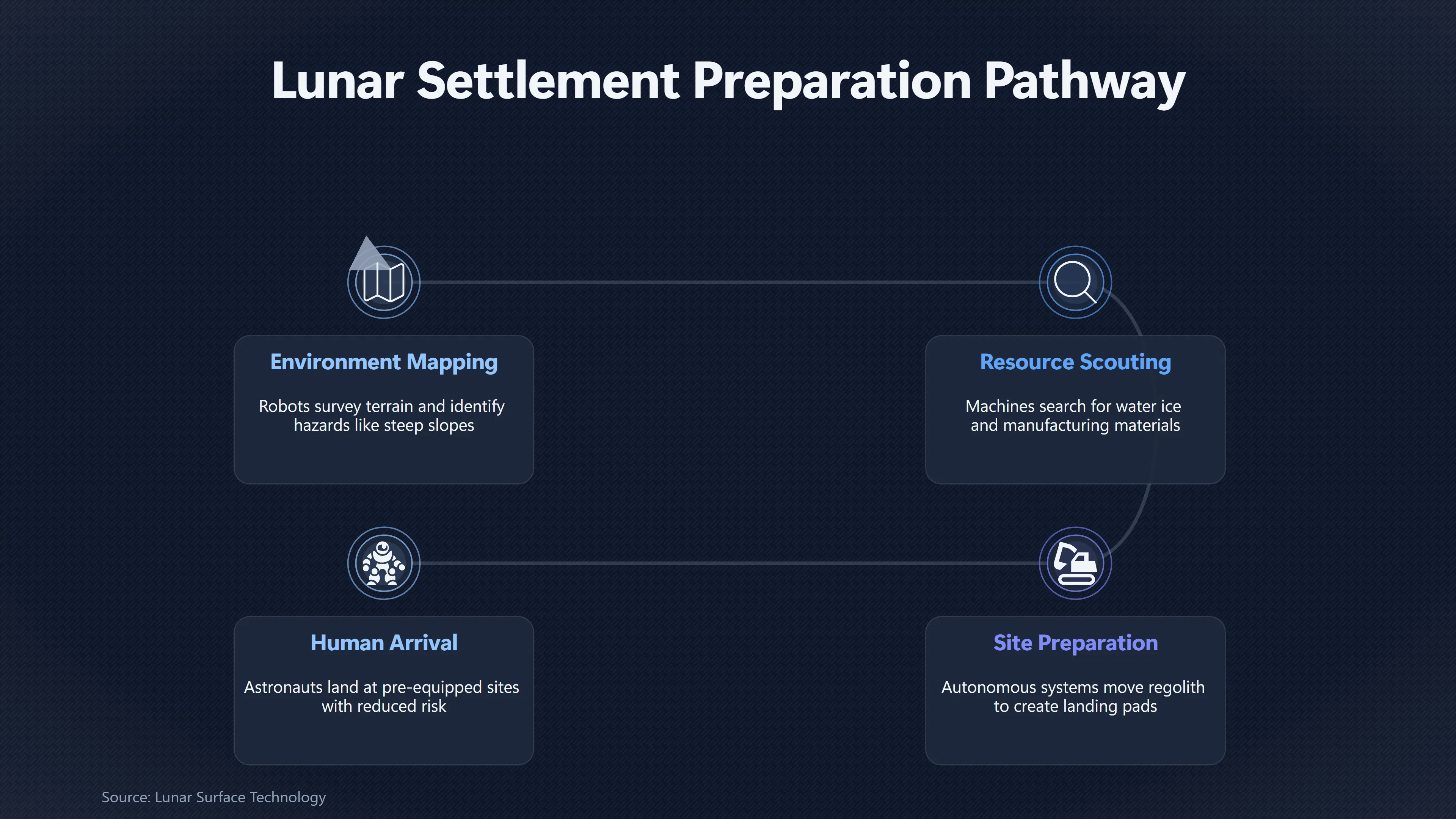
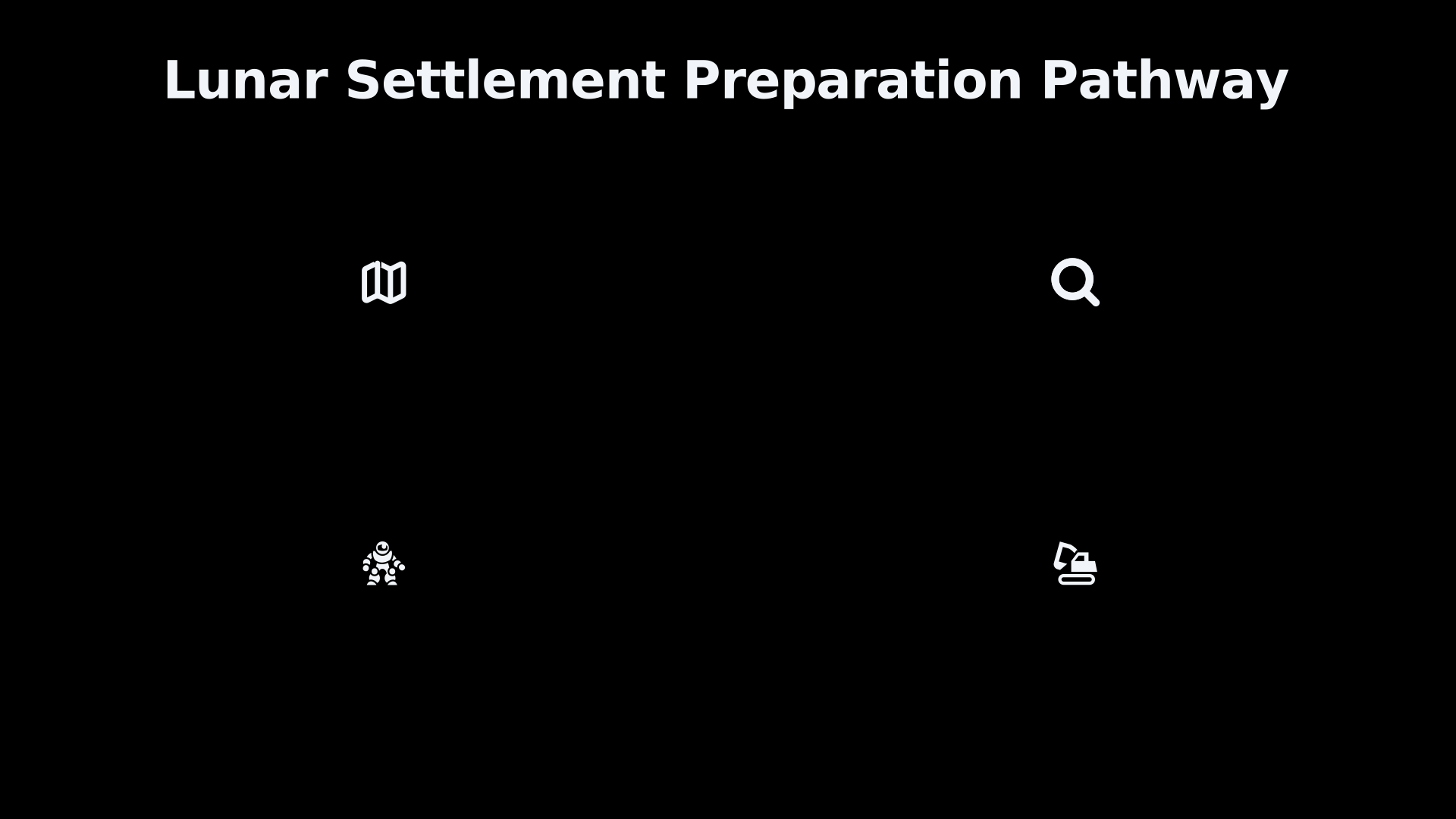
A lunar construction sequence could begin with autonomous exploration. Rovers can survey potential base locations, measure terrain conditions, identify hazards such as steep slopes or unstable ground, and collect detailed maps. These early surveys matter because lunar infrastructure must be built around local realities: sunlight availability, access to possible water ice, communication links and safe landing areas. NASA’s lunar surface technology programme identifies autonomous systems, resource utilisation, excavation, construction and surface power as interconnected capabilities needed for sustained lunar operations.[NASA]nasa.govLunar Surface TechnologyLunar Surface TechnologyJuly 6, 2026…
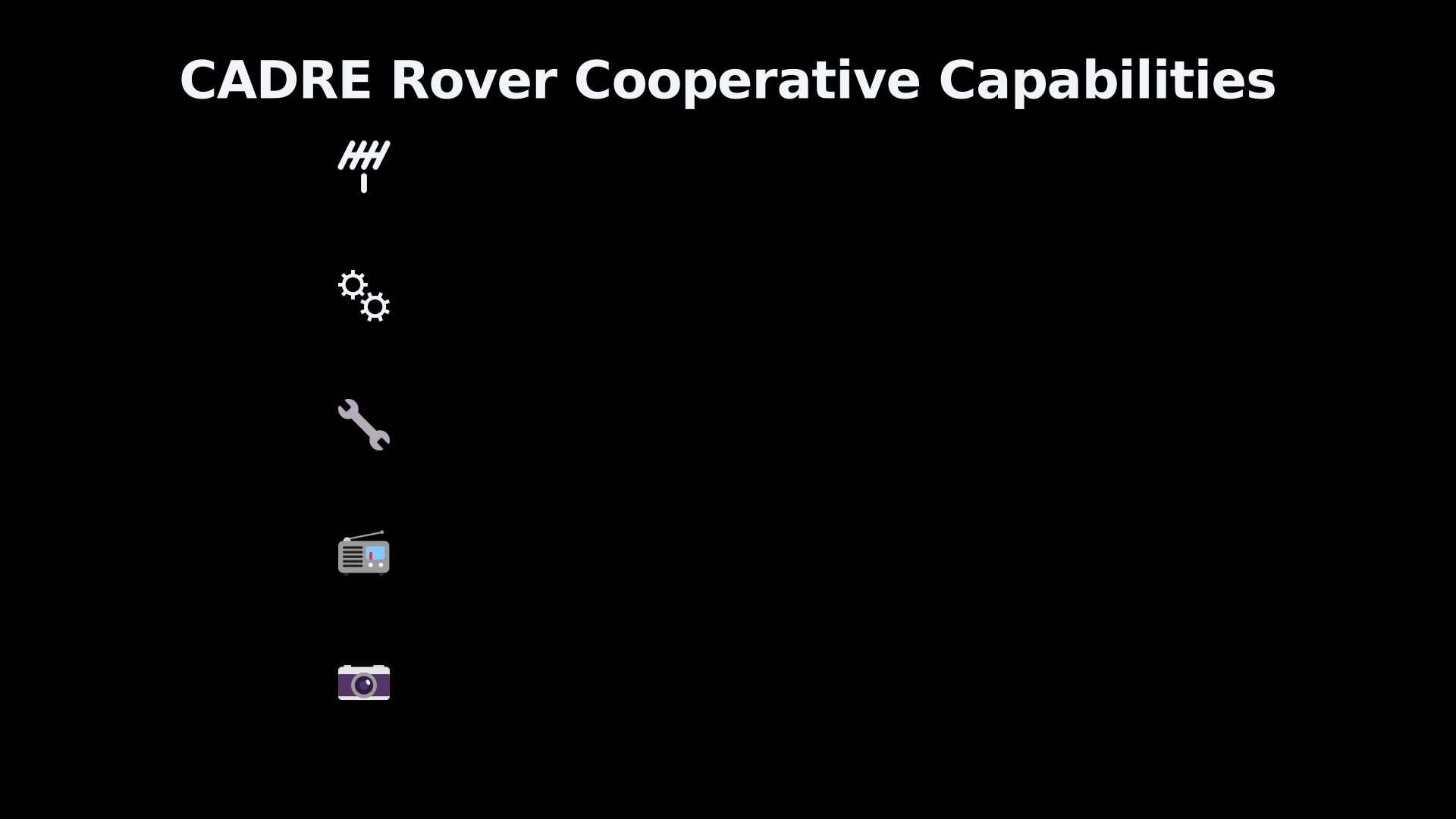
One of the clearest examples is NASA’s Cooperative Autonomous Distributed Robotic Exploration (CADRE) project. CADRE is designed to demonstrate that a group of small rovers can work together on the Moon without every movement being individually controlled from Earth. The three suitcase-sized rovers are intended to explore as a team, create maps and gather scientific measurements using distributed sensing.[NASA]nasa.govCooperative Autonomous Distributed Robotic Exploration (CADRECooperative Autonomous Distributed Robotic Exploration (CADRE) - NASAJuly 9, 2025…
The importance of CADRE is not simply that a rover can drive itself. A single robot has limited capability, but a network of machines can divide tasks and recover from partial failures. One rover might survey an area while another investigates a feature of interest and another acts as a communications link. This resembles the way future lunar infrastructure may operate: as a coordinated system rather than a collection of isolated machines.[NASA TechPort]techport.nasa.govTech Port NASA Tech PortNASA TechPortNASA TechPort - ProjectMay 20, 2026…
Future autonomous rovers could support settlement preparation by:
- Mapping construction zones before habitats, power systems or landing areas are installed.
- Searching for useful resources, especially water ice and materials that could support life-support systems or manufacturing.
- Moving lunar soil, or regolith, for construction tasks such as preparing landing pads, protective barriers or foundations.
- Inspecting equipment and detecting damage before human crews arrive.
- Maintaining robotic infrastructure during periods when no astronauts are present.
The concept is closely linked to in-situ resource utilisation: using materials already available on the Moon instead of transporting everything from Earth. Lunar regolith, sunlight and possible polar ice deposits could become building blocks for a more self-sufficient settlement.[NASA]nasa.govLunar Surface TechnologyLunar Surface TechnologyJuly 6, 2026…
Why autonomy matters beyond Earth control
A lunar rover does not operate in the same way as a remote-controlled vehicle on Earth. Although communication with the Moon is much faster than with Mars, delays, limited bandwidth and operational complexity still make constant human supervision impractical for large-scale activity.
The key shift is from machines that wait for instructions to machines that can make limited decisions within defined goals. An autonomous rover can decide how to avoid obstacles, manage energy, choose between competing tasks and continue operating when unexpected problems occur.
This capability becomes even more important as missions move further from Earth. A Mars settlement would face communication delays of several minutes each way, making Earth-based control unsuitable for routine operations. Lunar autonomy therefore serves as a testing ground for a broader model of AI-supported exploration: humans set objectives, while intelligent machines handle much of the local decision-making.[NASA TechPort]techport.nasa.govTech Port NASA Tech PortNASA TechPortNASA TechPort - ProjectMay 20, 2026…
Navigation is one of the hardest technical problems. The Moon has no GPS network, and familiar Earth navigation systems cannot simply be transferred. Researchers are developing approaches that allow rovers to estimate their location using cameras, terrain features and orbital maps. For example, the LunarNav research programme explores crater-based localisation, where a rover identifies surrounding lunar features and matches them with existing maps to determine its position.[arXiv]arxiv.orgLunarNav: Crater-based Localization for Long-range Autonomous Lunar Rover NavigationJanuary 3, 2023…
AI also changes the economics of exploration. Human labour is extremely expensive to transport and protect in space. Robots can spend months or years preparing an area, allowing astronauts to arrive at a location that is already better understood and partially equipped. This does not eliminate the need for humans, but it changes the sequence: machines prepare the environment so humans can focus on science, construction, governance and expansion.
The Moon as a test case for AI-enabled settlement
The Moon is the first realistic proving ground for autonomous settlement systems because it is close enough for support while still presenting many of the challenges of deeper space.
NASA’s Artemis plans focus on the lunar south pole, where permanently shadowed regions may contain water ice and nearby elevated areas can provide useful sunlight for power generation. Robotic exploration is essential because these environments are difficult to access and poorly understood. Missions such as the planned VIPER rover were designed to investigate the location and concentration of lunar resources that could support future human exploration.[NASA Science]science.nasa.govScience VIPERNASA ScienceVIPER - NASA ScienceJune 11, 2025…
Resource discovery is only the beginning. A functioning settlement requires infrastructure. NASA’s lunar technology work includes autonomous excavation and construction systems designed to manipulate lunar soil and support future surface operations. The agency highlights capabilities such as producing landing pads, managing dust, extracting resources and building infrastructure as necessary steps towards sustained lunar activity.[NASA]nasa.govLunar Surface TechnologyLunar Surface TechnologyJuly 6, 2026…
This creates a possible pathway towards a different model of expansion. Instead of launching a complete human settlement from Earth, civilisation could gradually build capability in space:
- Robotic explorers map and analyse the environment.
- Autonomous machines prepare sites and demonstrate resource use.
- Human crews arrive with reduced risks and better information.
- Larger robotic networks expand infrastructure over time.
In the context of AI bloom, the significance is not only the Moon itself. Autonomous systems that can operate in extreme environments represent a broader increase in humanity’s ability to extend knowledge, engineering and productive activity beyond existing limits.
Limits of robot-led settlement preparation
Autonomous lunar rovers are promising, but they are not a shortcut to easy settlement. The Moon remains one of the harshest environments humans have attempted to operate in.
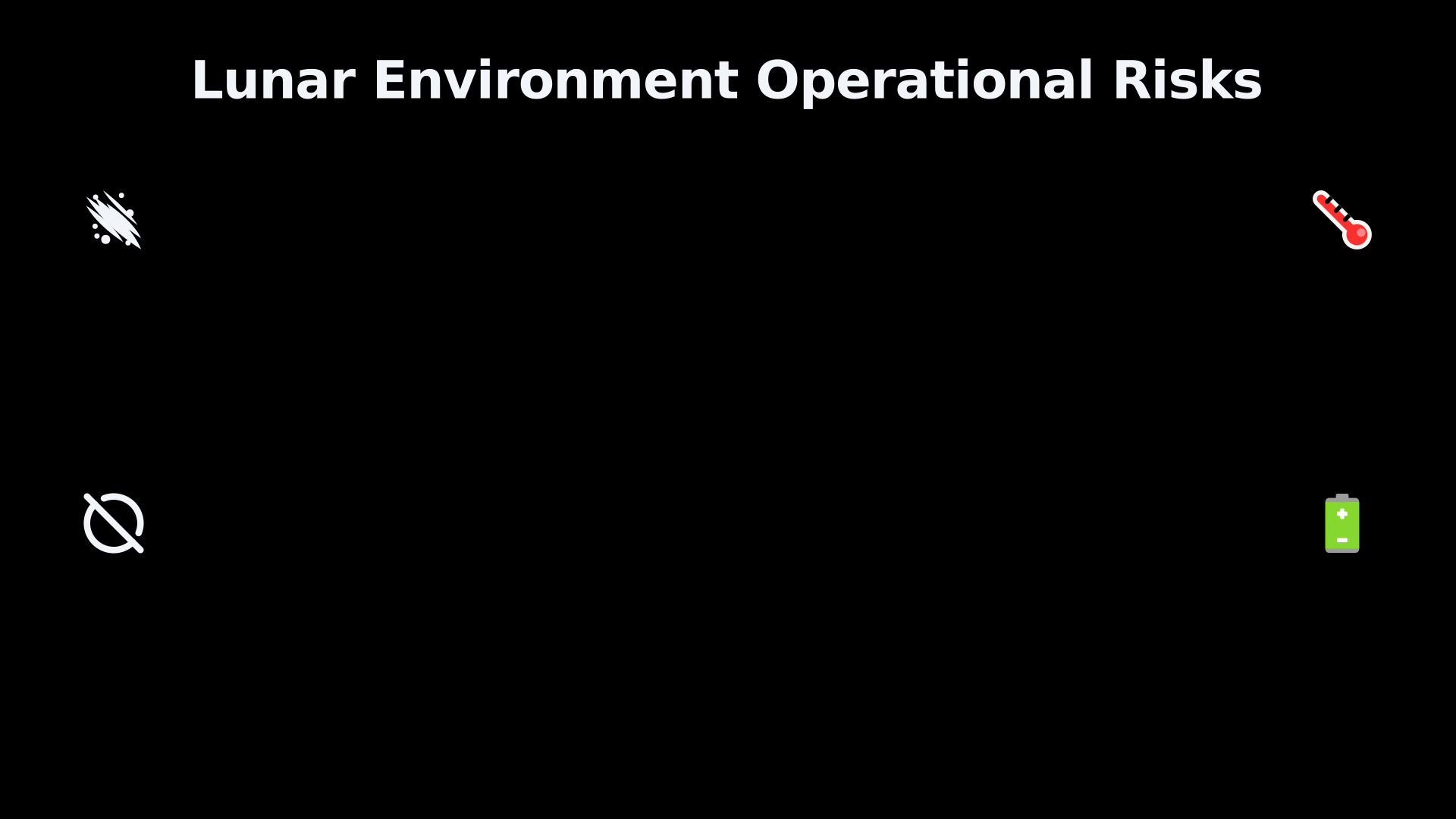
Lunar dust is a major challenge. Fine, abrasive particles can damage mechanical systems, interfere with equipment and create health risks for astronauts. Extreme temperature changes, radiation, limited energy availability and the absence of a protective atmosphere all make long-term operation difficult. NASA notes that lunar systems must survive conditions ranging from intense heat during lunar day to extreme cold during lunar night and permanently shadowed regions.[NASA]nasa.govLunar Surface TechnologyLunar Surface TechnologyJuly 6, 2026…
Autonomy itself also introduces risks. A rover making decisions independently must be reliable because repair opportunities may be limited. Engineers must balance independence with safety: too little autonomy creates dependence on Earth, while too much autonomy without sufficient testing could lead to expensive failures.
There is also uncertainty about resources. Water ice at the lunar poles is scientifically significant, but determining whether deposits are available in quantities and locations suitable for practical extraction remains an ongoing challenge. Robotic missions are needed partly because humanity still lacks detailed knowledge of how easily lunar resources can be used.[NASA Science]science.nasa.govScience VIPERNASA ScienceVIPER - NASA ScienceJune 11, 2025…
Finally, the benefits of lunar automation are not automatically guaranteed to serve humanity broadly. Space infrastructure requires investment, international cooperation and governance choices. A future where AI-supported settlement expands human opportunity would depend not only on technical success, but also on decisions about access, ownership, environmental protection and peaceful cooperation.
Why lunar rovers matter for humanity’s long future
Autonomous lunar rovers are small machines compared with the scale of human civilisation, but they represent a significant transition: moving from exploration by visitors to preparation by systems that can build capability ahead of us.
If successful, these technologies could become part of a larger pattern in which AI helps humanity overcome constraints that once seemed permanent. Robots could extend human reach into dangerous environments, accelerate scientific discovery and create the foundations for settlements beyond Earth. The Moon is unlikely to become a new home through robots alone, but autonomous machines may make it possible for humans to arrive with the tools, knowledge and infrastructure needed to stay.[NASA]nasa.govLunar Surface TechnologyLunar Surface TechnologyJuly 6, 2026…
The deeper significance is not simply that AI may help humans reach another world. It is that intelligent systems could expand the environments where human creativity and cooperation are possible. Lunar rovers are an early experiment in building a civilisation that can prepare, adapt and grow beyond the limits of a single planet.
Amazon book picks
Further Reading
Books and field guides related to Can lunar robots build before humans arrive?. Use these as the next step if you want deeper reading beyond the article.
The Case for Mars
He explains step-by-step how we can use present-day technology to send humans to Mars within ten years; actually produce fuel and oxygen...
Artemis
The bestselling author of The Martian returns with an irresistible new near-future thriller—a heist story set on the moon. Jasmine Bashar...
A City on Mars
* THE INSTANT NEW YORK TIMES BESTSELLER * Winner of the Hugo Award * Scientific American’s #1 Book for 2023 * Winner of Royal Society's T...

Packing for Mars
Rating: 3.9/5 from 19 Google Books ratings
What happens to you when you can't walk for a year? When you can't have sex? Or smell flowers? What happens if you vomit in your helmet d...
eBay marketplace picks
Marketplace Samples
Live-tested eBay searches with available results related to this page.
Selected fromspacecraft model oneBay.co.uk.
Endnotes
1.
Source: nasa.gov
Title: Lunar Surface Technology
Link:https://www.nasa.gov/lunar-surface-technology/
Source snippet
Lunar Surface TechnologyJuly 6, 2026...
Published: July 6, 2026
2.
Source: nasa.gov
Title: Cooperative Autonomous Distributed Robotic Exploration (CADRE)
Link:https://www.nasa.gov/cooperative-autonomous-distributed-robotic-exploration-cadre/
Source snippet
Cooperative Autonomous Distributed Robotic Exploration (CADRE) - NASAJuly 9, 2025...
Published: July 9, 2025
3.
Source: www-[robotics]({{ ‘robotics/’ | relative_url }}). jpl.nasa.gov
Link:https://www-robotics.jpl.nasa.gov/what-we-do/flight-projects/cooperative-autonomous-distributed-robotic-exploration-cadre/cadre-mission-overview/
4.
Source: techport.nasa.gov
Title: Tech Port NASA Tech Port
Link:https://techport.nasa.gov/projects/116324
Source snippet
NASA TechPortNASA TechPort - ProjectMay 20, 2026...
Published: May 20, 2026
5.
Source: www-robotics.jpl.nasa.gov
Link:https://www-robotics.jpl.nasa.gov/what-we-do/flight-projects/cooperative-autonomous-distributed-robotic-exploration-cadre/cadre-software/
6.
Source: arxiv.org
Link:https://arxiv.org/abs/2301.01350
Source snippet
LunarNav: Crater-based Localization for Long-range Autonomous Lunar Rover NavigationJanuary 3, 2023...
Published: January 3, 2023
7.
Source: science.nasa.gov
Title: Science VIPER
Link:https://science.nasa.gov/mission/viper/
Source snippet
NASA ScienceVIPER - NASA ScienceJune 11, 2025...
Published: June 11, 2025
8.
Source: nasa.gov
Title: ’s Artemis Base Camp on the Moon Will Need Light, Water, Elevation
Link:https://www.nasa.gov/humans-in-space/nasas-artemis-base-camp-on-the-moon-will-need-light-water-elevation/
Source snippet
NASA’s Artemis Base Camp on the Moon Will Need Light, Water, Elevation - NASA...
9.
Source: nasa.gov
Title: Moon Base
Link:https://www.nasa.gov/moonbase/
Source snippet
July 24, 2026 — Moon Base * Moon Base * Homepage * About * Solicitations * Resources * For Media Featured Video MOON BASE ASSEMBLY IN...
Published: July 24, 2026
10.
Source: nasa.gov
Title: Lunar Terrain Vehicle
Link:https://www.nasa.gov/suits-and-rovers/lunar-terrain-vehicle/
11.
Source: nasa.gov
Title: NAS A’s Lunar Surface Innovation Initiative
Link:https://www.nasa.gov/space-technology-mission-directorate/lunar-surface-innovation-initiative/
12.
Source: nasa.gov
Title: Moon Base
Link:https://www.nasa.gov/reference/moonbase-about/
13.
Source: jpl.nasa.gov
Title: testing advanced capabilities for moon mars rovers
Link:https://www.jpl.nasa.gov/news/nasa-testing-advanced-capabilities-for-moon-mars-rovers/
14.
Source: nasa.gov
Title: Moon Base Systems
Link:https://www.nasa.gov/moonbase-systems/
15.
Source: nasa.gov
Title: Moon Base Phases
Link:https://www.nasa.gov/moonbase-phases/
16.
Source: nasa.gov
Title: NAS A Provides Update on Moon Base Rovers, Landers, Missions
Link:https://www.nasa.gov/news-release/nasa-provides-update-on-moon-base-rovers-landers-missions/
17.
Source: techport.nasa.gov
Link:https://techport.nasa.gov/projects/118494
18.
Source: nasa.gov
Title: NAS A’s Water-Hunting Tool Will Help Scout Moon’s South Pole
Link:https://www.nasa.gov/solar-system/moon/nasas-water-hunting-tool-will-help-scout-moons-south-pole/
19.
Source: jpl.nasa.gov
Title: selects instruments for artemis lunar terrain vehicle
Link:https://www.jpl.nasa.gov/news/nasa-selects-instruments-for-artemis-lunar-terrain-vehicle/
20.
Source: science.nasa.gov
Title: taking a cadre rover in hand
Link:https://science.nasa.gov/photojournal/taking-a-cadre-rover-in-hand/
21.
Source: jpl.nasa.gov
Title: pia26296 cadre rovers explore the moon together artists concept
Link:https://www.jpl.nasa.gov/images/pia26296-cadre-rovers-explore-the-moon-together-artists-concept/
22.
Source: science.nasa.gov
Title: cadre rovers explore the moon together artists concept
Link:https://science.nasa.gov/photojournal/cadre-rovers-explore-the-moon-together-artists-concept/
23.
Source: nasa.gov
Title: NAS A’s Network of Small Moon-Bound Rovers Is Ready to Roll
Link:https://www.nasa.gov/technology/nasas-network-of-small-moon-bound-rovers-is-ready-to-roll/
24.
Source: science.nasa.gov
Title: cadre atlo team presents completed rovers
Link:https://science.nasa.gov/photojournal/cadre-atlo-team-presents-completed-rovers/
25.
Source: jpl.nasa.gov
Title: s network of small moon bound rovers is ready to roll
Link:https://www.jpl.nasa.gov/news/nasas-network-of-small-moon-bound-rovers-is-ready-to-roll/
26.
Source: science.nasa.gov
Title: cadre rover on the moon artists concept
Link:https://science.nasa.gov/photojournal/cadre-rover-on-the-moon-artists-concept/
27.
Source: science.nasa.gov
Title: rover and instruments
Link:https://science.nasa.gov/mission/viper/rover-and-instruments/
28.
Source: science.nasa.gov
Title: lunar operations
Link:https://science.nasa.gov/mission/viper/lunar-operations/
29.
Source: ntrs.nasa.gov
Link:https://ntrs.nasa.gov/citations/20220014603
30.
Source: ntrs.nasa.gov
Link:https://ntrs.nasa.gov/citations/20220013715
31.
Source: nasa.gov
Title: (ASPECT) Autonomous Site Preparation: Excavation, Compaction, and Testing
Link:https://www.nasa.gov/directorates/stmd/space-tech-research-grants/aspect-autonomous-site-preparation-excavation-compaction-and-testing/
32.
Source: nasa.gov
Title: NAS A’s Artemis Rover to Land Near Nobile Region of Moon’s South Pole
Link:https://www.nasa.gov/news-release/nasas-artemis-rover-to-land-near-nobile-region-of-moons-south-pole/
33.
Source: nasa.gov
Title: NAS A Rover to Search for Water, Other Resources on Moon
Link:https://www.nasa.gov/solar-system/nasa-rover-to-search-for-water-other-resources-on-moon/
34.
Source: nasa.gov
Title: NAS A Outlines Lunar Surface Sustainability Concept
Link:https://www.nasa.gov/general/nasa-outlines-lunar-surface-sustainability-concept/
35.
Source: nasa.gov
Title: A Few Things Artemis Will Teach Us About Living and Working on the Moon
Link:https://www.nasa.gov/missions/a-few-things-artemis-will-teach-us-about-living-and-working-on-the-moon/?linkId=71185322
36.
Source: jpl.nasa.gov
Title: ice confirmed at the moons poles
Link:https://www.jpl.nasa.gov/news/ice-confirmed-at-the-moons-poles/
37.
Source: astrobiology.nasa.gov
Title: autonomous docking under ice
Link:https://astrobiology.nasa.gov/news/autonomous-docking-under-ice/
38.
Source: www-robotics.jpl.nasa.gov
Title: cadre mission overview
Link:https://www-robotics.jpl.nasa.gov/what-we-do/flight-projects/cooperative-autonomous-distributed-robotic-exploration-cadre/cadre-mission-overview/?view=gallery
39.
Source: ai.jpl.nasa.gov
Link:https://ai.jpl.nasa.gov/public/projects/cadre/
40.
Source: jpl.nasa.gov
Link:https://www.jpl.nasa.gov/missions/cadre/
41.
Source: robotics.jpl.nasa.gov
Title: cooperative autonomous distributed robotic exploration cadre
Link:https://robotics.jpl.nasa.gov/what-we-do/flight-projects/cooperative-autonomous-distributed-robotic-exploration-cadre/
42.
Source: science.gsfc.nasa.gov
Link:https://science.gsfc.nasa.gov/sci/projects/635/
43.
Source: jpl.nasa.gov
Link:https://www.jpl.nasa.gov/missions/moonfall/
Additional References
44.
Source: youtube.com
Title: How NASA’s Team of Autonomous Mini Rovers Will Explore the Moon
Link:https://www.youtube.com/watch?v=KquhO_4IYWc
Source snippet
Testing the Deployer System for NASA's CADRE Project...
45.
Source: youtube.com
Title: Preparing NASA’s CADRE Moon Rovers for Launch
Link:https://www.youtube.com/watch?v=8PaW5AY4cQg
Source snippet
How NASA's Team of Autonomous Mini Rovers Will Explore the Moon...
46.
Source: youtube.com
Title: NASA’s CADRE: Mini Rovers to Explore the Moon as a Team
Link:https://www.youtube.com/watch?v=KQU1VSIPhqo
Source snippet
Preparing NASA's CADRE Moon Rovers for Launch...
47.
Source: sciencedirect.com
Link:https://www.sciencedirect.com/science/article/pii/S0094576525006174
48.
Source: jst.go.jp
Link:https://www.jst.go.jp/moonshot/en/program/goal3/appeal/3B_yoshida_ap02.html
49.
Source: technology.esa.int
Link:https://technology.esa.int/lab/automation-and-robotics-laboratories
50.
Source: lunarexploration.esa.int
Link:https://lunarexploration.esa.int/library
51.
Source: technology.esa.int
Link:https://technology.esa.int/page/moon
52.
Source: technology.esa.int
Link:https://technology.esa.int/program/preparation
53.
Source: youtube.com
Title: Testing the Deployer System for NASA’s CADRE Project
Link:https://www.youtube.com/watch?v=wJdQtAEStB4
Source snippet
NASA's CADRE Mini Rover Drives Over a Rock...