Within AI Screening
What Must AI Mammography Prove Before Rollout?
Health systems need evidence on mortality, advanced cancer, unnecessary treatment and cost before making AI a routine part of breast screening.
On this page
- The outcomes national screening programmes should demand
- How workload savings and clinical harms should be balanced
- Why long term trials and health system evaluations remain essential
Page outline Jump by section
Introduction
Artificial intelligence has shown that it can help radiologists find more breast cancers while reducing the workload of reading mammograms. That is an important achievement, particularly for health systems facing shortages of specialist staff. However, national breast screening programmes are not judged by whether they detect more abnormalities. They are judged by whether they improve the health of millions of generally healthy people without creating unnecessary anxiety, treatment or expense.
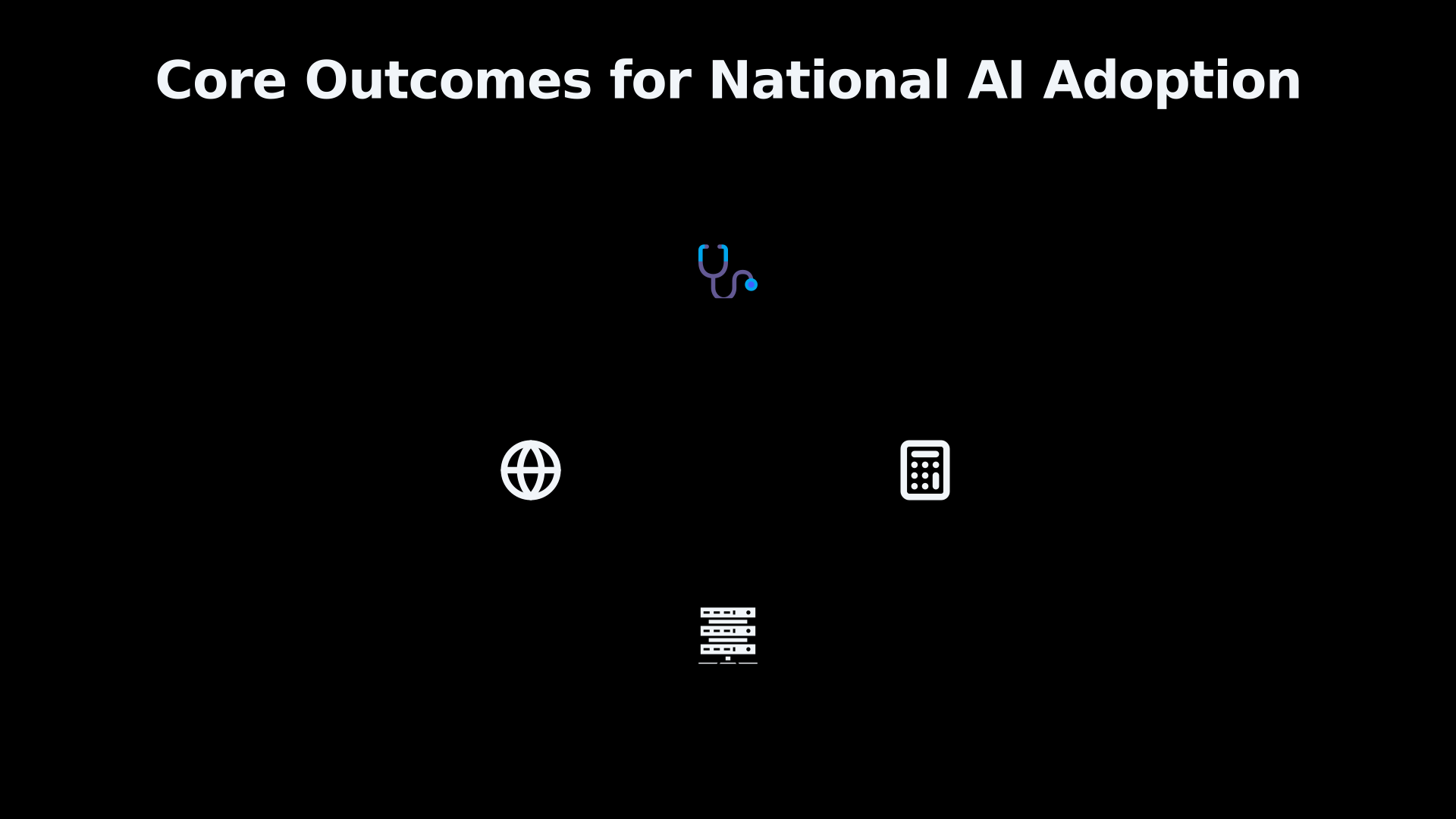
For that reason, promising trial results are only the beginning. Before AI becomes routine across a national screening programme, policymakers need evidence that it reduces advanced disease and deaths, limits unnecessary interventions, performs reliably across diverse populations, represents good value for money, and can be introduced safely at scale. Those standards are deliberately high because even small errors or biases become significant when applied to millions of screening examinations.
Which outcomes should determine national adoption?
A national screening programme should not adopt AI because it achieves impressive accuracy scores or detects more cancers in retrospective datasets. Those are useful indicators, but they are surrogate measures rather than the outcomes that ultimately matter.
The strongest evidence should demonstrate improvements in outcomes such as:
- Fewer interval cancers diagnosed between screening rounds.
- Fewer advanced-stage cancers at diagnosis.
- Lower breast cancer mortality.[nature.com]nature.comMay 2, 2026…
- Reduced unnecessary biopsies and treatment.
- Stable or improved quality of life.
- Equal or improved access across different population groups.
The Swedish MASAI randomised trial represents an important step because it moved beyond retrospective testing into real-world screening. Follow-up results showed AI-supported screening achieved a non-inferior interval cancer rate, higher sensitivity and unchanged specificity while reducing radiologist workload substantially. Importantly, interval cancers in the AI group also appeared less likely to have unfavourable characteristics such as larger tumour size. These findings strengthen the case that AI may be identifying clinically important cancers rather than simply increasing diagnosis numbers.[PubMed]pubmed.ncbi.nlm.nih.govInterval cancer, sensitivity, and specificity comparing AI-supported mammography screening with standard double reading without AI…
Even so, interval cancer rates remain an intermediate outcome. Whether earlier detection ultimately produces fewer deaths and better long-term quality of life requires longer follow-up across multiple screening rounds.
Why finding more cancers is not enough
Cancer screening has repeatedly shown that detecting additional cancers does not automatically translate into better health.
Several well-recognised mechanisms explain why:
- Lead-time bias makes survival after diagnosis appear longer simply because the disease is detected earlier.
- Length bias means screening preferentially detects slower-growing tumours that remain visible for longer.
- Overdiagnosis identifies cancers that would never have become symptomatic during a person’s lifetime.
Overdiagnosis matters because diagnosis often triggers surgery, radiotherapy, hormone treatment or chemotherapy. These interventions carry genuine physical and psychological costs. If AI increases detection mainly by identifying harmless disease, the apparent success of screening could mask an increase in unnecessary treatment.
This is why screening policy places greater weight on advanced cancer rates, interval cancers and mortality than on detection rates alone.
Workload savings must never become the only success measure
One of AI mammography’s clearest benefits is operational.
Large screening programmes require enormous numbers of mammograms to be interpreted, while many countries face shortages of breast radiologists. Studies consistently suggest AI can reduce reading workload by around 40% or more, particularly when acting as a second reader or triage tool.[PubMed]pubmed.ncbi.nlm.nih.govInterval cancer, sensitivity, and specificity comparing AI-supported mammography screening with standard double reading without AI…
Those savings could allow specialists to spend more time on:
- Diagnostic assessment clinics.
- Breast biopsies.
- Complex or equivocal cases.
- Patient communication.
- Faster reporting times.
However, workforce savings should be viewed as a secondary benefit rather than the primary justification for rollout.
A cheaper system that slightly increases unnecessary treatment or misses additional aggressive cancers would represent poor value despite lower staffing costs. Screening exists to improve health outcomes, not simply to process more examinations.
Can the evidence be reproduced outside Sweden?
One successful trial, even a large randomised one, is rarely sufficient for nationwide policy.
Health systems differ in important ways:
- Screening intervals.
- Population age structure.
- Breast density.
- Imaging equipment.
- Radiologist experience.
- Cancer prevalence.
- Referral pathways.
An AI system that performs well in one country may not achieve identical results elsewhere.
Earlier assessments by NICE highlighted precisely this problem. Much of the initial evidence came from enriched datasets containing unusually high proportions of cancers rather than representative screening populations. NICE also noted that prospective trials and evaluations using routine screening populations were essential before widespread adoption, and specifically identified interval cancers, specificity and detection of clinically meaningful disease as key outcomes for implementation decisions.[Nice]nice.org.ukOpen source on nice.org.uk.
This makes external validation an essential requirement rather than a technical detail.
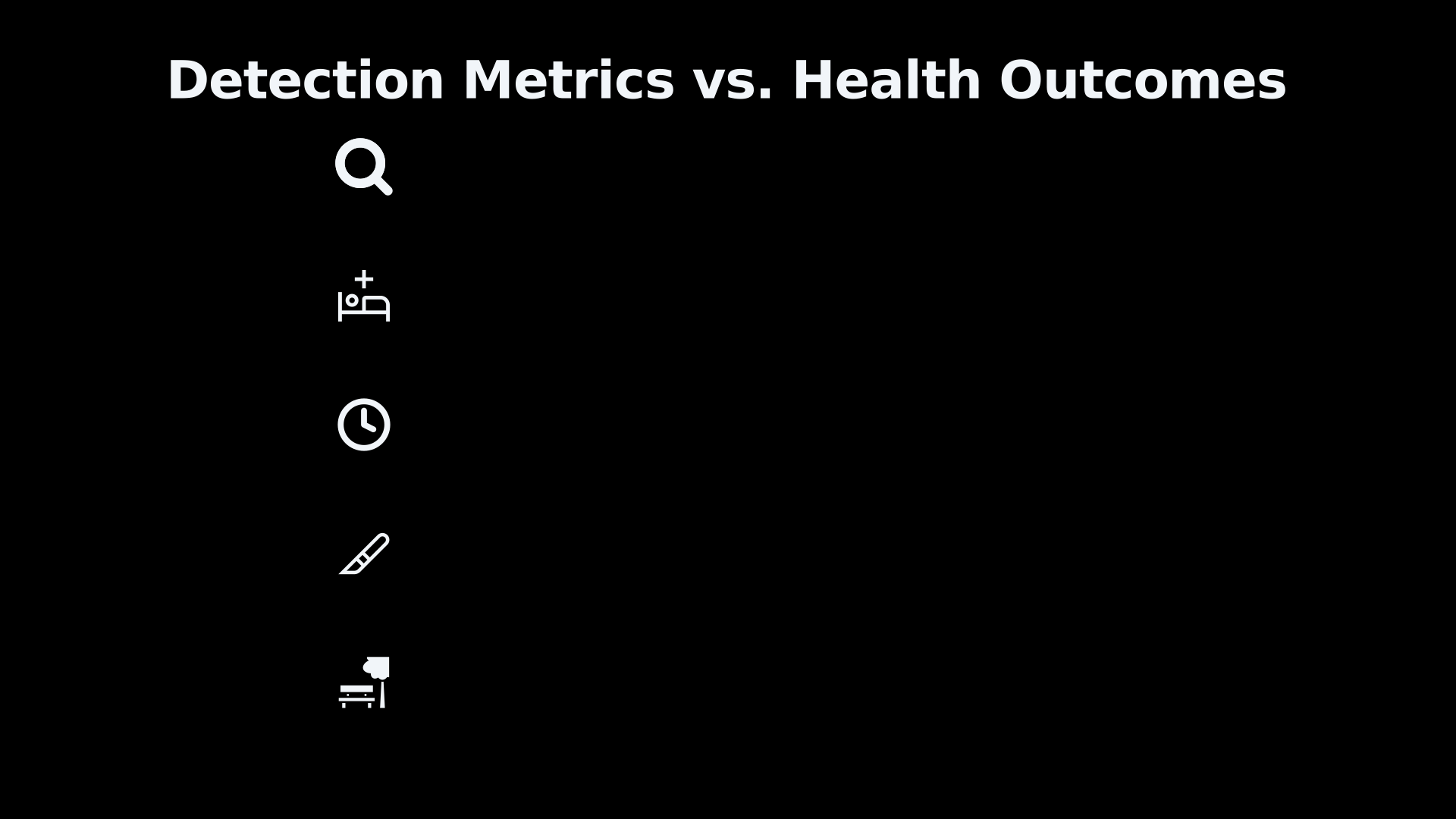
Health systems need evidence that extends beyond diagnostic accuracy
Introducing AI into a national screening programme changes an entire clinical pathway.
Decision-makers therefore need evidence across multiple levels.
Clinical effectiveness
AI should demonstrate sustained improvements in meaningful health outcomes over repeated screening rounds rather than a temporary increase in detected cancers.
Economic value
Implementation involves software licences, integration with imaging systems, cybersecurity, validation, maintenance, monitoring and staff training. These costs should be offset by measurable improvements in health and efficiency.
Recent modelling based on prospective screening evidence suggests AI-assisted strategies could be cost-effective within the UK breast screening programme, with reduced lifetime costs and small gains in quality-adjusted life years (QALYs). However, these remain modelled estimates that depend on assumptions about long-term outcomes rather than decades of observed practice.[nature.com]nature.comMay 2, 2026…
Operational reliability
Health systems must know how AI performs:
- During equipment upgrades.
- Across different manufacturers.
- In rural and urban services.
- During software updates.
- When image quality varies.
- When radiologists disagree with the algorithm.
These implementation questions receive far less attention than headline accuracy figures but often determine whether a technology succeeds in routine practice.
Equity must be demonstrated, not assumed
National screening programmes serve diverse populations.
An AI system should therefore prove that performance remains consistent across groups including:
- Different ethnic backgrounds.
- Women with dense breast tissue.[pubmed.ncbi.nlm.nih.gov]pubmed.ncbi.nlm.nih.govSource details in endnotes.
- Different age groups.
- Socioeconomic backgrounds.
- Different imaging devices.
- Different screening centres.
If performance varies substantially between groups, nationwide deployment could unintentionally widen existing health inequalities.
Continuous monitoring after rollout is therefore as important as pre-approval testing. AI systems evolve through software updates, making ongoing performance surveillance necessary throughout their operational life.

Why long-term follow-up remains indispensable
Many important screening outcomes take years to emerge.
Researchers need time to observe whether earlier detection changes:
- Rates of metastatic disease.
- Breast cancer mortality.[nature.com]nature.comMay 2, 2026…
- Overall survival.
- Quality of life.
- Treatment intensity.
- Healthcare costs over decades.
Without long-term follow-up, policymakers risk basing permanent national decisions on short-term surrogate measures.
This caution is not unique to AI. It reflects the standards expected of all screening technologies because screening intervenes in healthy populations, where even small unintended harms can affect very large numbers of people.
What successful national evidence would look like
The strongest case for nationwide AI mammography would combine several forms of evidence rather than relying on any single impressive trial.
An ideal evidence base would show:
- Consistent reductions in clinically important interval cancers across multiple healthcare systems.
- Earlier detection translating into fewer advanced cancers and lower mortality.
- Stable or reduced false-positive rates and overdiagnosis.
- Demonstrated cost-effectiveness under routine national screening conditions.
- Reliable performance across diverse populations and imaging equipment.
- Safe governance for software updates, quality assurance and ongoing monitoring.
- Meaningful workforce savings that improve patient care without compromising safety.
Within the broader debate about AI’s potential to accelerate medicine and contribute to long-term human flourishing, mammography offers an instructive example of responsible implementation. It illustrates that genuine progress depends not simply on building more capable AI systems, but on proving that they improve real human outcomes under the demanding conditions of everyday healthcare. Only when those standards are met does national rollout become a justified public health decision rather than an optimistic technological experiment.
Amazon book picks
Further Reading
Books and field guides related to What Must AI Mammography Prove Before Rollout?. Use these as the next step if you want deeper reading beyond the article.

Deep Medicine: How Artificial Intelligence Can Make Healthcar...
First published 2019. Subjects: Artificial intelligence, Medical informatics, Medical applications, Diagnosis, Data processing.
The Digital Doctor: Hope, Hype, and Harm at the Dawn of Medic...
The New York Times Science Bestseller from Robert Wachter, Modern Healthcare’s #1 Most Influential Physician-Executive in the US While mo...
The Patient Will See You Now: The Future of Medicine Is in Yo...
A revolutionary argument for how putting patients in charge will make healthcare better for everyone
Complications: A Surgeon's Notes
In gripping accounts of true cases, surgeon Atul Gawande explores the power and the limits of medicine, offering an unflinching view from...
eBay marketplace picks
Marketplace Samples
Live-tested eBay searches with available results related to this page.
Selected frommedical poster oneBay.co.uk.
Endnotes
1.
Source: nature.com
Link:https://www.nature.com/articles/s41416-026-03465-3
Source snippet
May 2, 2026...
Published: May 2, 2026
2.
Source: nature.com
Link:https://www.nature.com/nature-index/article/10.1016/s0140-6736%2825%2902464-x
3.
Source: pubmed.ncbi.nlm.nih.gov
Link:https://pubmed.ncbi.nlm.nih.gov/41620232/
Source snippet
Interval cancer, sensitivity, and specificity comparing AI-supported mammography screening with standard double reading without AI...
4.
Source: nice.org.uk
Link:https://www.nice.org.uk/advice/mib242/chapter/Clinical-and-technical-evidence
5.
Source: nice.org.uk
Link:https://www.nice.org.uk/advice/mib242/chapter/Summary
Source snippet
Summary | Artificial intelligence in mammography | Advice | NICE...
6.
Source: pmc.ncbi.nlm.nih.gov
Link:https://pmc.ncbi.nlm.nih.gov/articles/PMC13373195/
Source snippet
2026 May 2;135(3):453–460. doi: 10.1038/s41416-026-03465-3 ECONOMIC EVALUATION OF ARTIFICIAL INTELLIGENCE FOR CANCER DETECTION IN THE UK...
7.
Source: pubmed.ncbi.nlm.nih.gov
Link:https://pubmed.ncbi.nlm.nih.gov/42069897/
Source snippet
2026 Aug;135(3):453-460. doi: 10.1038/s41416-026-03465-3. Epub 2026 May 2. ECONOMIC EVALUATION OF ARTIFICIAL INTELLIGENCE FOR CANCER DETE...
8.
Source: pmc.ncbi.nlm.nih.gov
Link:https://pmc.ncbi.nlm.nih.gov/articles/PMC13036691/
Source snippet
2026 Mar 27;8(2):e269007. doi: 10.1148/rycan.269007 AI AND BREAST CANCER SCREENING AT A CROSSROADS: INSIGHTS FROM THE MASAI TRIAL Andrea...
9.
Source: pubmed.ncbi.nlm.nih.gov
Link:https://pubmed.ncbi.nlm.nih.gov/39904652/
10.
Source: nice.org.uk
Title: Clinical and technical evidence
Link:https://www.nice.org.uk/advice/mib304/chapter/Clinical-and-technical-evidence
11.
Source: nice.org.uk
Title: The technologies
Link:https://www.nice.org.uk/advice/mib242/chapter/The-technologies
12.
Source: ncbi.nlm.nih.gov
Link:https://www.ncbi.nlm.nih.gov/books/NBK563627/
13.
Source: ncbi.nlm.nih.gov
Link:https://www.ncbi.nlm.nih.gov/books/NBK269537/
14.
Source: pubmed.ncbi.nlm.nih.gov
Link:https://pubmed.ncbi.nlm.nih.gov/33141657/
Additional References
15.
Source: associationofbreastsurgery.org.uk
Link:https://associationofbreastsurgery.org.uk/professionals/information-hub/publications/2026/interval-cancer-sensitivity-and-specificity-comparing-ai-supported-mammography-screening-with-standard-double-reading-without-ai-in-the-masai-study-a-randomised-controlled-non-inferiority-single-blinded-population-based-screening-accuracy-t
Source snippet
MASAI study: a randomised, controlled, non-inferiority, single-blinded, population-based, screening-accuracy trial | Association of Breas...
16.
Source: youtube.com
Link:https://www.youtube.com/watch?v=zq3INCnFdmo
Source snippet
Study finds use of AI in breast screening as safe and effective...
17.
Source: youtube.com
Title: Landmark Study Suggests AI Could Revolutionize Breast Cancer Screening
Link:https://www.youtube.com/watch?v=7Ct1-B-dJFA
Source snippet
Paper of the week MASAI Trial – Full videocast...
18.
Source: youtube.com
Title: Paper of the week MASAI Trial – Full videocast
Link:https://www.youtube.com/watch?v=3GvyGJLYk24
Source snippet
Artificial Intelligence for the Clinician Episode 5: Are Radiologists Out of a Job?...
19.
Source: youtube.com
Title: Study finds use of AI in breast screening as safe and effective
Link:https://www.youtube.com/watch?v=6mXfa6CdMzs
Source snippet
Researchers use AI to detect cancer • FRANCE 24 English...
20.
Source: lifescience.net
Link:https://www.lifescience.net/publications/1865240/interval-cancer-sensitivity-and-specificity-compar/
21.
Source: doi.org
Link:https://doi.org/10.1016/s2589-7500%2824%2900267-x
22.
Source: cochrane.org
Title: Screening for breast cancer with mammography | Cochrane
Link:https://www.cochrane.org/evidence/CD001877_screening-breast-cancer-mammography
23.
Source: youtube.com
Title: Researchers use AI to detect cancer • FRANCE 24 English
Link:https://www.youtube.com/watch?v=6di_ODhGvvI
24.
Source: clinicaltrials.gov
Link:https://clinicaltrials.gov/study/NCT04838756